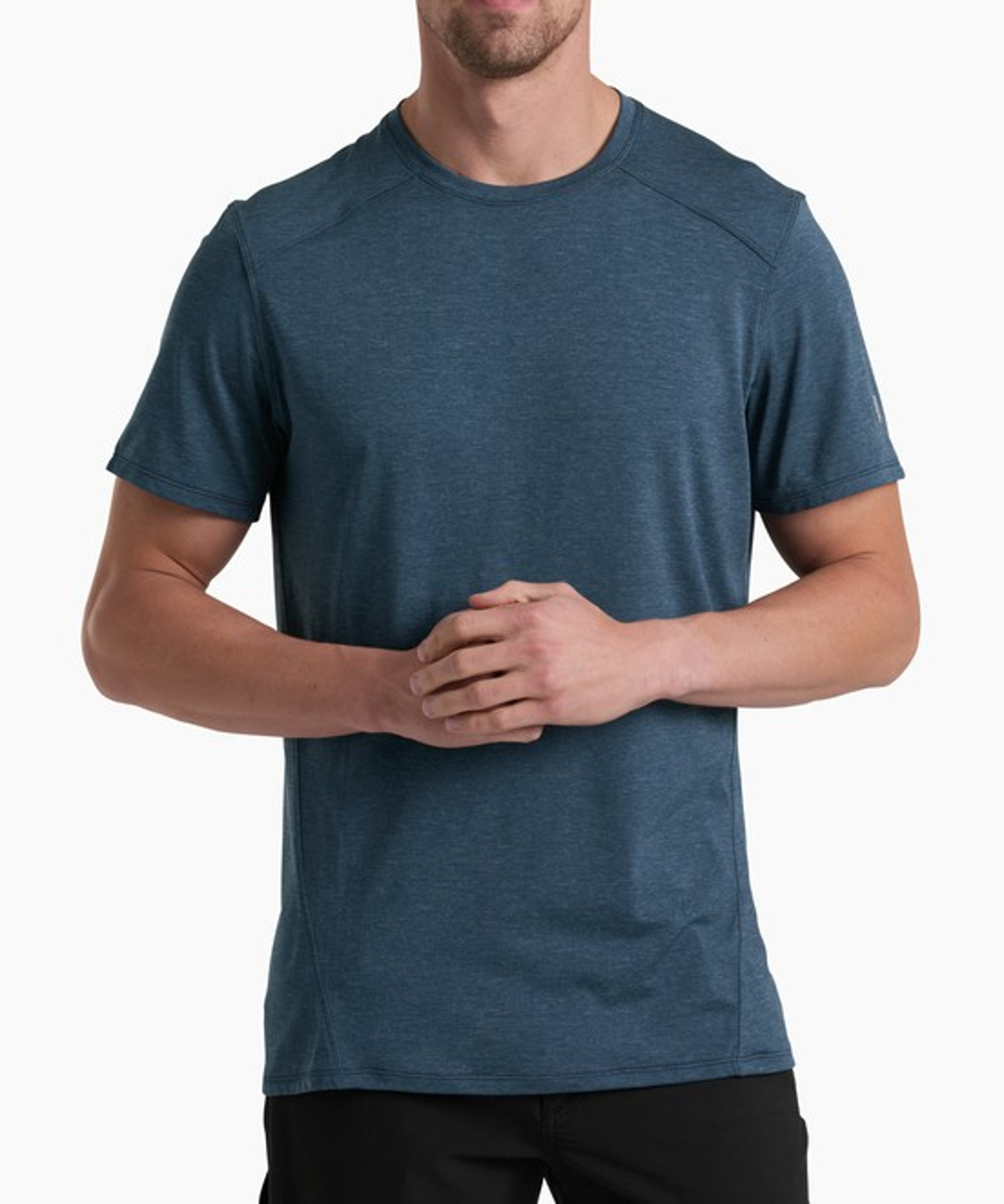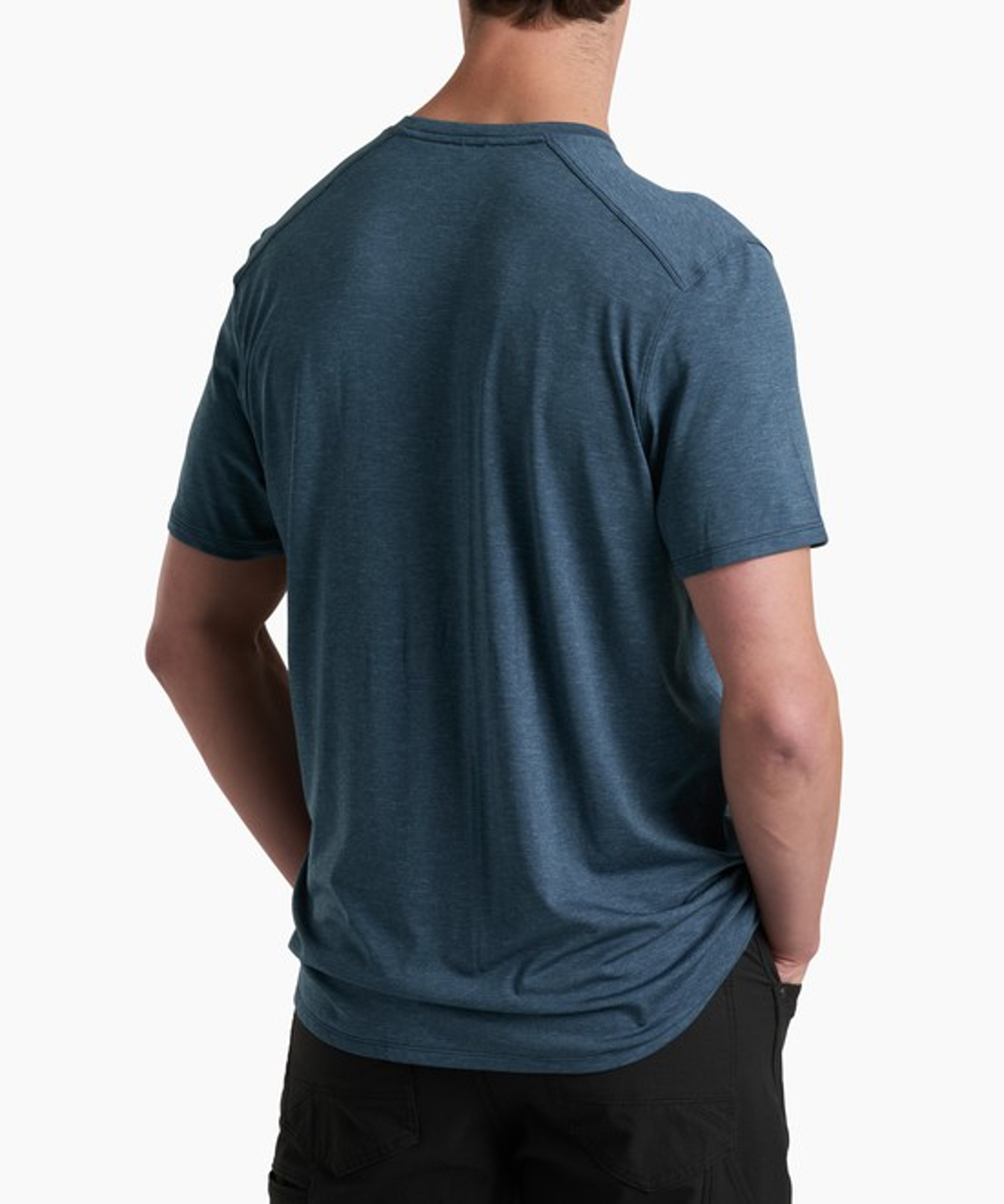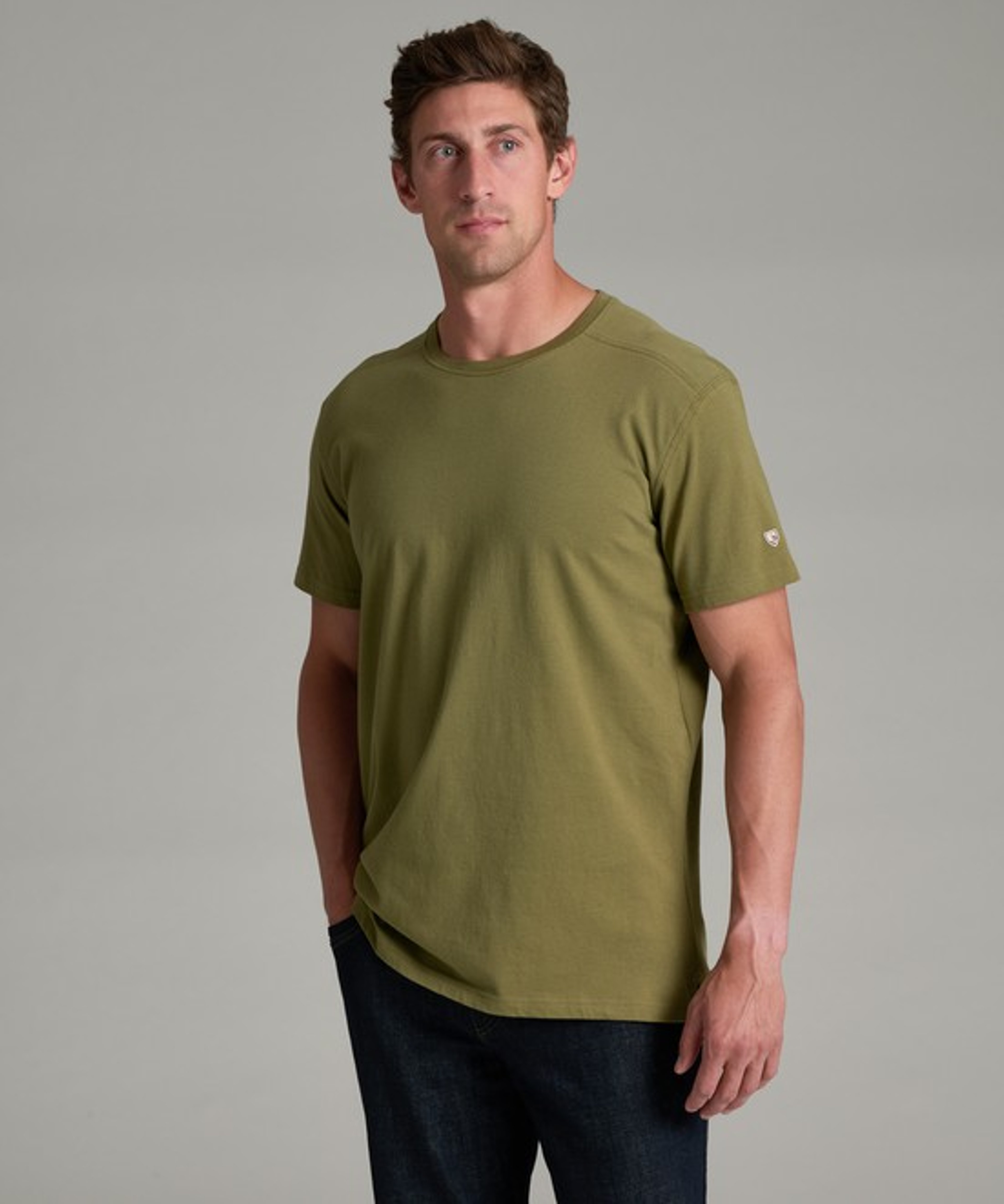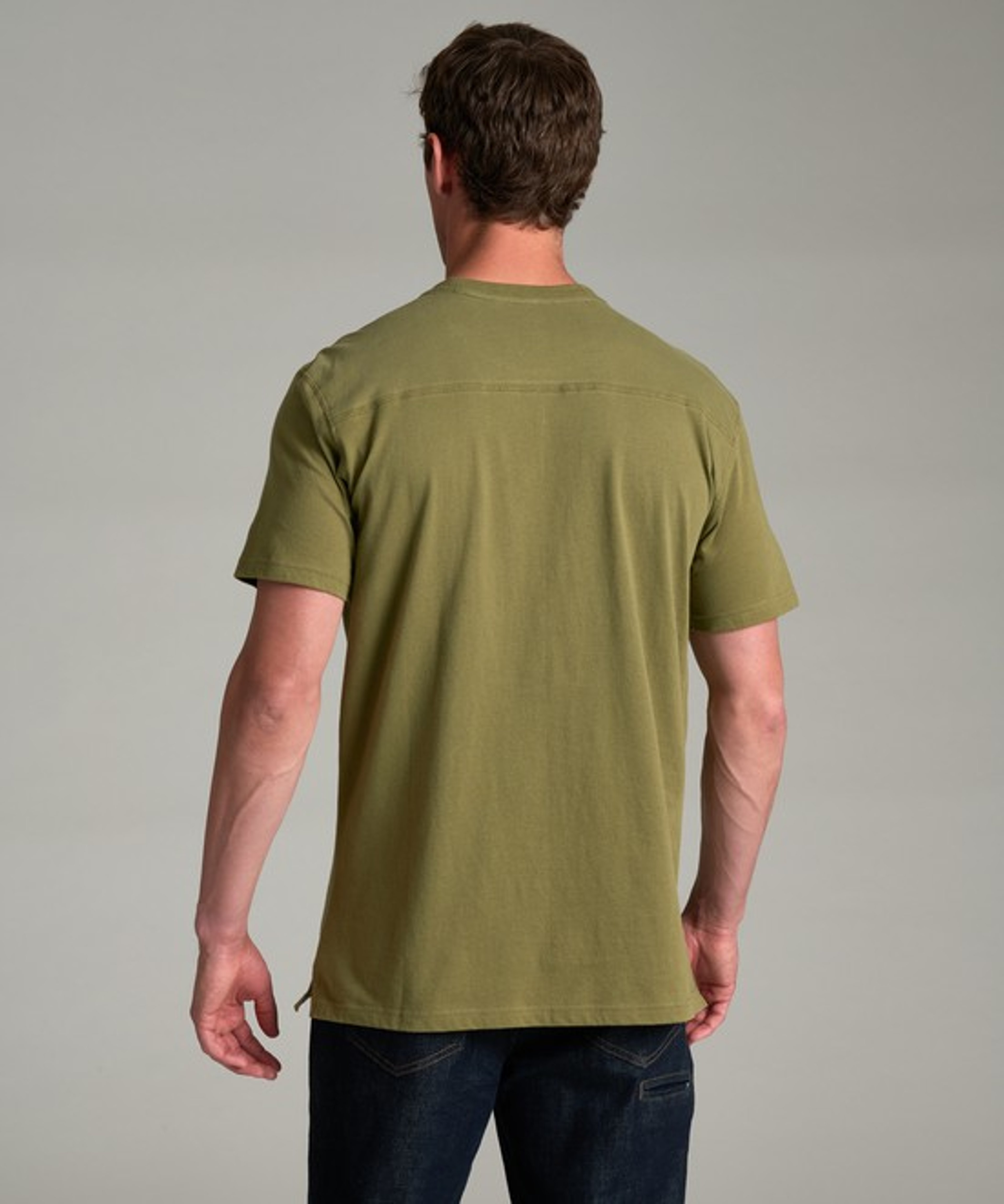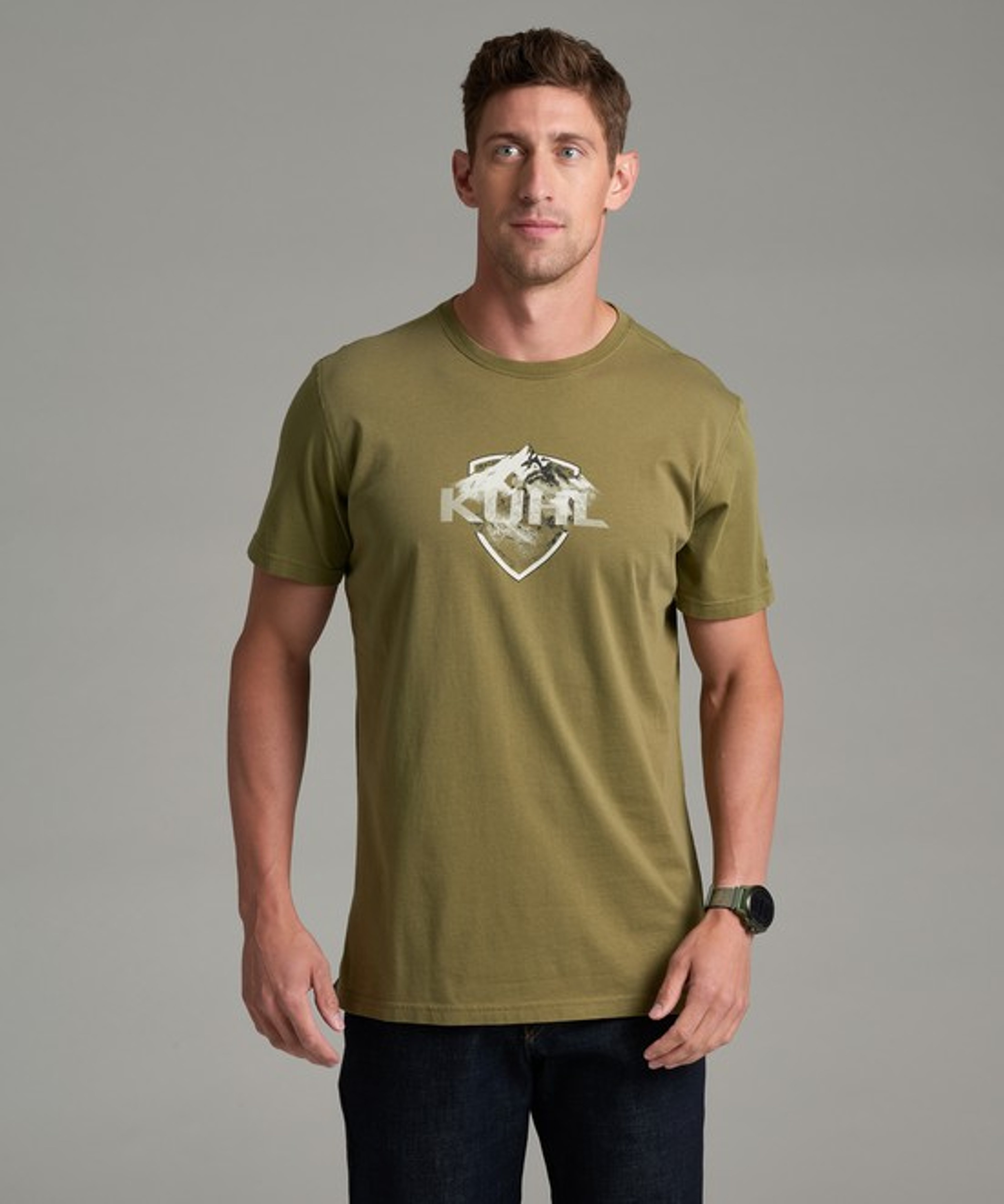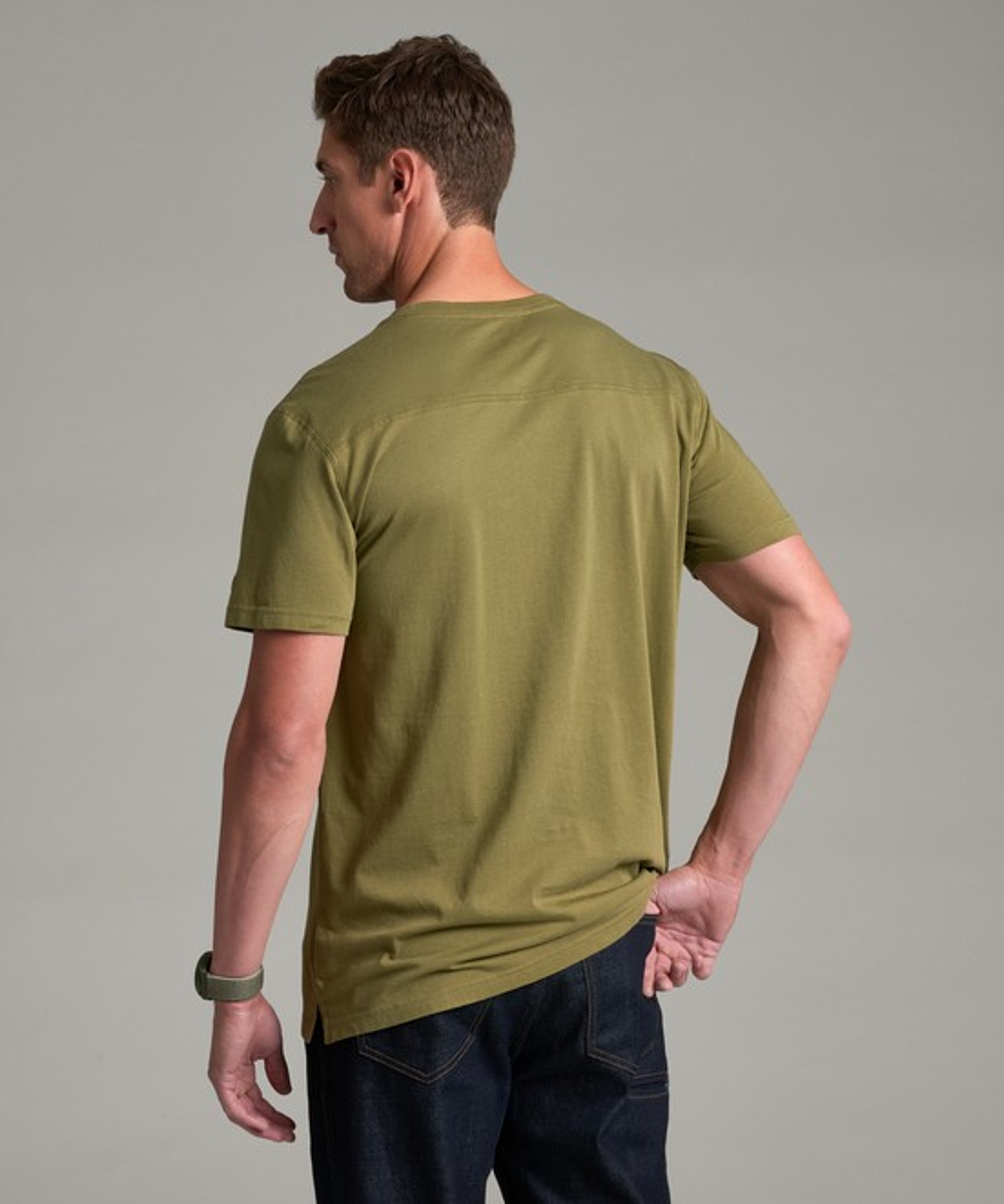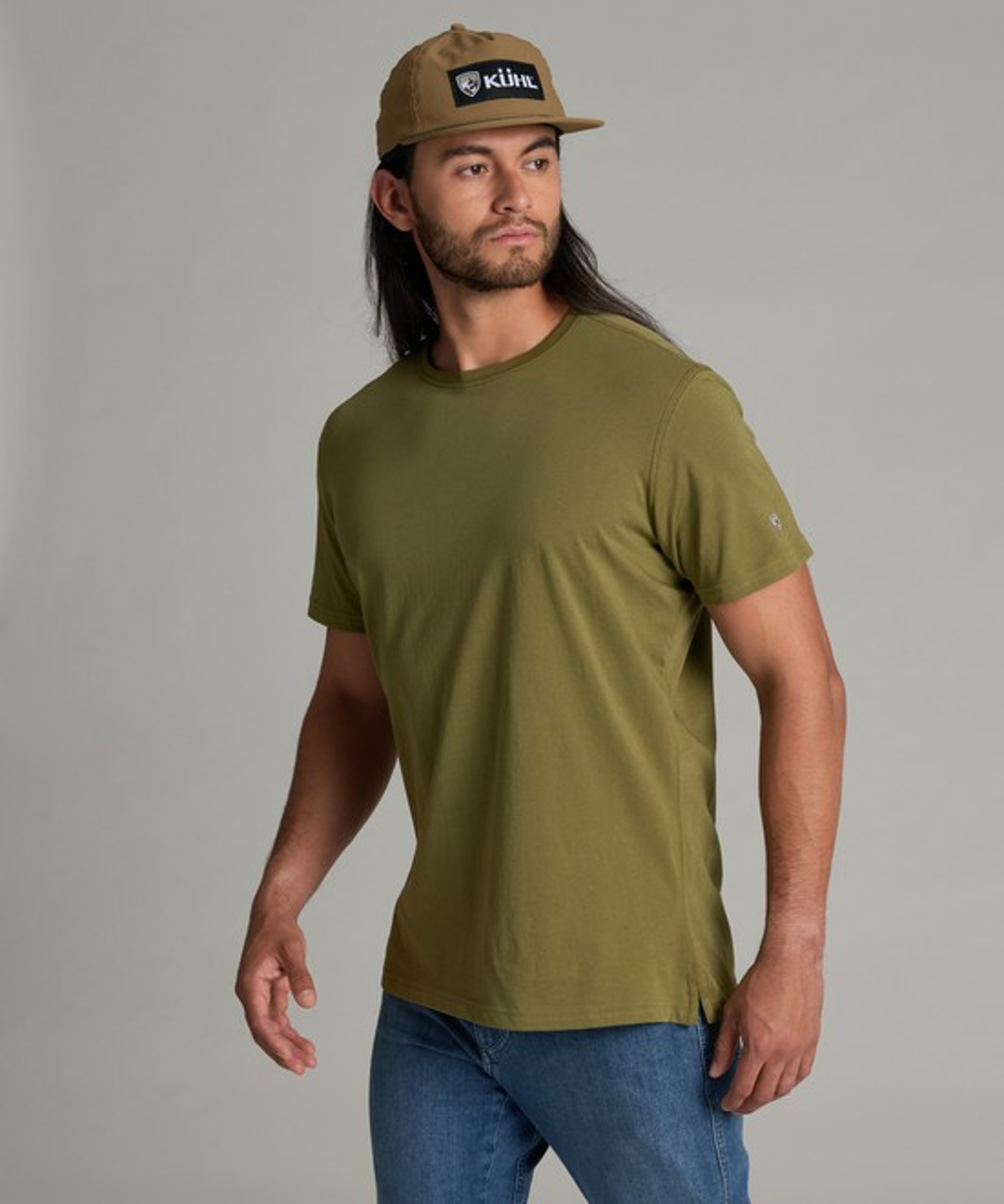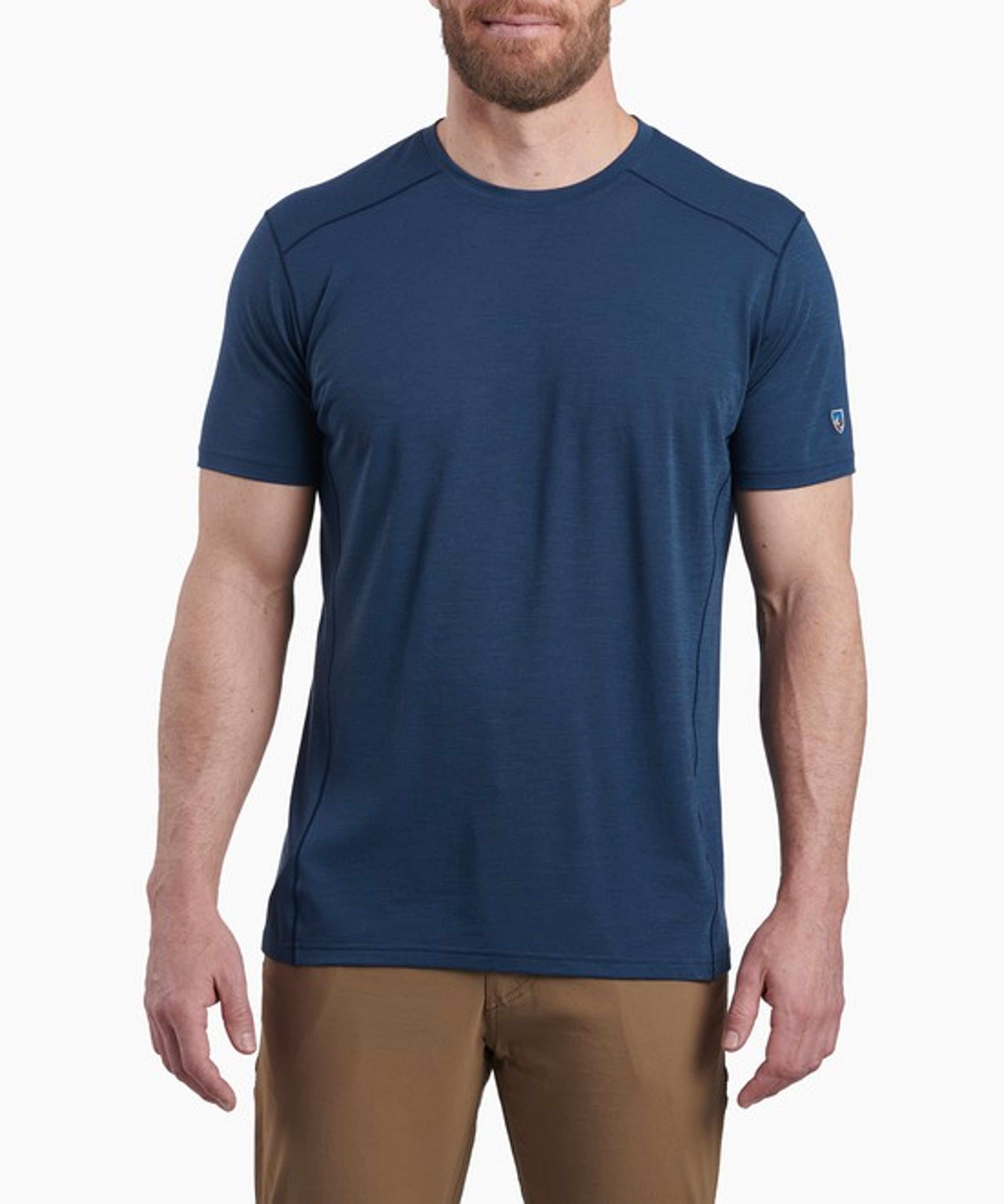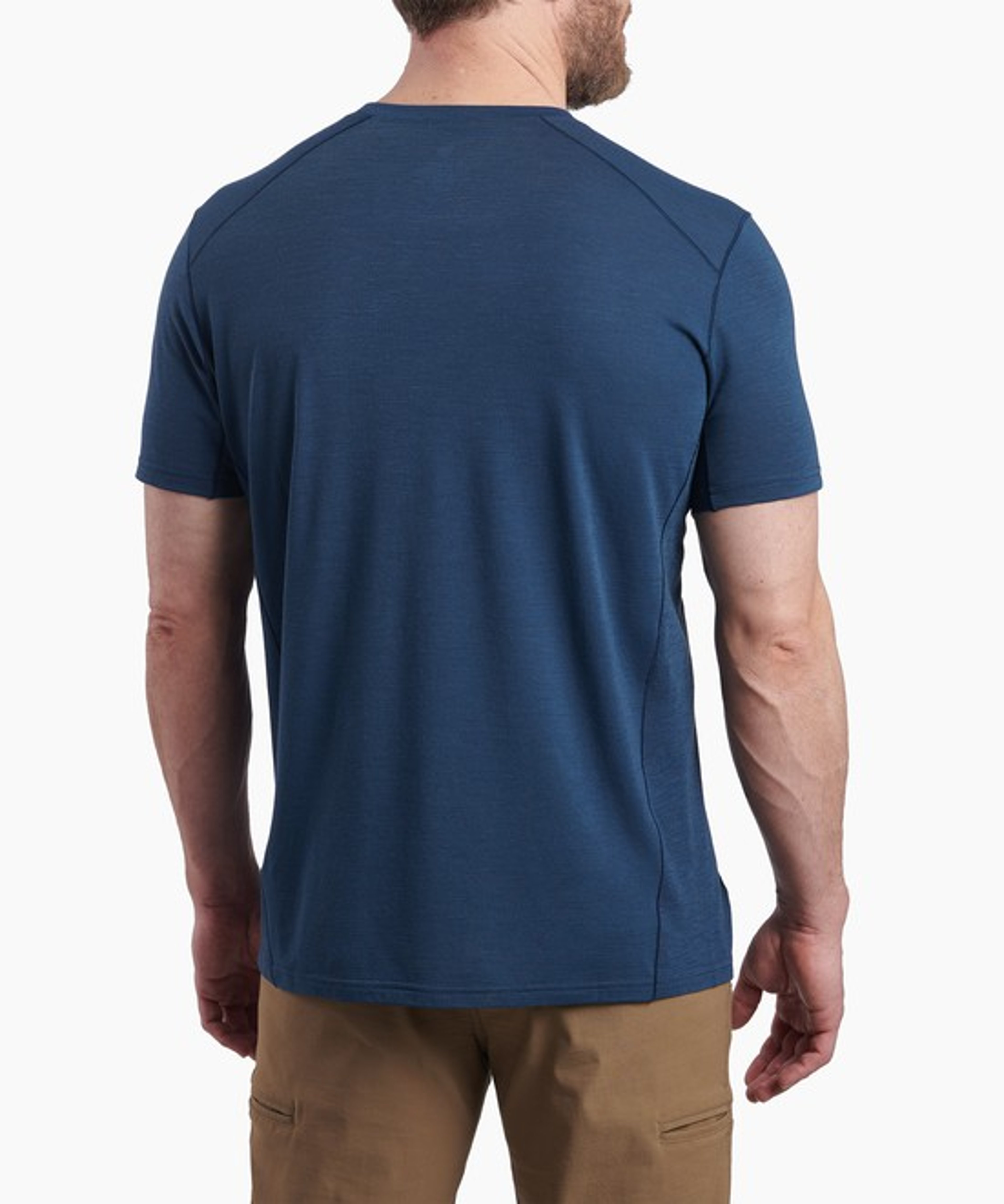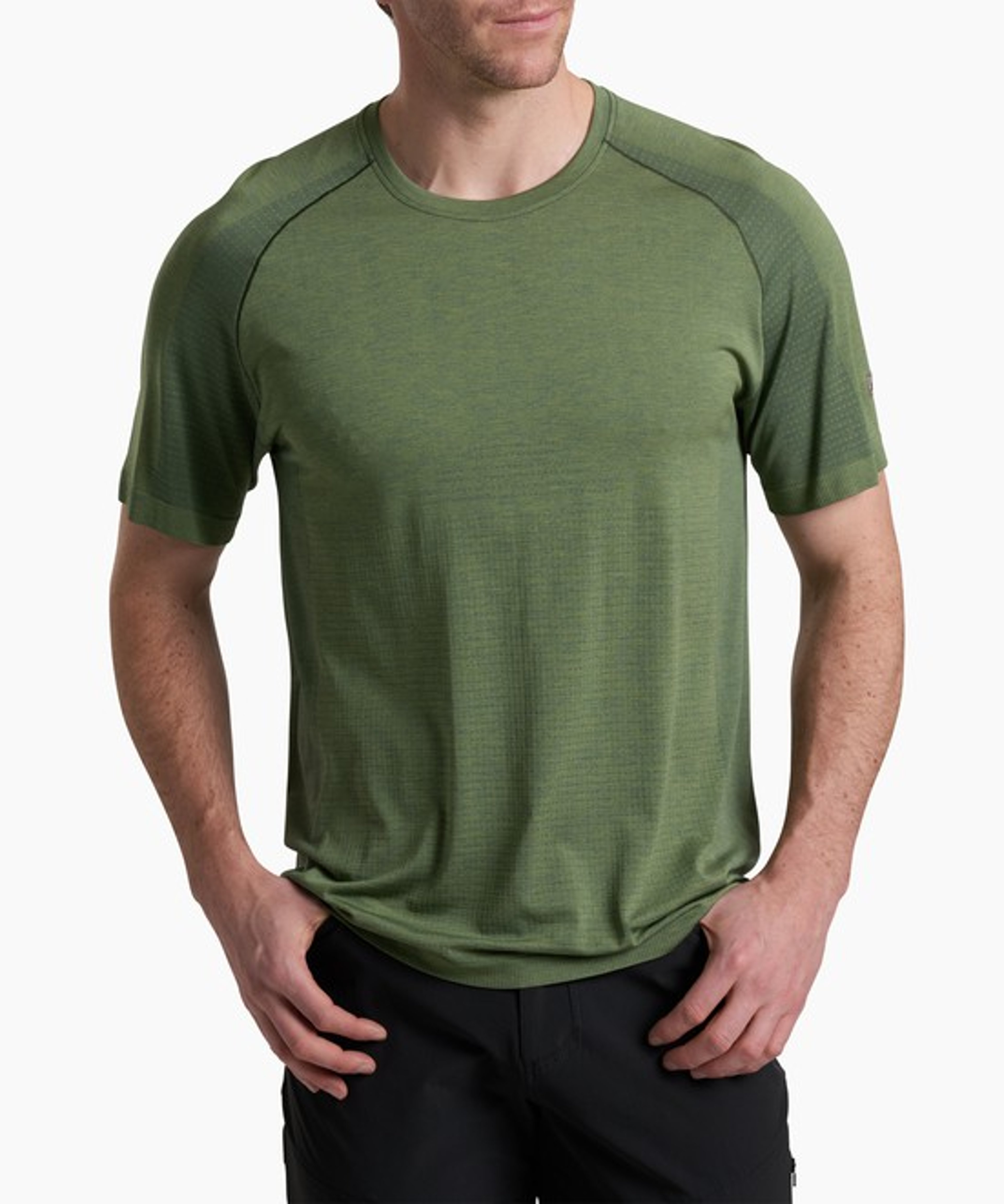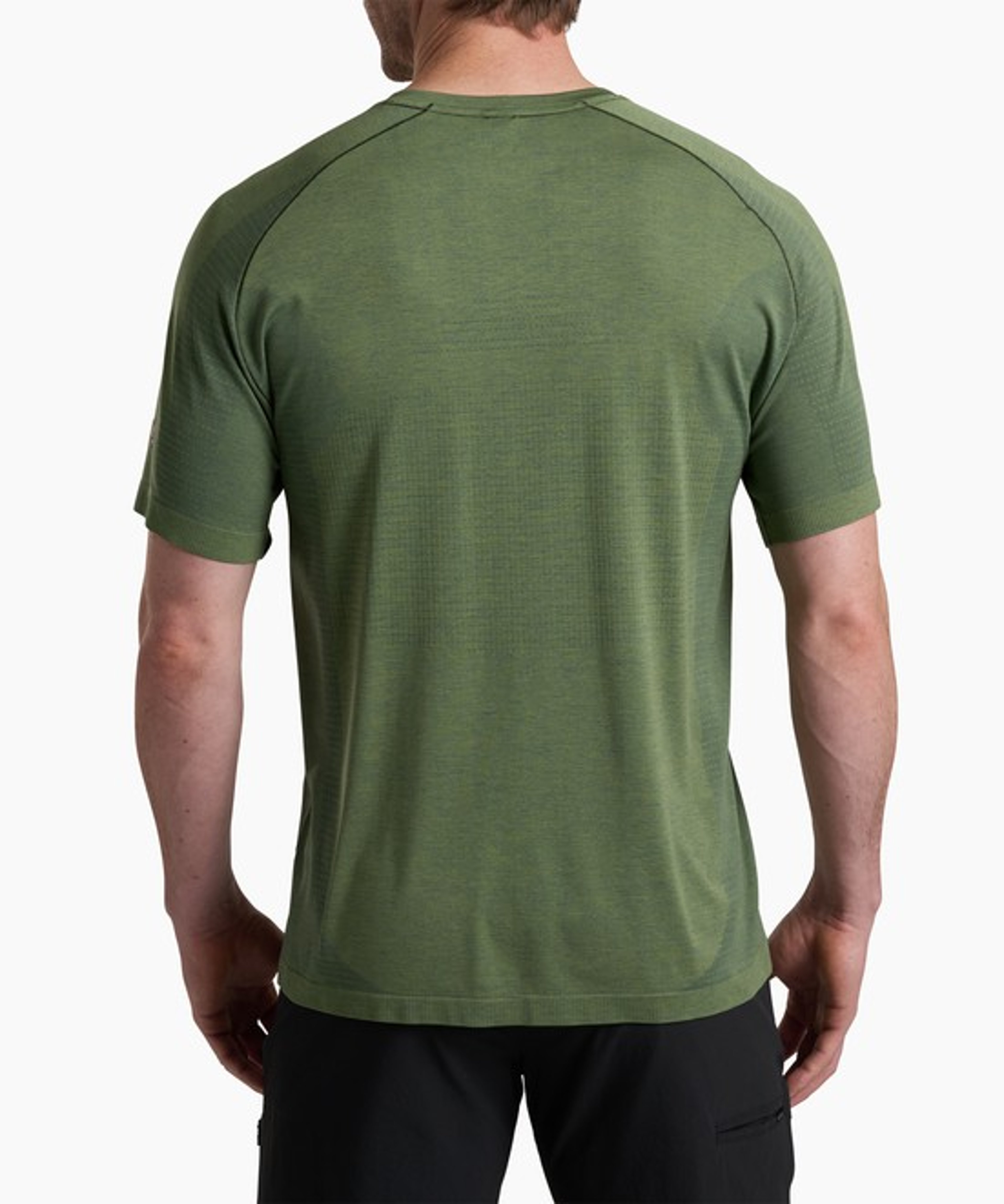



Men's T-Shirts
Take on the Day in KÜHL Men's T-Shirts
Choose from a variety of fabrics, styles, and features for the men's t-shirts that are right for you:
Organic Cotton Comfort. Soft, breathable cotton tees are built for everyday wear, from coffee runs to summit pushes. Premium organic cotton holds its hand-feel after dozens of wash cycles, with a relaxed fit that drapes cleanly over a base layer top when the temperature drops.
Merino Performance. When you're moving fast or packing light, look to a merino-blend tee. Merino regulates temperature across a wide range, resists odor over multi-day efforts, and feels smooth next to skin, qualities a standard cotton tee can't match.
Sun-Forward Construction. Hot-weather tees lean on tight-knit synthetics or merino blends with UPF 50+ to block UV on exposed ridgelines. Moisture-wicking fibers pull sweat to the surface so it evaporates fast, and a quick-dry hand means you're not wearing a wet shirt twenty minutes into a climb.
Layer-Ready Silhouettes. A trim, articulated cut works under a button-down or a fleece without binding at the shoulders. If you want the same DNA in a long-cut layer, our men's long-sleeve shirts carry the same fit logic in a piece that adds sleeve coverage for sun and bugs.
Graphic & Logo Tees. For days off the trail, mountain-culture graphic tees and clean logo prints carry the same organic cotton hand-feel as our performance tees. Same fabric, different occasion.
Look for signature touches like flatlock or offset shoulder seams to prevent pack-strap chafe, a slightly relaxed body for airflow, and articulated construction that lets you reach overhead without the hem riding up.
Choose from a variety of fabrics, styles, and features for the men's t-shirts that are right for you:
Organic Cotton Comfort. Soft, breathable cotton tees are built for everyday wear, from coffee runs to summit pushes. Premium organic cotton holds its hand-feel after dozens of wash cycles, with a relaxed fit that drapes cleanly over a base layer top when the temperature drops.
Merino Performance. When you're moving fast or packing light, look to a merino-blend tee. Merino regulates temperature across a wide range, resists odor over multi-day efforts, and feels smooth next to skin, qualities a standard cotton tee can't match.
Sun-Forward Construction. Hot-weather tees lean on tight-knit synthetics or merino blends with UPF 50+ to block UV on exposed ridgelines. Moisture-wicking fibers pull sweat to the surface so it evaporates fast, and a quick-dry hand means you're not wearing a wet shirt twenty minutes into a climb.
Layer-Ready Silhouettes. A trim, articulated cut works under a button-down or a fleece without binding at the shoulders. If you want the same DNA in a long-cut layer, our men's long-sleeve shirts carry the same fit logic in a piece that adds sleeve coverage for sun and bugs.
Graphic & Logo Tees. For days off the trail, mountain-culture graphic tees and clean logo prints carry the same organic cotton hand-feel as our performance tees. Same fabric, different occasion.
Look for signature touches like flatlock or offset shoulder seams to prevent pack-strap chafe, a slightly relaxed body for airflow, and articulated construction that lets you reach overhead without the hem riding up.
From quick-dry hiking tees to soft organic cotton, KÜHL men's t-shirts are built for trail days, hot weather, and everything in between.
What makes the best t-shirts for you?
The best men's t-shirt checks a few non-negotiable boxes: a fabric that moves moisture instead of soaking it up, a cut that lets you reach and climb without binding, and durability that survives the washing machine for a few seasons. Beyond that, it's about matching the shirt to the day. A breathable, moisture-wicking tee earns its place for hikes and gym sessions. A soft organic cotton tee earns its place everywhere else. Look for flatlock seams at the shoulders if you'll be wearing a pack, and a hem that stays in place when you're moving overhead.
What fabric is best for performance shirts: synthetic, merino, or blend?
It depends on what you're optimizing for: synthetic for speed and durability, merino for odor resistance and temperature regulation, and a merino-synthetic blend if you want a bit of both. Synthetic polyester is the fastest-drying option and the most abrasion-resistant under pack straps, the right call for hot, sweaty, single-day pushes. Merino wool regulates body temperature across a wide range and resists odor for multi-day trips where laundry isn't an option. Blends split the difference, pairing the next-to-skin feel of merino with the toughness of nylon or polyester.
Do you really need a technical shirt, or will a cotton tee do?
For low-output days, a quality cotton tee is genuinely fine. The rule that cotton is the enemy mostly applies once you're sweating hard or moving in cold, wet conditions. Cotton absorbs sweat and holds it against the skin, which is comfortable for a stroll but cold and clammy on a real hike. Technical fabrics breathe better, dry faster, and don't get heavier when wet. For trail days, opt for a short-sleeve performance shirt. For everything else, organic cotton has its place.
Can you wear long-sleeve shirts in summer?
Yes, and on high-sun days it's often the smarter call than going short-sleeve. A lightweight, breathable long-sleeve with a UPF 50+ rating blocks more UV than sunscreen reapplied every two hours, and on exposed ridgelines that adds up to less burn and less fatigue. The trick is fabric weight: a tightly-knit synthetic or merino blend feels barely-there on the skin while shading every inch of forearm. Mesh panels under the arms or a slightly relaxed cut help airflow do the rest.
How should a t-shirt fit for layering?
It should sit close enough to layer cleanly under a button-down or a fleece without bunching at the waist, but loose enough that you don't notice it when you're moving. The shoulder seam is the tell: it should land at the edge of your shoulder, not halfway down your bicep, so a midlayer or jacket slides over it without pinching. Articulated construction at the shoulders and a hem that stays in place when you raise your arms make the difference between a tee that disappears in a layered system and one you keep tugging at.
What's the best t-shirt for hot weather hikes?
Reach for the most breathable, sun-protective option you own: a UPF 50+ tee in a quick-dry synthetic or merino blend, ideally with mesh ventilation or an open-weave knit. Moisture-wicking matters most when the air is humid and sweat won't evaporate on its own. A fast-drying fabric keeps weight off your shoulders mile after mile. Pair it with a brimmed hat and you've got the right base for a long, exposed trail day.