








Socks
Keep Your Feet Moving in KÜHL Socks
Whether you're logging miles on the trail, packing for a winter ascent, or stacking errands in town, the right sock decides how the day ends. Choose from a variety of weights, heights, and cushioning levels for the socks that match how you move:
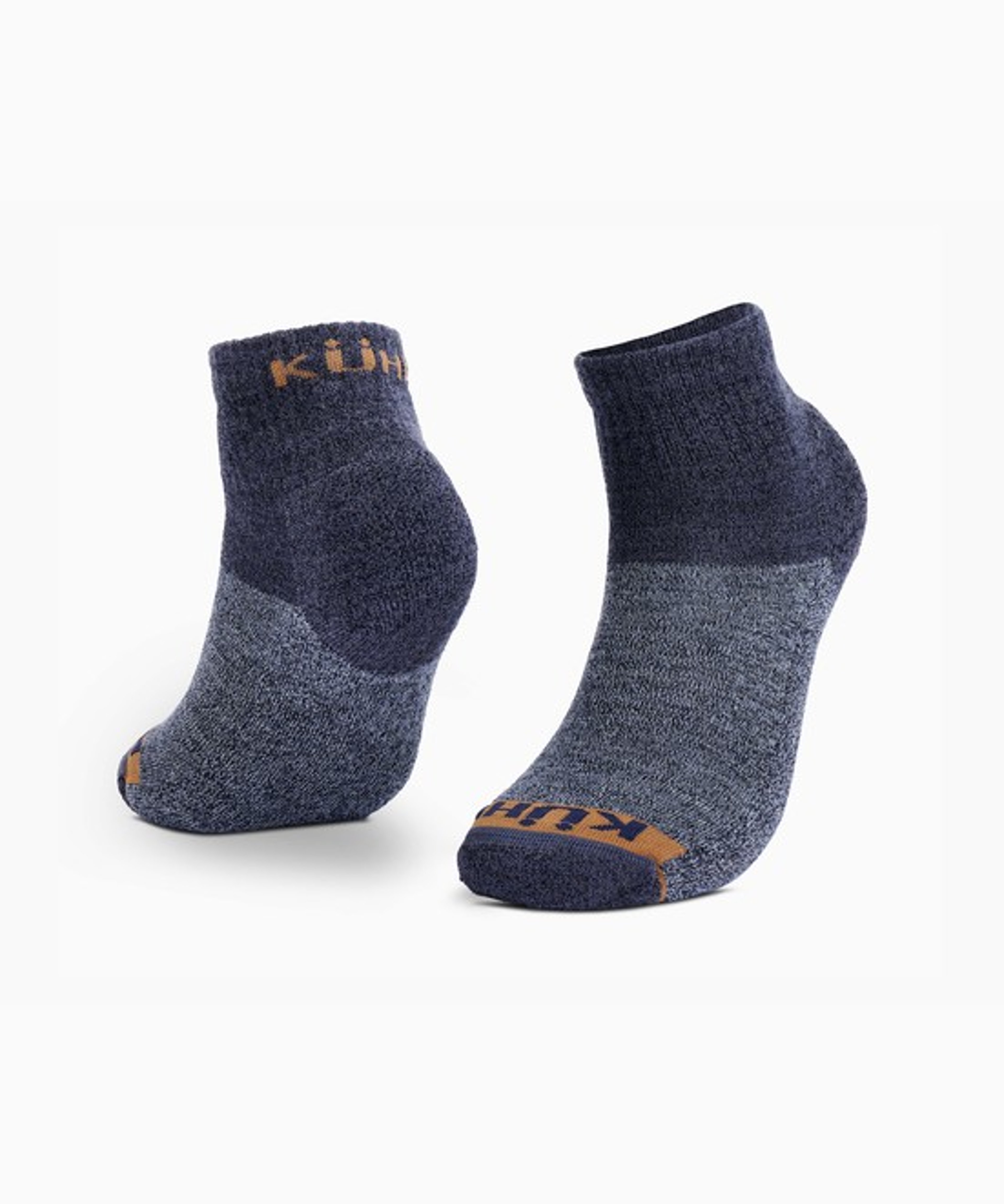
Midweight Quarter Socks. Ultra-fine merino paired with durable nylon delivers temperature-regulating comfort and superior longevity. Medium cushion at the ankle softens every step inside hiking boots and trail runners, while the quarter height keeps the cuff just above the collar of a mid-cut boot, out of sight, out of the way.
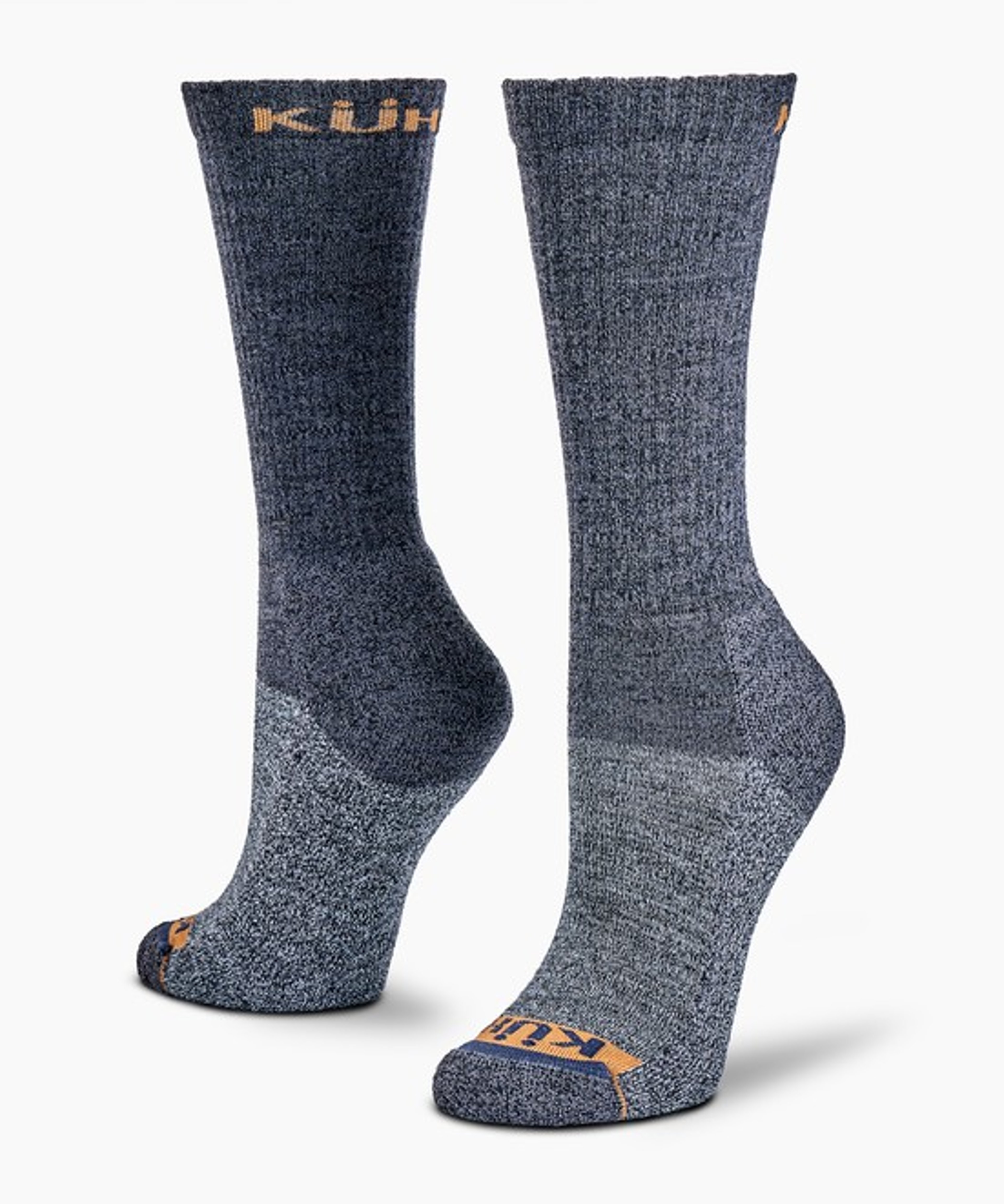
Midweight Crew Socks. The same merino-and-nylon construction in a taller crew height. Crew length adds coverage against debris on overgrown trails, against the cuff of a ski boot, and against the chill on shoulder-season mornings. Medium cushion underfoot, breathable knit up top.
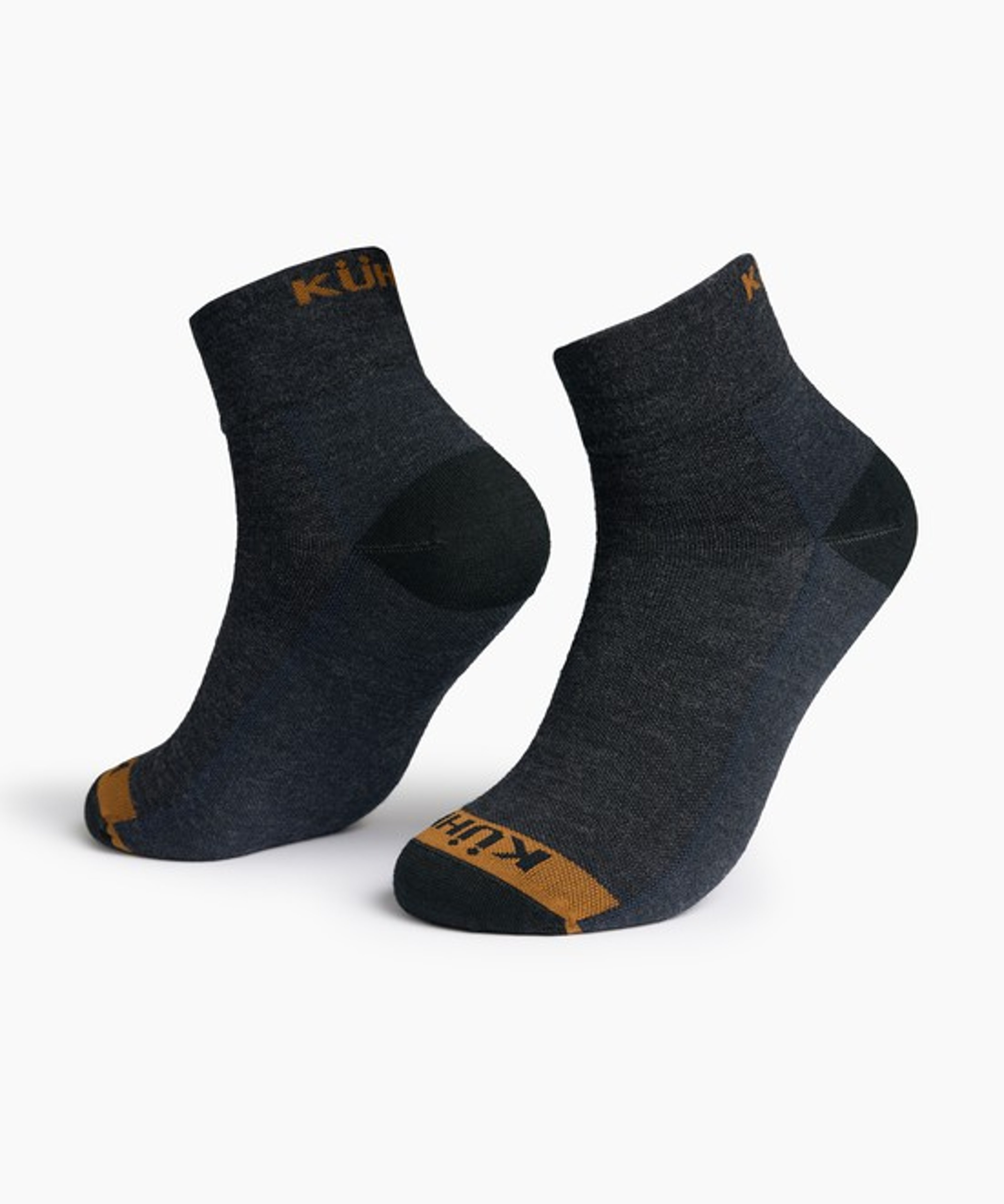
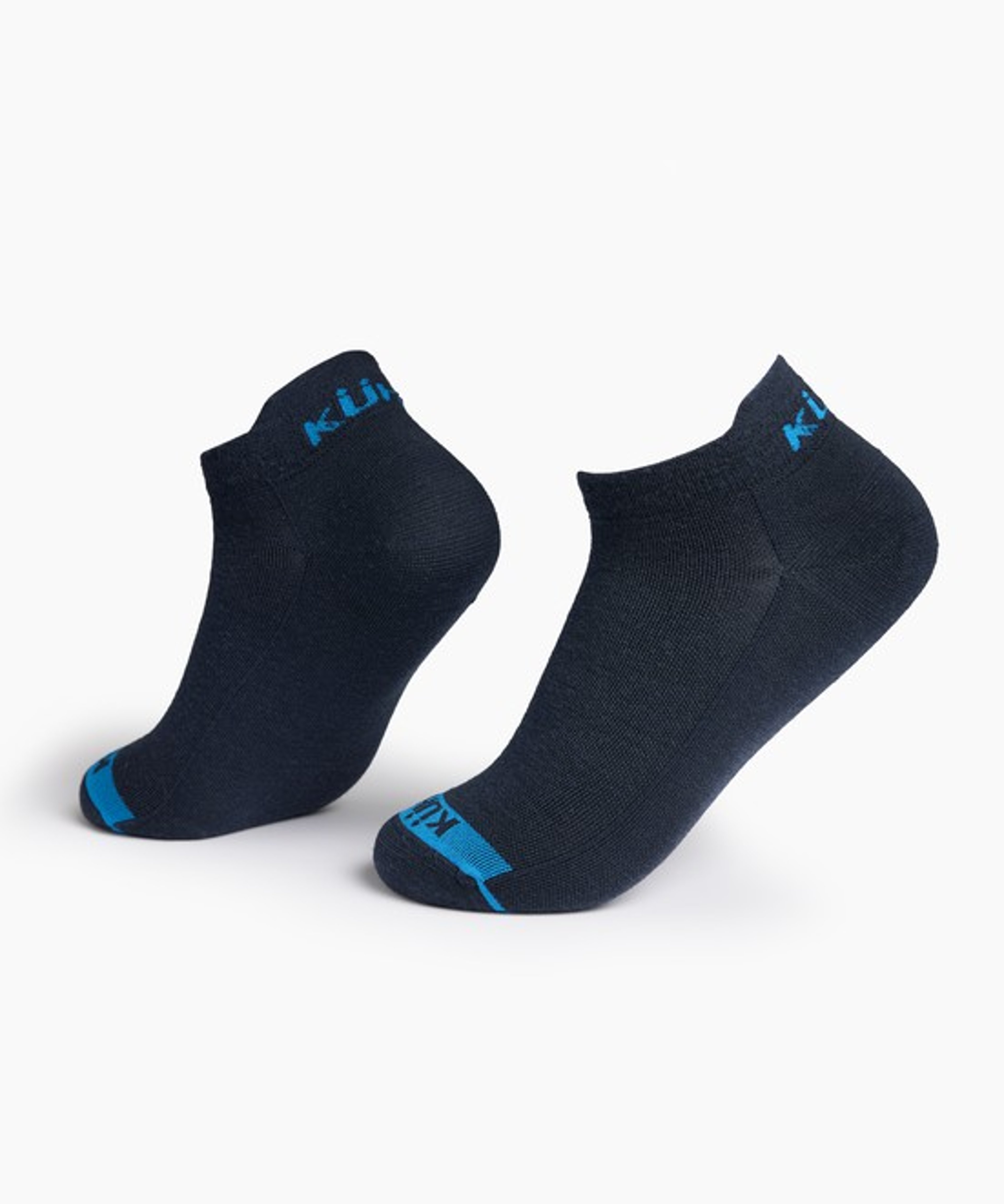
Lightweight Performance Socks. Ultra-soft, breathable, and built for warm-weather miles. Ultra-fine merino is the headliner (softer against the skin than standard wool) and a measured amount of nylon adds the durability needed for repeated washes. Lycra knit into the arch and cuff locks the sock in place so it doesn't slip into the boot mid-stride.
Why Merino. Merino wool is the workhorse fiber on a serious sock for one reason: it regulates. It insulates when the air is cold, breathes when it's warm, wicks moisture off the foot, and resists odor between washes. Build it into a trekking and expedition kit and it becomes the layer you forget about, which is exactly the point.
Look for signature touches across every pair: smooth toe seams to prevent blisters, reinforced heel and toe zones for the high-wear miles, and a snug arch band that keeps the sock paired with the foot, not the boot. Round the system out with a wide-brim from our hat collection and the small things stop being afterthoughts.
Whether you're logging miles on the trail, packing for a winter ascent, or stacking errands in town, the right sock decides how the day ends. Choose from a variety of weights, heights, and cushioning levels for the socks that match how you move:
Midweight Quarter Socks. Ultra-fine merino paired with durable nylon delivers temperature-regulating comfort and superior longevity. Medium cushion at the ankle softens every step inside hiking boots and trail runners, while the quarter height keeps the cuff just above the collar of a mid-cut boot, out of sight, out of the way.
Midweight Crew Socks. The same merino-and-nylon construction in a taller crew height. Crew length adds coverage against debris on overgrown trails, against the cuff of a ski boot, and against the chill on shoulder-season mornings. Medium cushion underfoot, breathable knit up top.
Lightweight Performance Socks. Ultra-soft, breathable, and built for warm-weather miles. Ultra-fine merino is the headliner (softer against the skin than standard wool) and a measured amount of nylon adds the durability needed for repeated washes. Lycra knit into the arch and cuff locks the sock in place so it doesn't slip into the boot mid-stride.
Why Merino. Merino wool is the workhorse fiber on a serious sock for one reason: it regulates. It insulates when the air is cold, breathes when it's warm, wicks moisture off the foot, and resists odor between washes. Build it into a trekking and expedition kit and it becomes the layer you forget about, which is exactly the point.
Look for signature touches across every pair: smooth toe seams to prevent blisters, reinforced heel and toe zones for the high-wear miles, and a snug arch band that keeps the sock paired with the foot, not the boot. Round the system out with a wide-brim from our hat collection and the small things stop being afterthoughts.
Find the right merino-blend sock for your boot, your season, and your miles, from lightweight summer styles to midweight crew for cold-weather days.
What should you look for in socks?
The best technical socks check four key boxes: a fiber blend tuned to the conditions, the right cushion for the boot, a fit that stays put, and enough durability to outlast the gear they live inside.
For trail and travel use, lead with merino wool. Merino regulates temperature in heat and cold, wicks sweat off the foot, and resists odor across multi-day trips. Add nylon for abrasion resistance, the heel and toe see the most wear, and a touch of Lycra around the arch for a no-slip fit. From there, match cushion to load: lightweight for warm-weather miles in trail runners, midweight for mid-cut hiking boots and shoulder-season days, heavier knits for cold and stiff boots. If you're outfitting a cold-weather kit, our ski collection is the natural place to start matching crew socks to insulating layers.
For trail and travel use, lead with merino wool. Merino regulates temperature in heat and cold, wicks sweat off the foot, and resists odor across multi-day trips. Add nylon for abrasion resistance, the heel and toe see the most wear, and a touch of Lycra around the arch for a no-slip fit. From there, match cushion to load: lightweight for warm-weather miles in trail runners, midweight for mid-cut hiking boots and shoulder-season days, heavier knits for cold and stiff boots. If you're outfitting a cold-weather kit, our ski collection is the natural place to start matching crew socks to insulating layers.
How important is UPF protection?
UPF protection matters less on socks than it does on the rest of your kit, because socks are almost always covered by a boot or shoe. The exception is low-cut summer styles worn with trail runners on exposed alpine routes. There, a tight-knit fabric blocks more incidental UV than a loose-knit one, but the surface area is small enough that the real sun-defense battles are fought by what your hat and sleeves cover, not what's tucked inside your boot.
How should socks fit, snug or loose?
Socks should fit snug enough that they don't bunch inside the boot, but never so tight that they cut circulation at the calf or arch. The arch band is the single most important fit feature on a technical sock. It locks the knit against the foot so the sock moves as one piece with the boot, not separately.
For midweight crew styles, the cuff should sit flat against the calf without digging in. For lightweight quarter styles, the cuff should clear the boot collar so it doesn't get pinched at the ankle. A blend of merino, nylon, and Lycra delivers the right combination of stretch and recovery. Lycra in particular is what keeps the sock from sagging by mile ten.
For midweight crew styles, the cuff should sit flat against the calf without digging in. For lightweight quarter styles, the cuff should clear the boot collar so it doesn't get pinched at the ankle. A blend of merino, nylon, and Lycra delivers the right combination of stretch and recovery. Lycra in particular is what keeps the sock from sagging by mile ten.
Are socks good for hot vs cold weather?
Yes. The trick is matching weight, height, and fiber to the conditions, not buying one sock for every season.
For hot weather, choose a lightweight merino blend in a quarter or low-cut height. Ultra-fine merino wicks sweat off the foot, dries faster than cotton, and resists the bacteria that cause stink on multi-day trips. For cold weather, step up to a midweight crew with medium cushion at the ankle and a higher merino content. The same fiber that breathes in the heat insulates in the cold, which is why merino is the default fiber on serious mountain socks. Whatever the season, skip cotton. Cotton holds moisture against the skin and is the fastest route to a blister.
For hot weather, choose a lightweight merino blend in a quarter or low-cut height. Ultra-fine merino wicks sweat off the foot, dries faster than cotton, and resists the bacteria that cause stink on multi-day trips. For cold weather, step up to a midweight crew with medium cushion at the ankle and a higher merino content. The same fiber that breathes in the heat insulates in the cold, which is why merino is the default fiber on serious mountain socks. Whatever the season, skip cotton. Cotton holds moisture against the skin and is the fastest route to a blister.
What materials work best for socks?
Ultra-fine merino wool, nylon, and Lycra is the trio that does the heavy lifting on technical socks, and each fiber has a job.
Merino regulates temperature, wicks moisture, and resists odor without itch. Nylon is the durability fiber: it goes into the heel, the toe, and the high-abrasion zones where a pure-wool sock would wear thin in a season. Lycra is the fit fiber: a small percentage knitted into the arch and cuff is what gives the sock its snap-back and keeps it from sliding into the boot. Avoid pure cotton for any hard-output day. It absorbs sweat, dries slowly, and creates the wet-skin friction that causes blisters. If you're packing a travel and gear bag for a long trip, two or three pairs of merino-blend socks beats a drawer full of cotton ones.
Merino regulates temperature, wicks moisture, and resists odor without itch. Nylon is the durability fiber: it goes into the heel, the toe, and the high-abrasion zones where a pure-wool sock would wear thin in a season. Lycra is the fit fiber: a small percentage knitted into the arch and cuff is what gives the sock its snap-back and keeps it from sliding into the boot. Avoid pure cotton for any hard-output day. It absorbs sweat, dries slowly, and creates the wet-skin friction that causes blisters. If you're packing a travel and gear bag for a long trip, two or three pairs of merino-blend socks beats a drawer full of cotton ones.