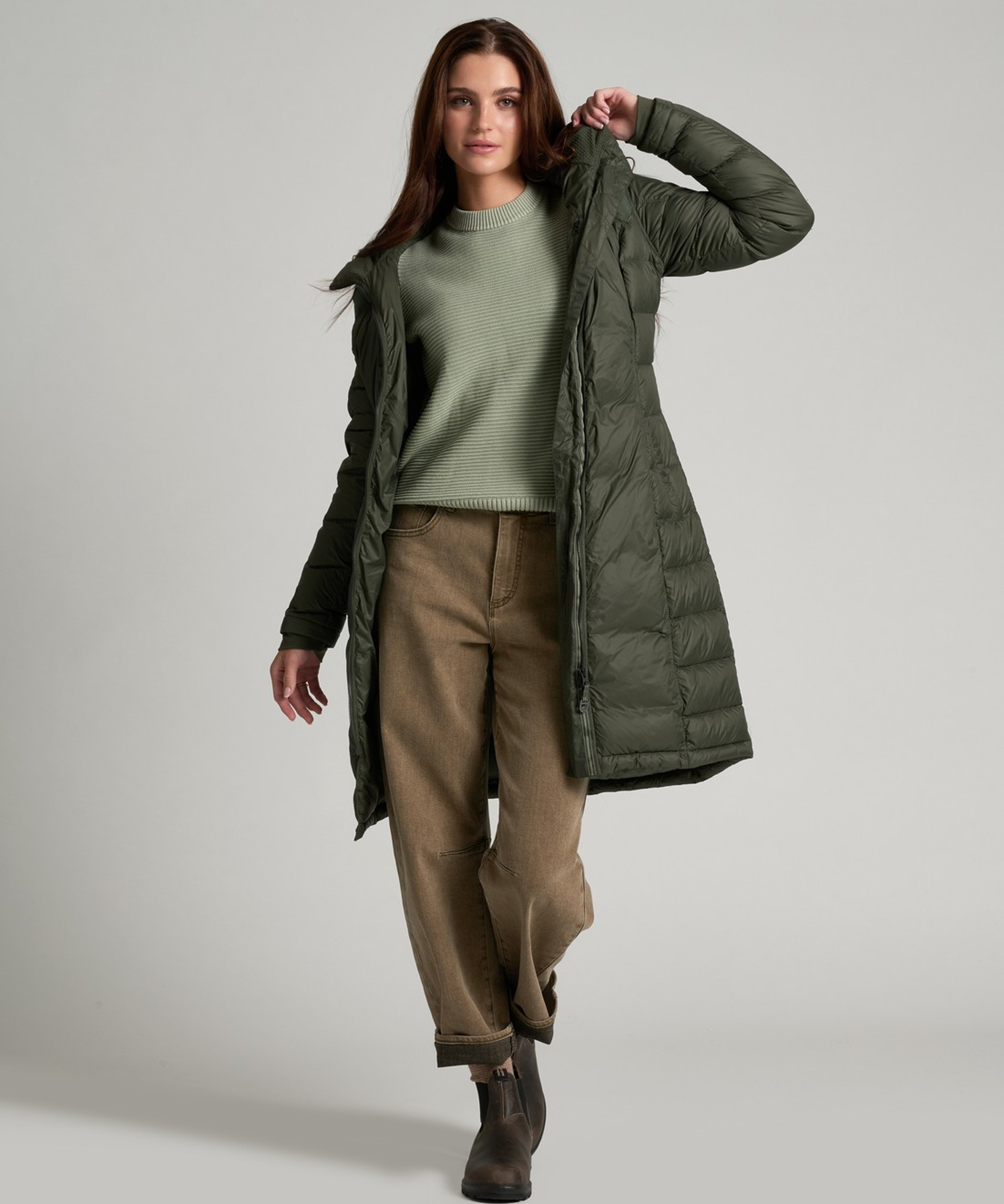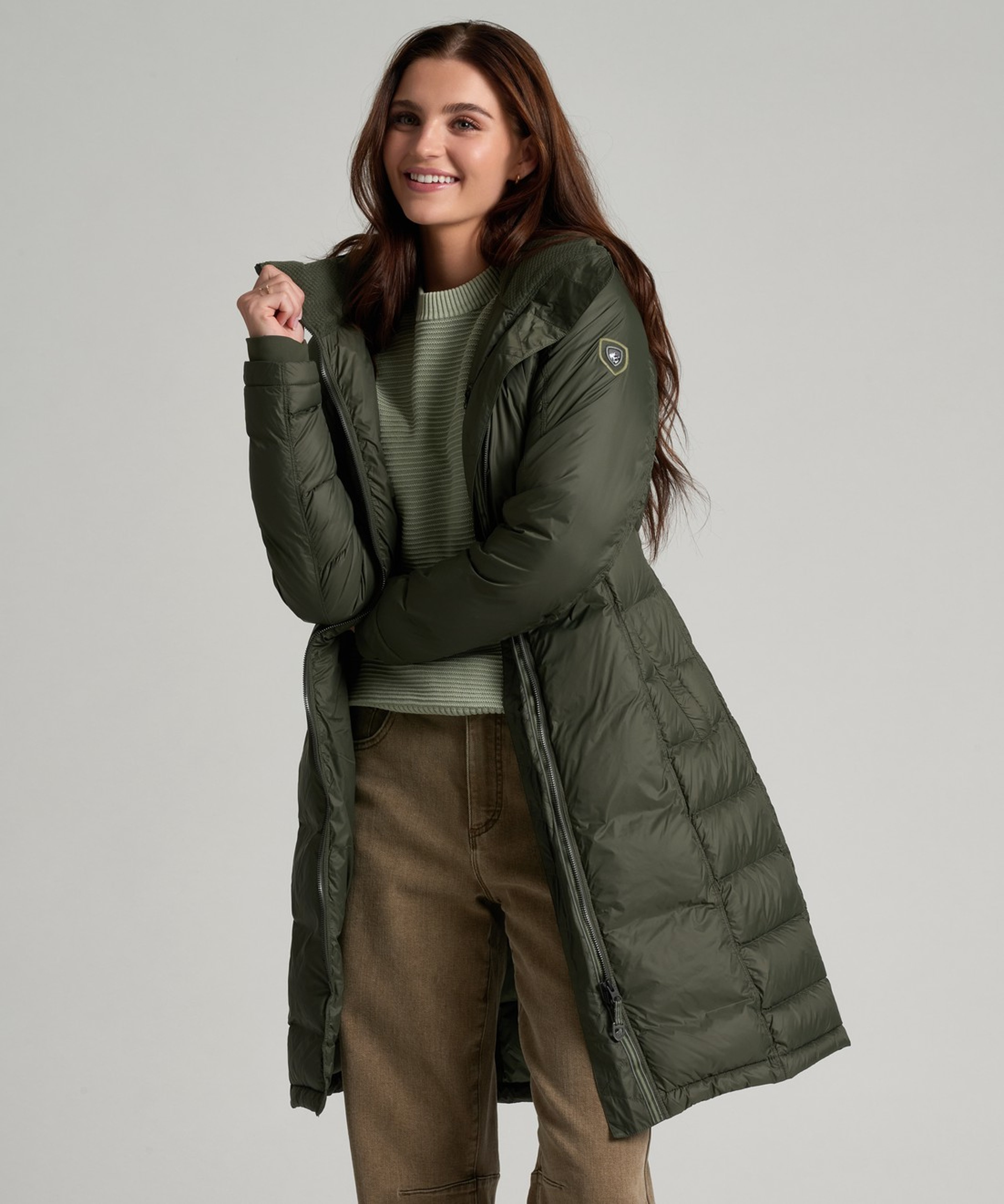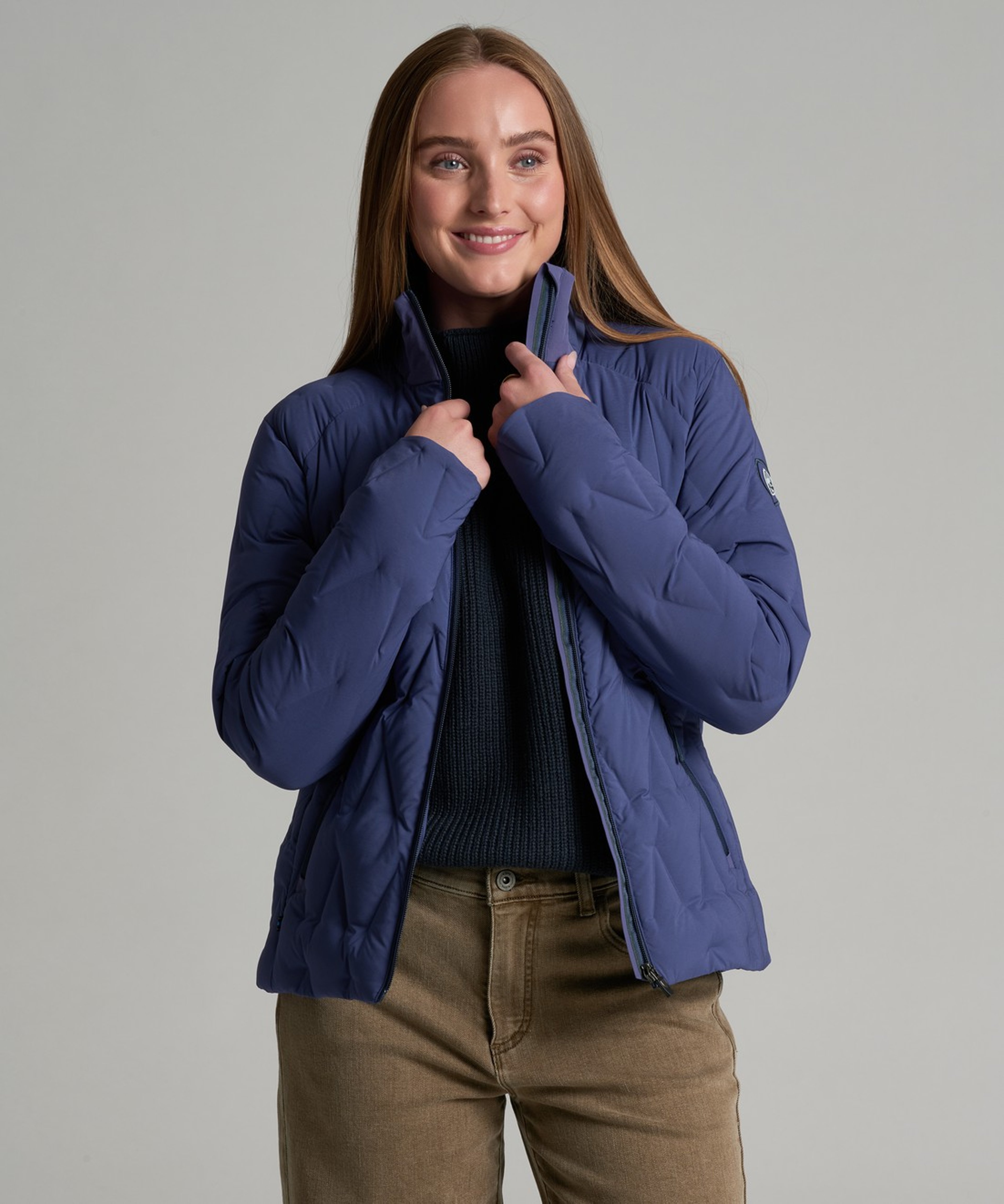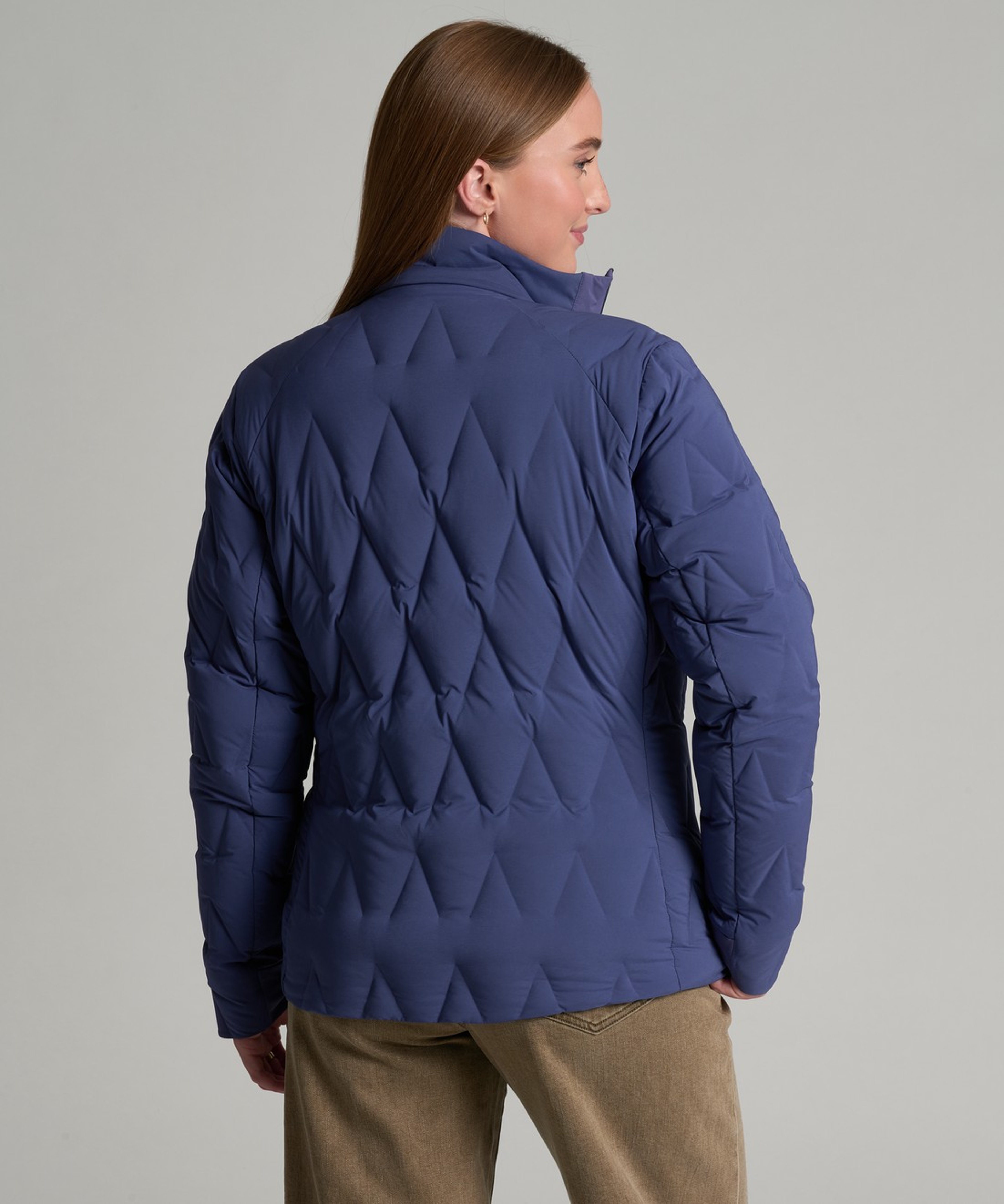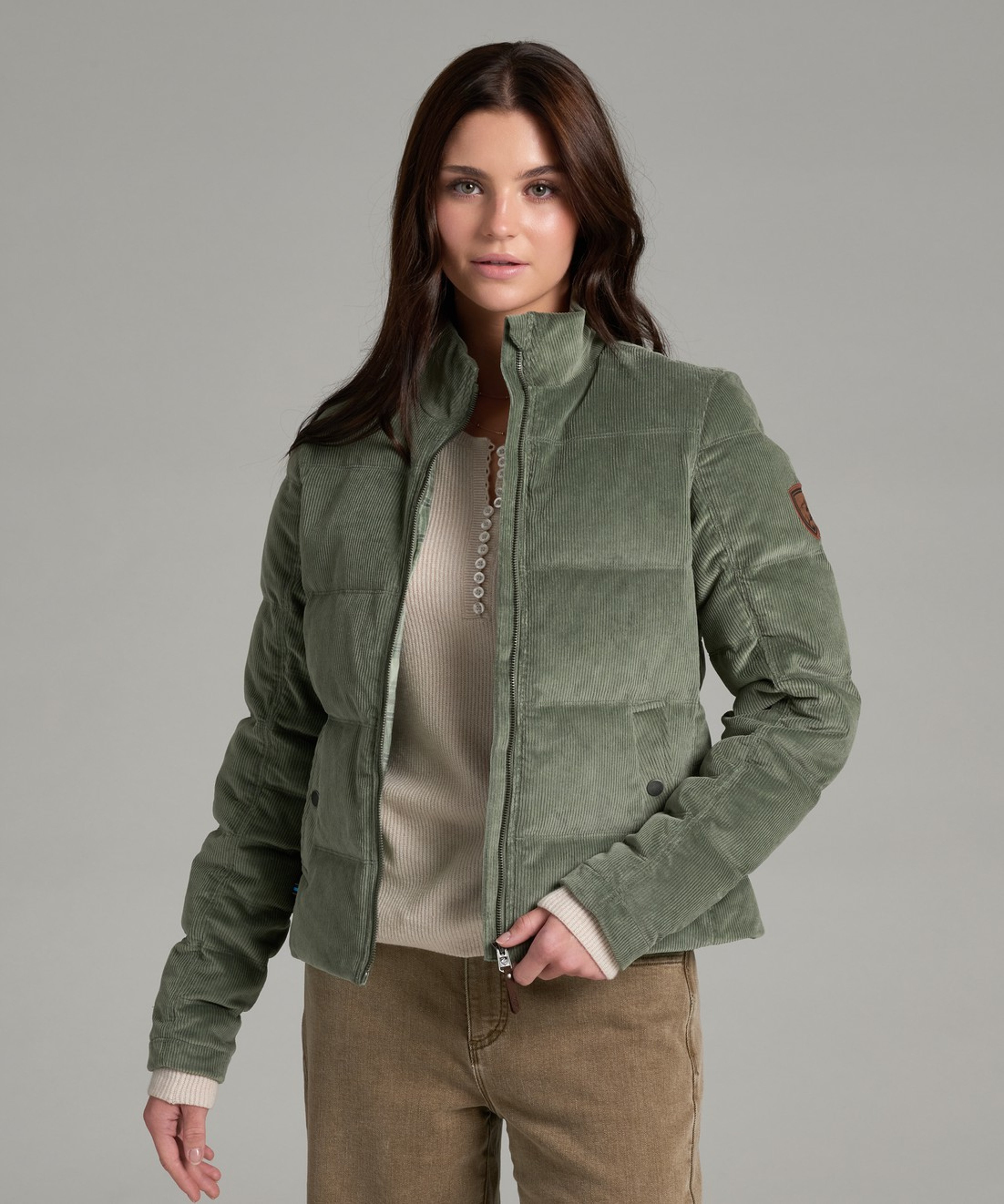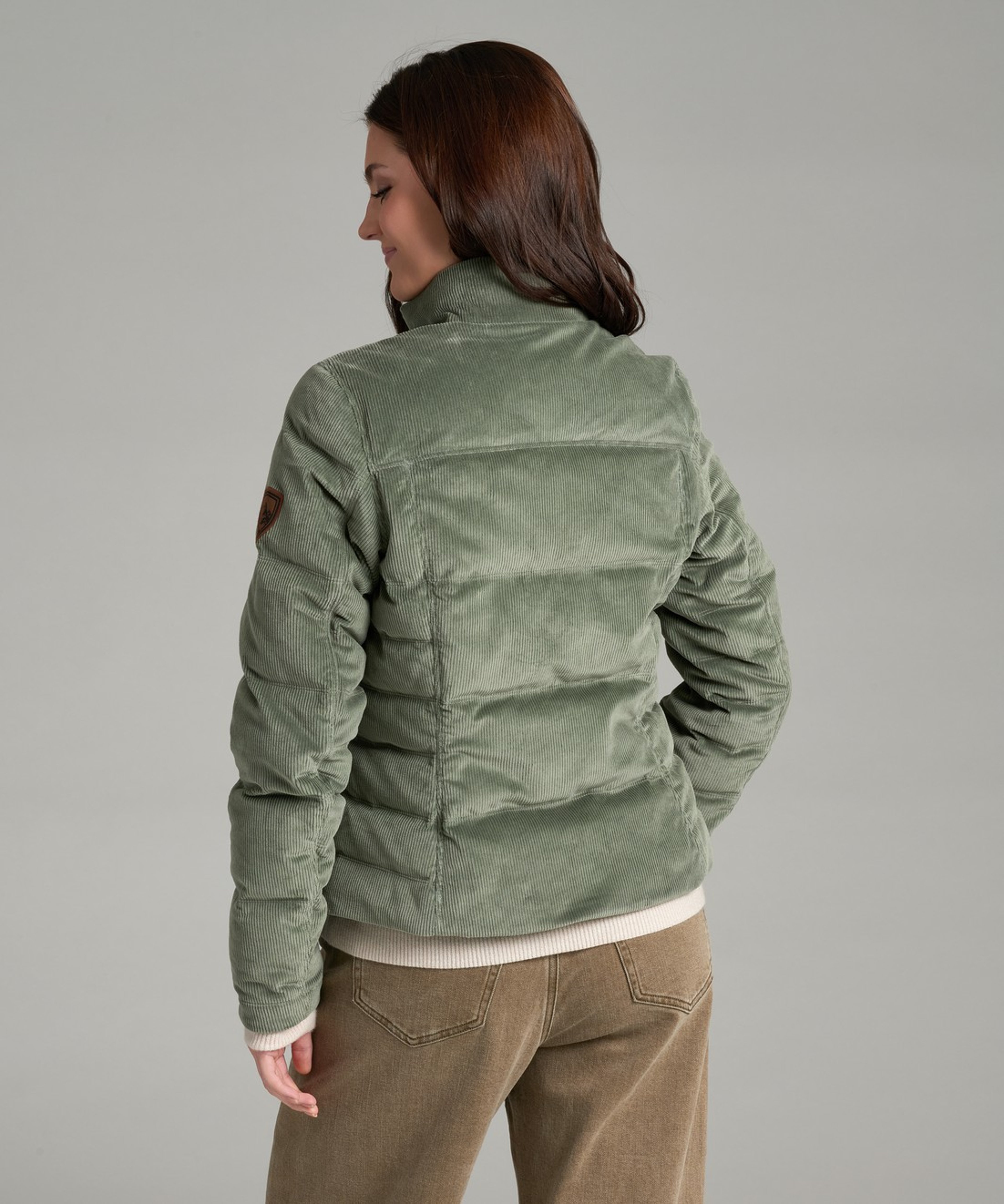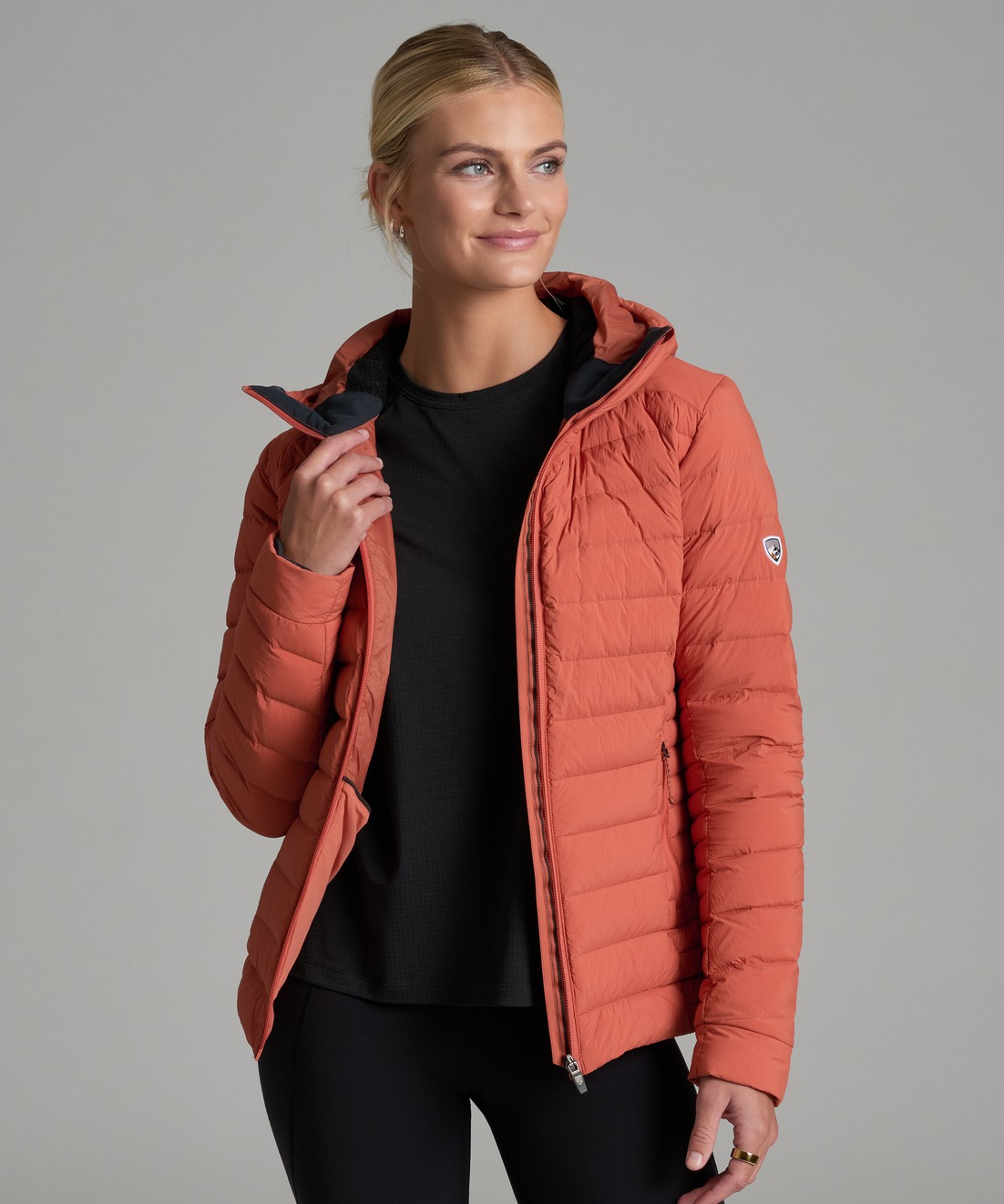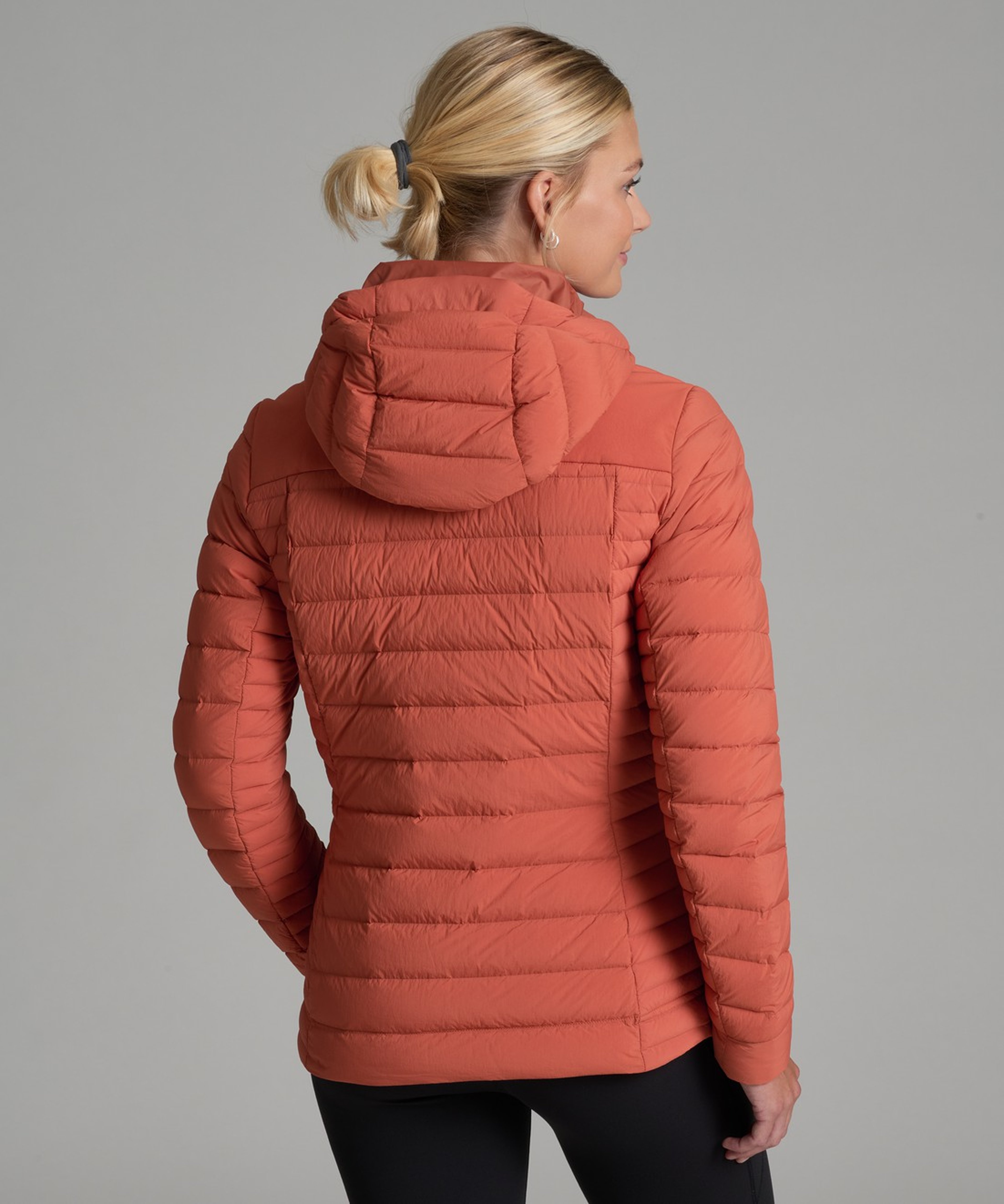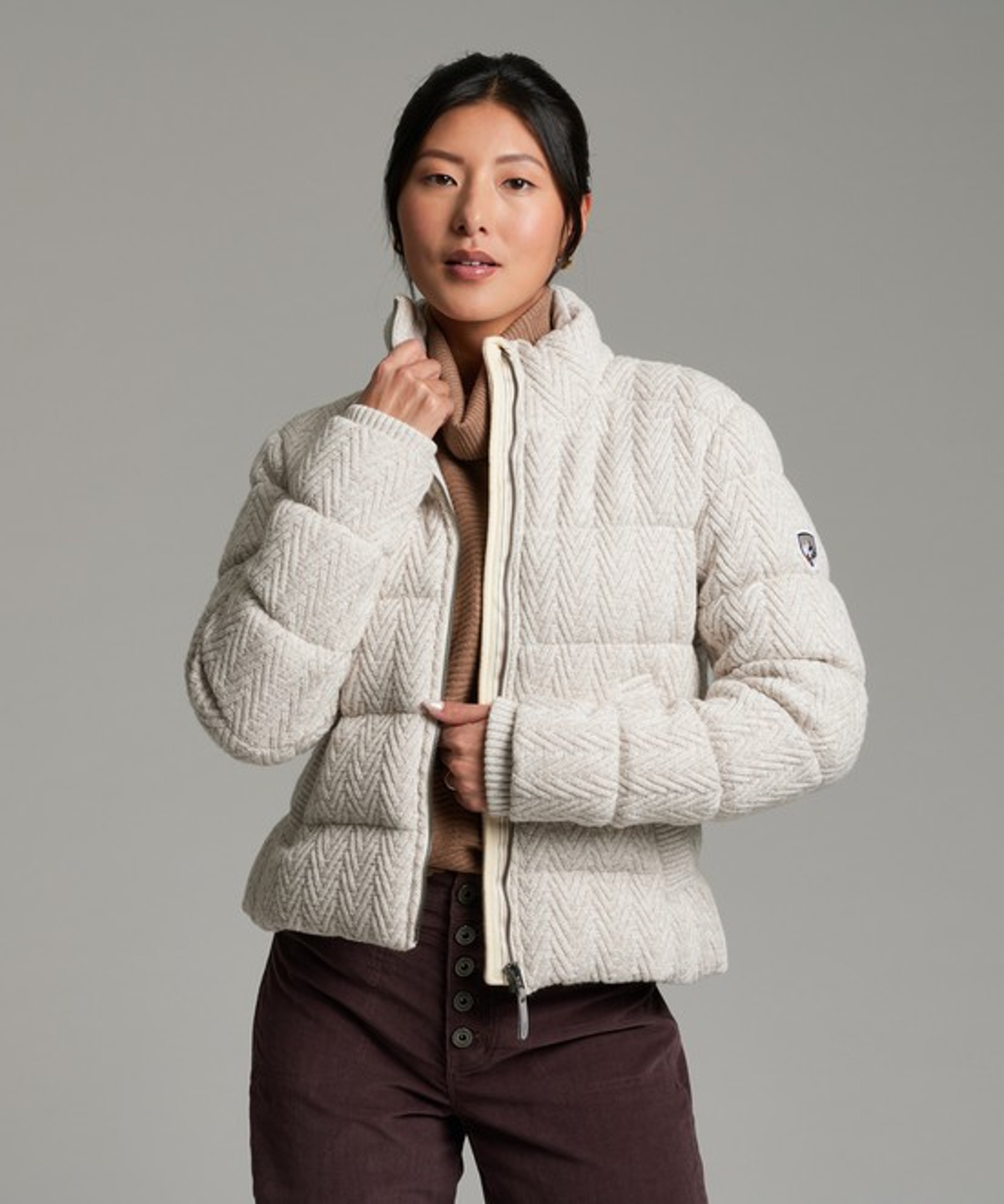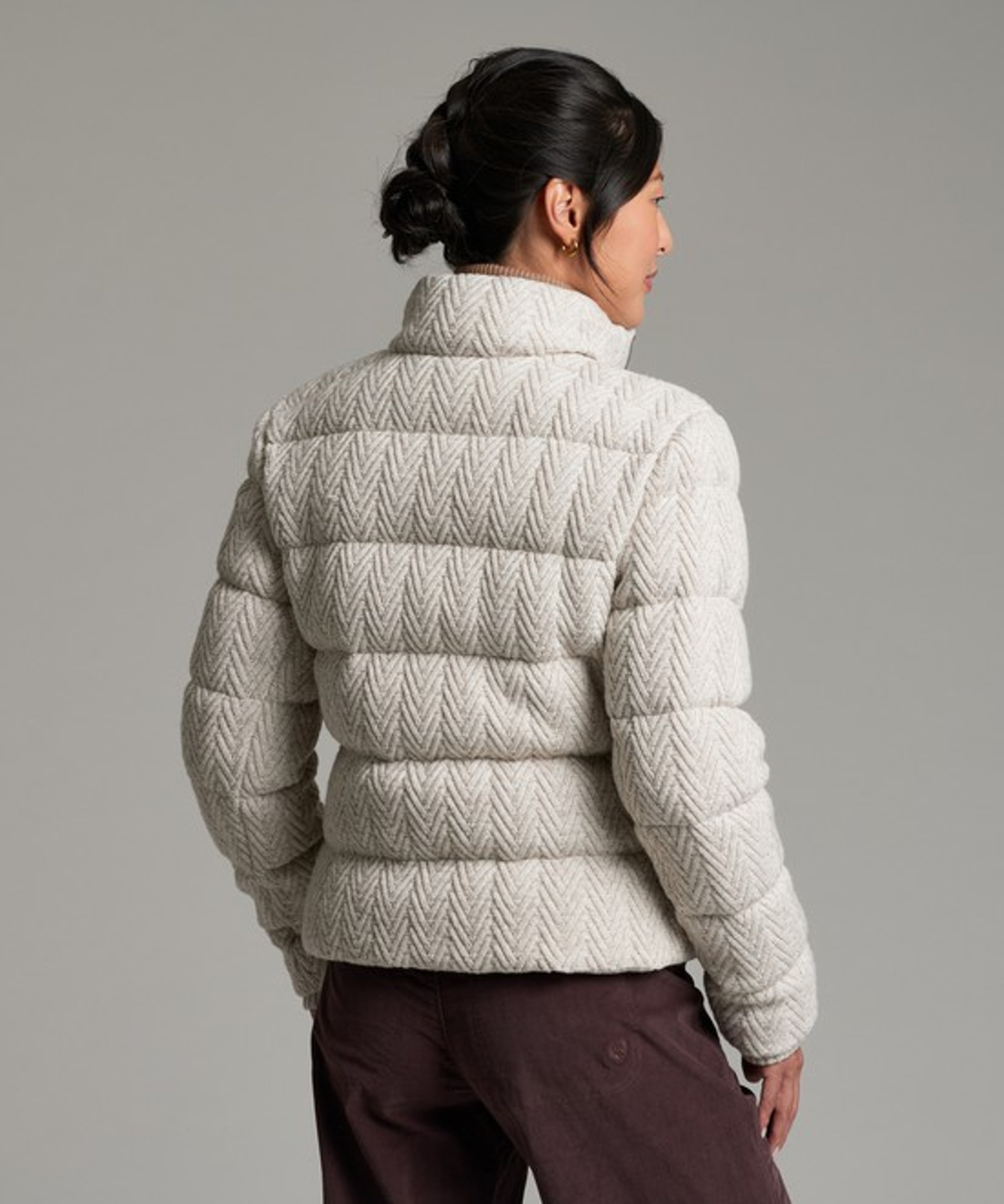









Women's Down Outerwear
Lock in Core Warmth with KÜHL Women's Down Outerwear
Choose from a variety of fills, shells, and silhouettes for the women's down outerwear that matches how and where you wear it:
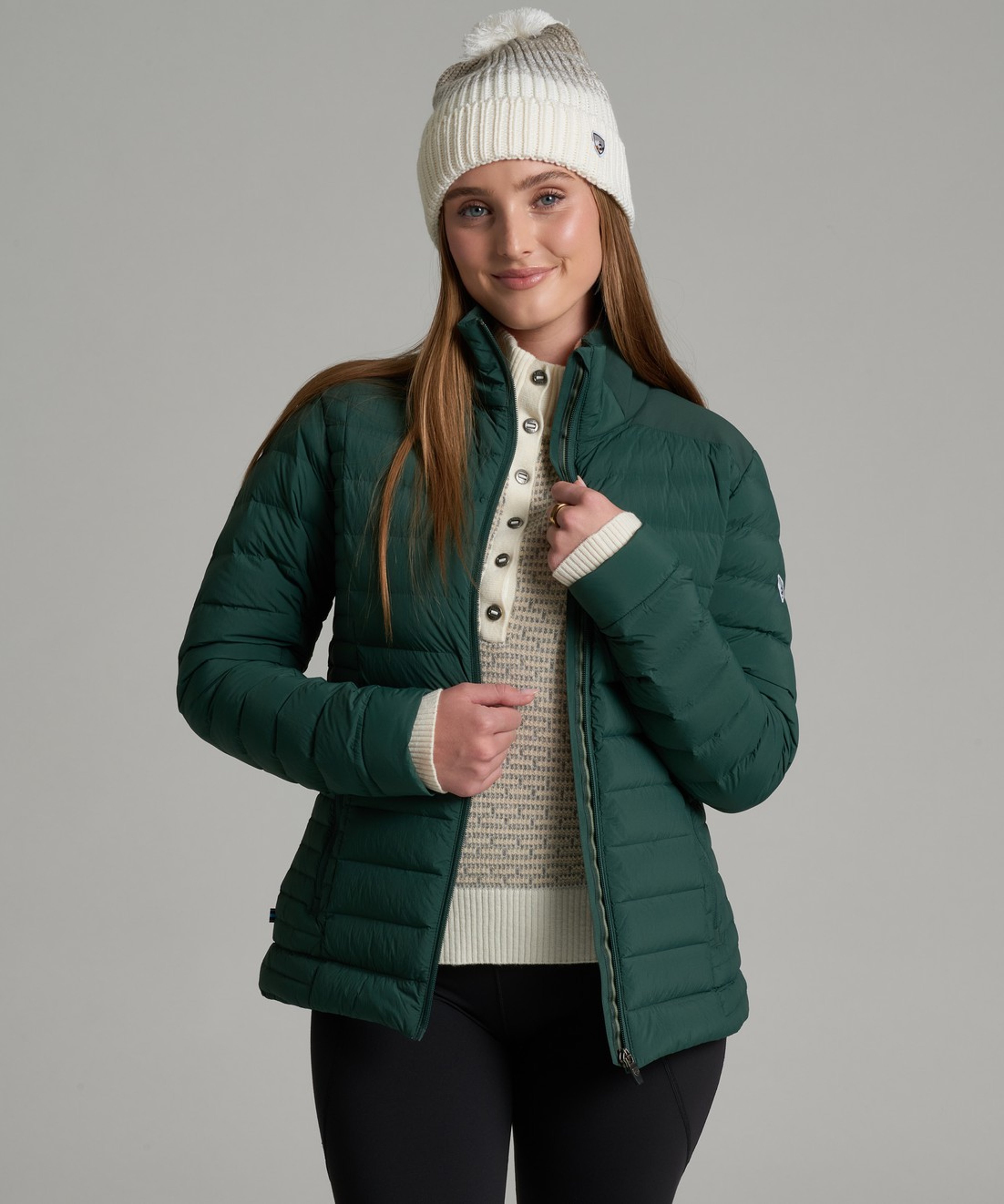
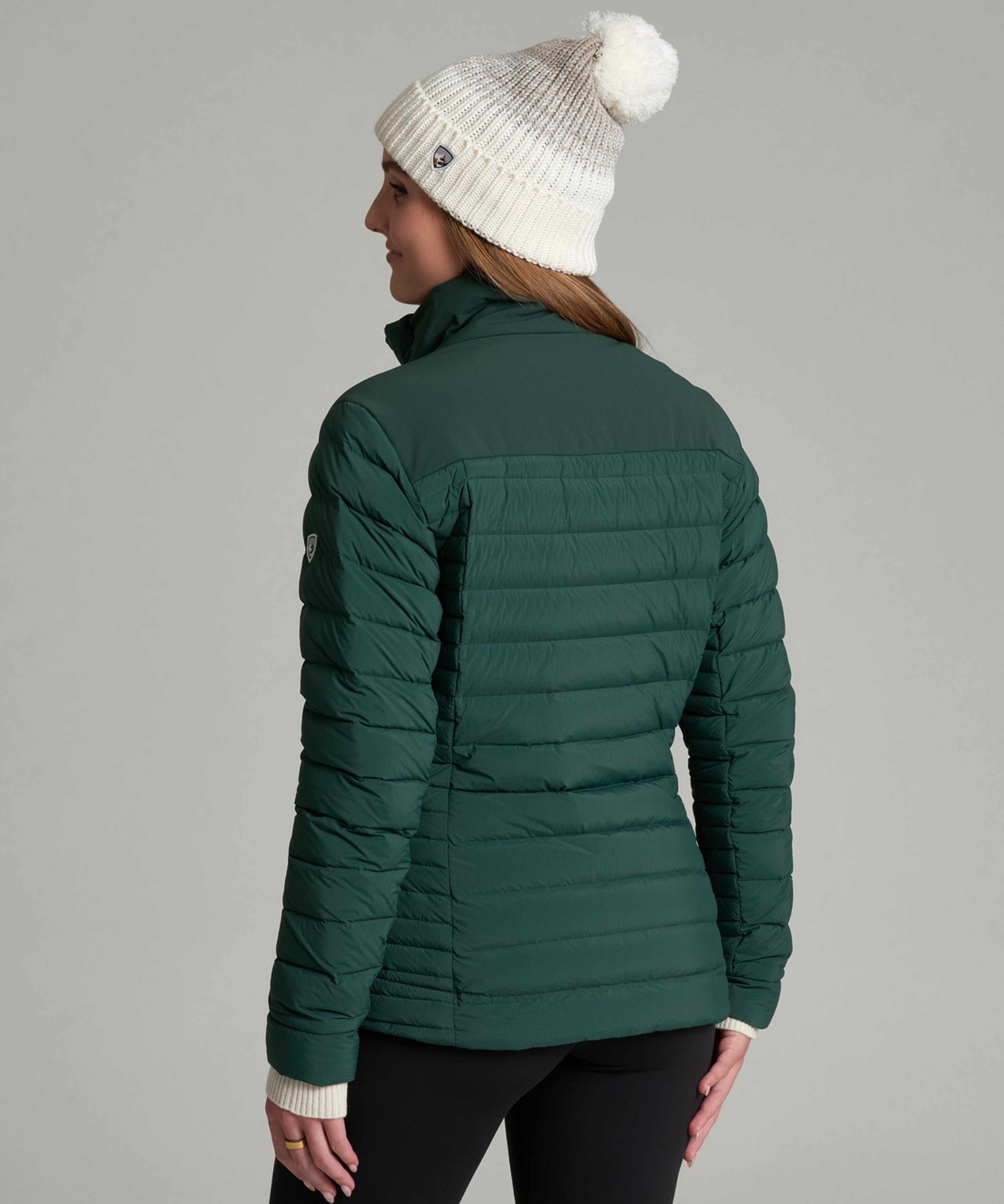
Premium Warmth Where You Need It. Body-mapped construction places more fill at the core and less under the arms, so heat builds where you want it without bulk where you don't. RDS-certified goose down delivers exceptional warmth-to-weight, packing genuine winter warmth into a layer light enough to live in your daypack.
Durable Shells Built to Last. A stretch-woven exterior with a DWR finish sheds light moisture, snow, and trail grime, while reinforced overlays guard the high-wear shoulders, elbows, and hems that take the most abuse from packs and rock. The result is a down piece you can move and scramble in, not one you baby.
Layering-Ready Cuts. Articulated sleeves and a trim-to-relaxed cut leave room for a base layer and a mid-weight fleece without binding at the shoulder or biceps. Pair your down piece with a softshell jacket when wind picks up but rain stays away.
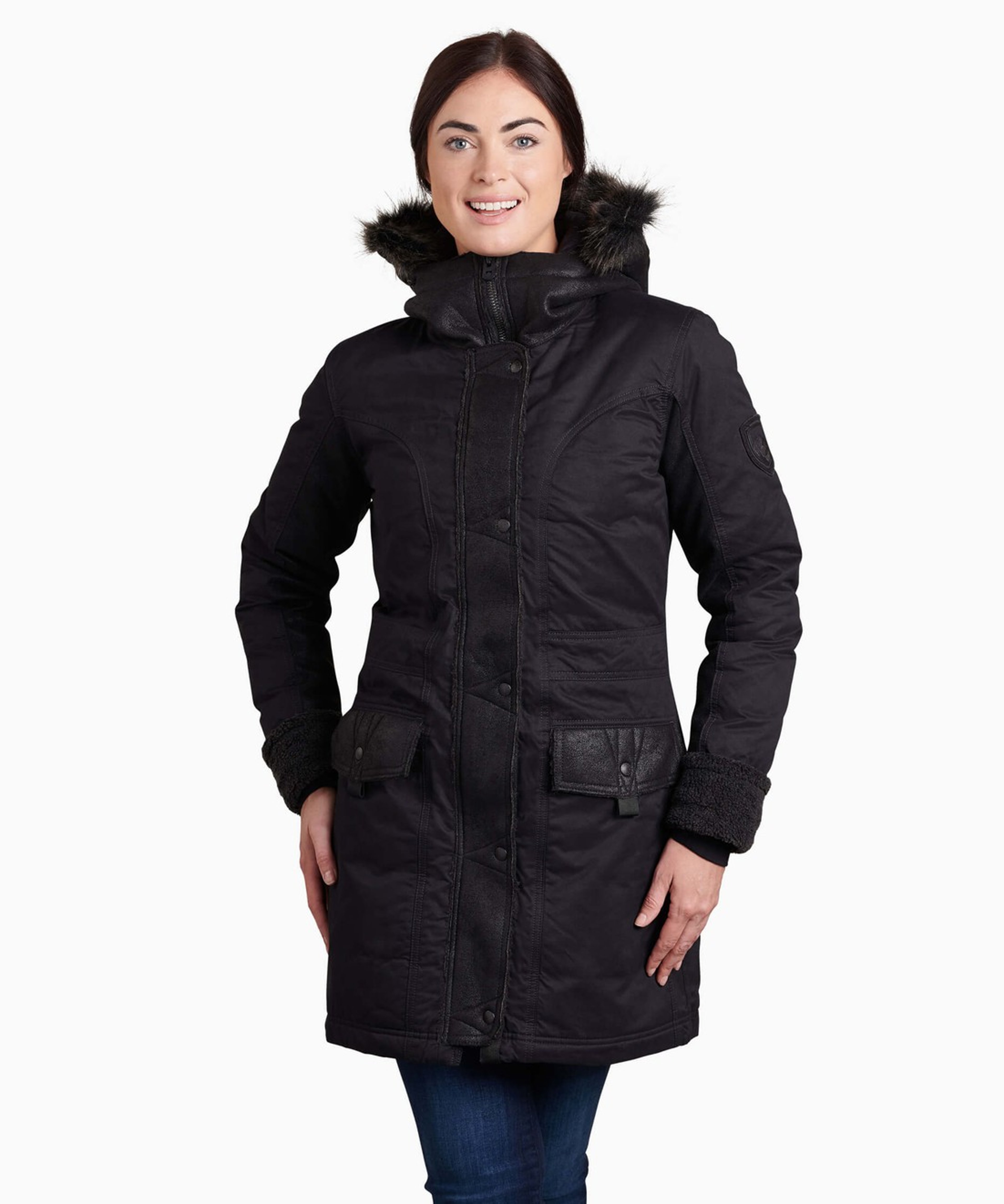
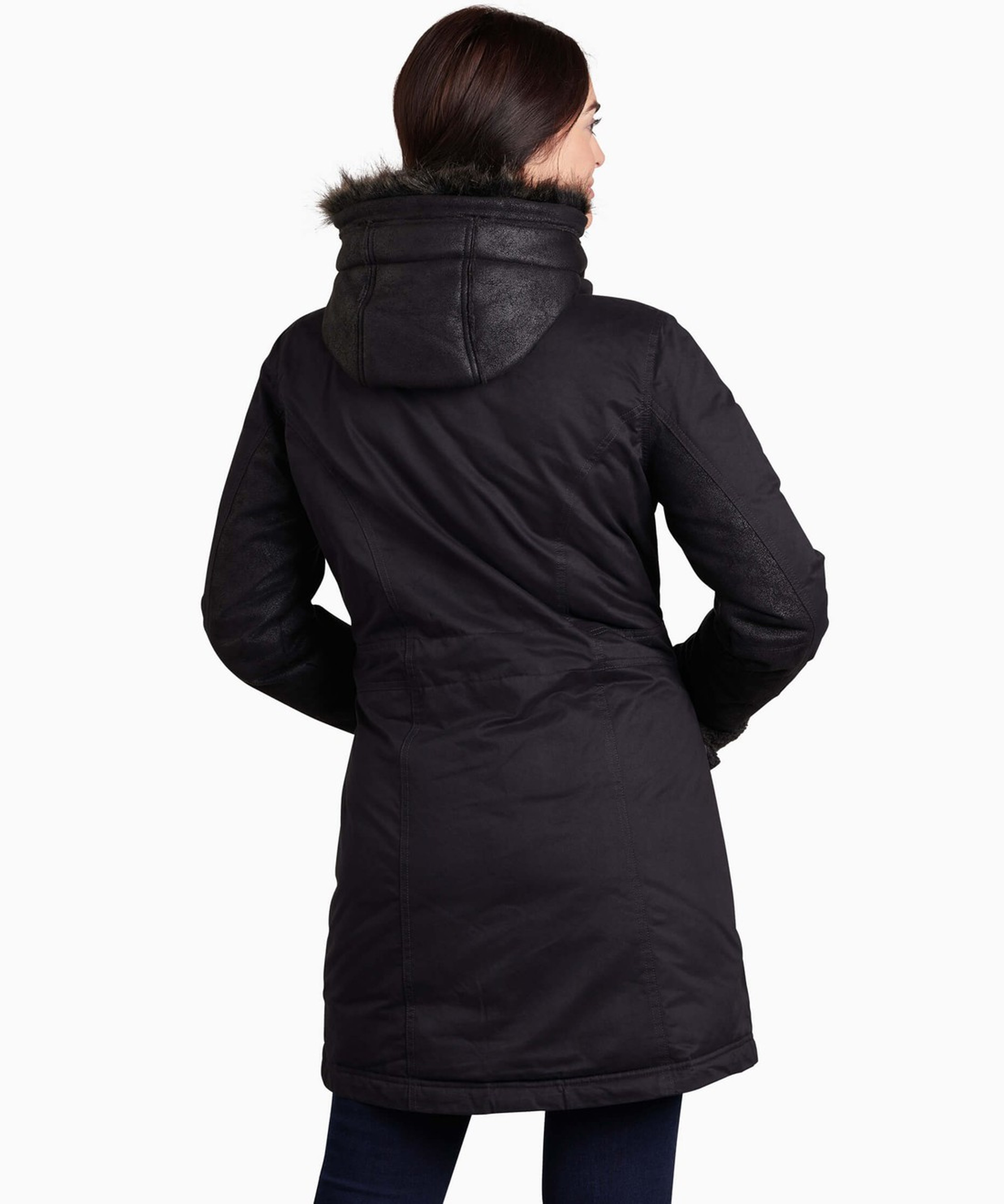
Range of Silhouettes. From mid-weight everyday jackets to deep-winter parkas and packable puffies, the collection covers commute through expedition. If you want core warmth without sleeves, see our women's vests. For milder transitional days, women's fleece layers add breathable warmth at a fraction of the bulk.
When choosing your down outerwear, look for signature touches like helmet-compatible hoods, articulated sleeves, gusseted underarms for ventilation during high-output efforts, and zippered hand pockets set high enough to stay accessible under a hip belt. Hem and cuff adjusters lock the warmth in when temperatures drop.
Choose from a variety of fills, shells, and silhouettes for the women's down outerwear that matches how and where you wear it:
Premium Warmth Where You Need It. Body-mapped construction places more fill at the core and less under the arms, so heat builds where you want it without bulk where you don't. RDS-certified goose down delivers exceptional warmth-to-weight, packing genuine winter warmth into a layer light enough to live in your daypack.
Durable Shells Built to Last. A stretch-woven exterior with a DWR finish sheds light moisture, snow, and trail grime, while reinforced overlays guard the high-wear shoulders, elbows, and hems that take the most abuse from packs and rock. The result is a down piece you can move and scramble in, not one you baby.
Layering-Ready Cuts. Articulated sleeves and a trim-to-relaxed cut leave room for a base layer and a mid-weight fleece without binding at the shoulder or biceps. Pair your down piece with a softshell jacket when wind picks up but rain stays away.
Range of Silhouettes. From mid-weight everyday jackets to deep-winter parkas and packable puffies, the collection covers commute through expedition. If you want core warmth without sleeves, see our women's vests. For milder transitional days, women's fleece layers add breathable warmth at a fraction of the bulk.
When choosing your down outerwear, look for signature touches like helmet-compatible hoods, articulated sleeves, gusseted underarms for ventilation during high-output efforts, and zippered hand pockets set high enough to stay accessible under a hip belt. Hem and cuff adjusters lock the warmth in when temperatures drop.
Find the right women's down outerwear: fill power, shell construction, layering fit, and the features that matter for hiking, travel, and everyday cold.
What should you look for in women's down outerwear?
The best women's down outerwear balances four things: warmth-to-weight, weather protection, layering fit, and durability where you actually wear it.
Look for a high fill-power (650 and up signals premium loft per ounce), a DWR-treated shell to shed light precipitation, an articulated cut that doesn't restrict reach, and reinforced overlays at the shoulders and hips where pack straps abrade. Body-mapped construction (more down at the core, less under the arms) keeps you warm without overheating during output.
Look for a high fill-power (650 and up signals premium loft per ounce), a DWR-treated shell to shed light precipitation, an articulated cut that doesn't restrict reach, and reinforced overlays at the shoulders and hips where pack straps abrade. Body-mapped construction (more down at the core, less under the arms) keeps you warm without overheating during output.
What's the difference between a hardshell, softshell, and insulated jacket?
Hardshells block sustained rain and wind. Softshells trade some weather protection for breathability and stretch. Insulated jackets add warmth.
A hardshell uses a waterproof, breathable membrane with taped seams for downpours and alpine storms. A softshell handles wind, light drizzle, and high-output days where breathability matters more than monsoon-proofing. An insulated jacket, down or synthetic, is your warmth layer, worn alone in dry cold or under a shell when weather turns.
A hardshell uses a waterproof, breathable membrane with taped seams for downpours and alpine storms. A softshell handles wind, light drizzle, and high-output days where breathability matters more than monsoon-proofing. An insulated jacket, down or synthetic, is your warmth layer, worn alone in dry cold or under a shell when weather turns.
How do you choose between down and synthetic insulation?
Choose down when warmth-to-weight and packability matter most. Choose synthetic when wet weather is likely.
Down compresses smaller and provides more warmth per ounce than any synthetic. RDS-certified goose down at 650 to 800 fill is the standard for dry cold, alpine starts, and travel. Synthetic insulation retains more of its warmth when soaked and dries faster, which makes it the safer pick for damp coastal climates or rainforest hiking.
Down compresses smaller and provides more warmth per ounce than any synthetic. RDS-certified goose down at 650 to 800 fill is the standard for dry cold, alpine starts, and travel. Synthetic insulation retains more of its warmth when soaked and dries faster, which makes it the safer pick for damp coastal climates or rainforest hiking.
Is down outerwear waterproof or just water-resistant?
Down outerwear is water-resistant, not waterproof. The shell sheds light moisture but won't stop sustained rain.
Most down pieces use a DWR-finished face fabric that beads off snow flurries and brief showers. For real rain, layer a women's rain jacket over your down piece, or step up to a hardshell-over-insulator system. Once down gets soaked it loses loft and warmth, so keeping it dry is the priority.
Most down pieces use a DWR-finished face fabric that beads off snow flurries and brief showers. For real rain, layer a women's rain jacket over your down piece, or step up to a hardshell-over-insulator system. Once down gets soaked it loses loft and warmth, so keeping it dry is the priority.
How should down outerwear fit for layering?
A well-fitting down piece leaves room for a base layer and a mid-weight fleece underneath without pulling at the shoulders or hem.
Try it on over the layers you actually wear. Sleeves should reach past the wrist when arms are raised overhead, and the hood should clear a beanie or helmet without choking the neck. Articulated sleeves and gusseted underarms preserve reach when scrambling under a pack.
Try it on over the layers you actually wear. Sleeves should reach past the wrist when arms are raised overhead, and the hood should clear a beanie or helmet without choking the neck. Articulated sleeves and gusseted underarms preserve reach when scrambling under a pack.
What features matter most when hiking or backpacking?
For hiking and backpacking, prioritize packability, pack-friendly pocket placement, and ventilation for sustained output.
A jacket that stuffs into its own pocket with a carabiner loop earns its space in your pack. Hand pockets set high above a hip belt stay accessible mid-hike. An adjustable, helmet-compatible hood seals out wind at exposed ridgelines. Underarm gussets vent excess heat on climbs without forcing you to stop and strip layers.
A jacket that stuffs into its own pocket with a carabiner loop earns its space in your pack. Hand pockets set high above a hip belt stay accessible mid-hike. An adjustable, helmet-compatible hood seals out wind at exposed ridgelines. Underarm gussets vent excess heat on climbs without forcing you to stop and strip layers.
New Colors