









Women's Rain Jackets
Weather the Forecast in KÜHL Women's Rain Jackets
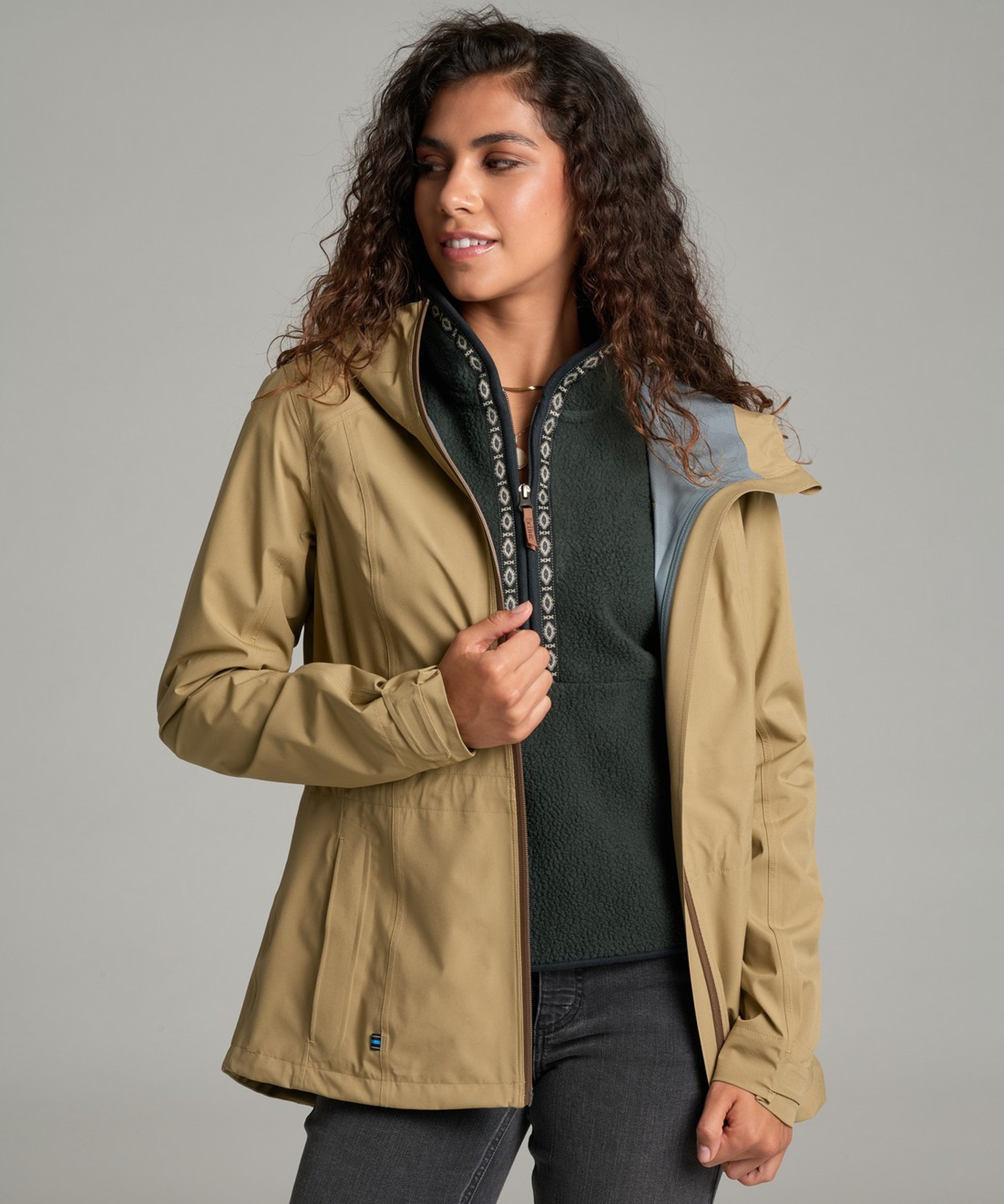
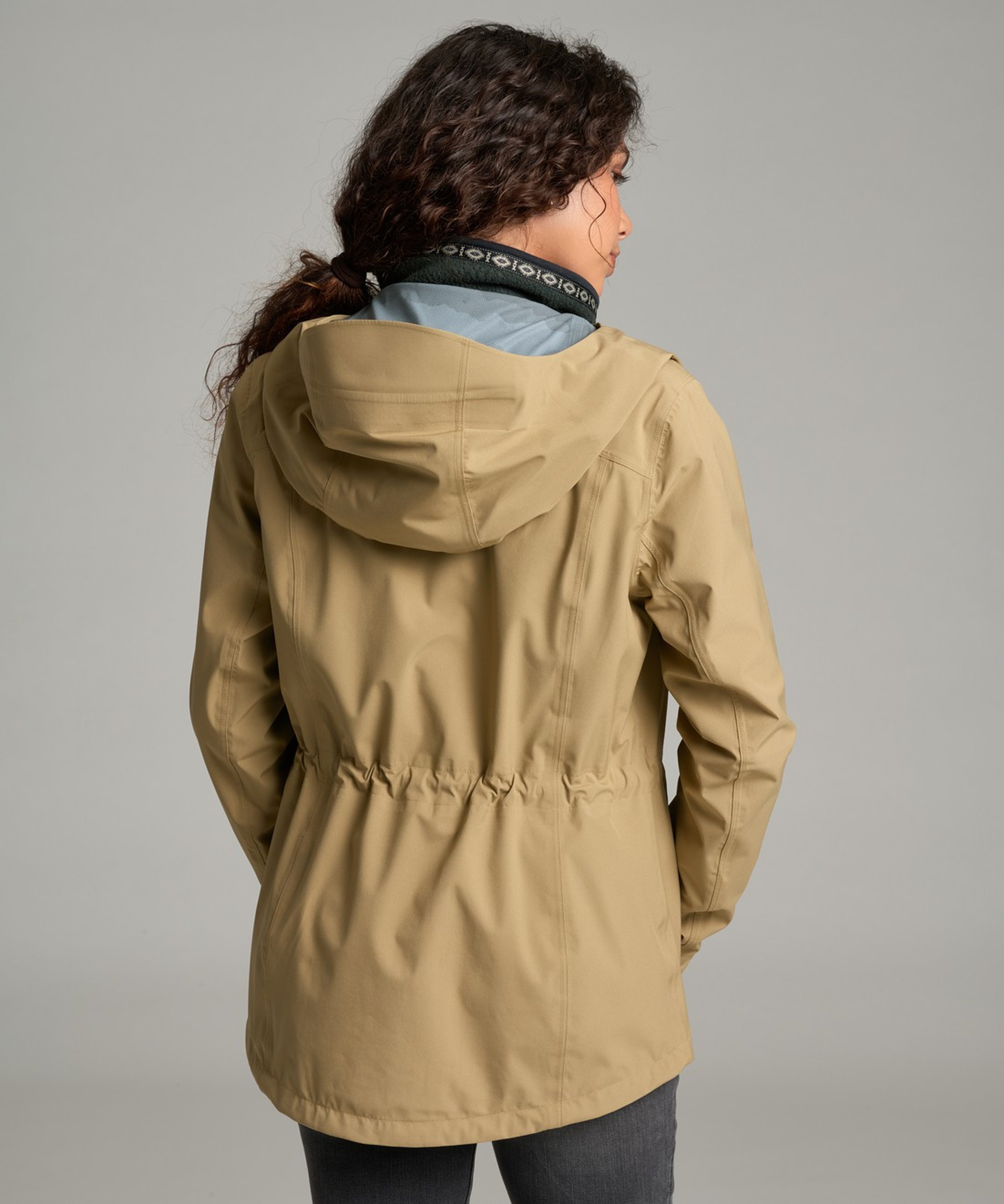
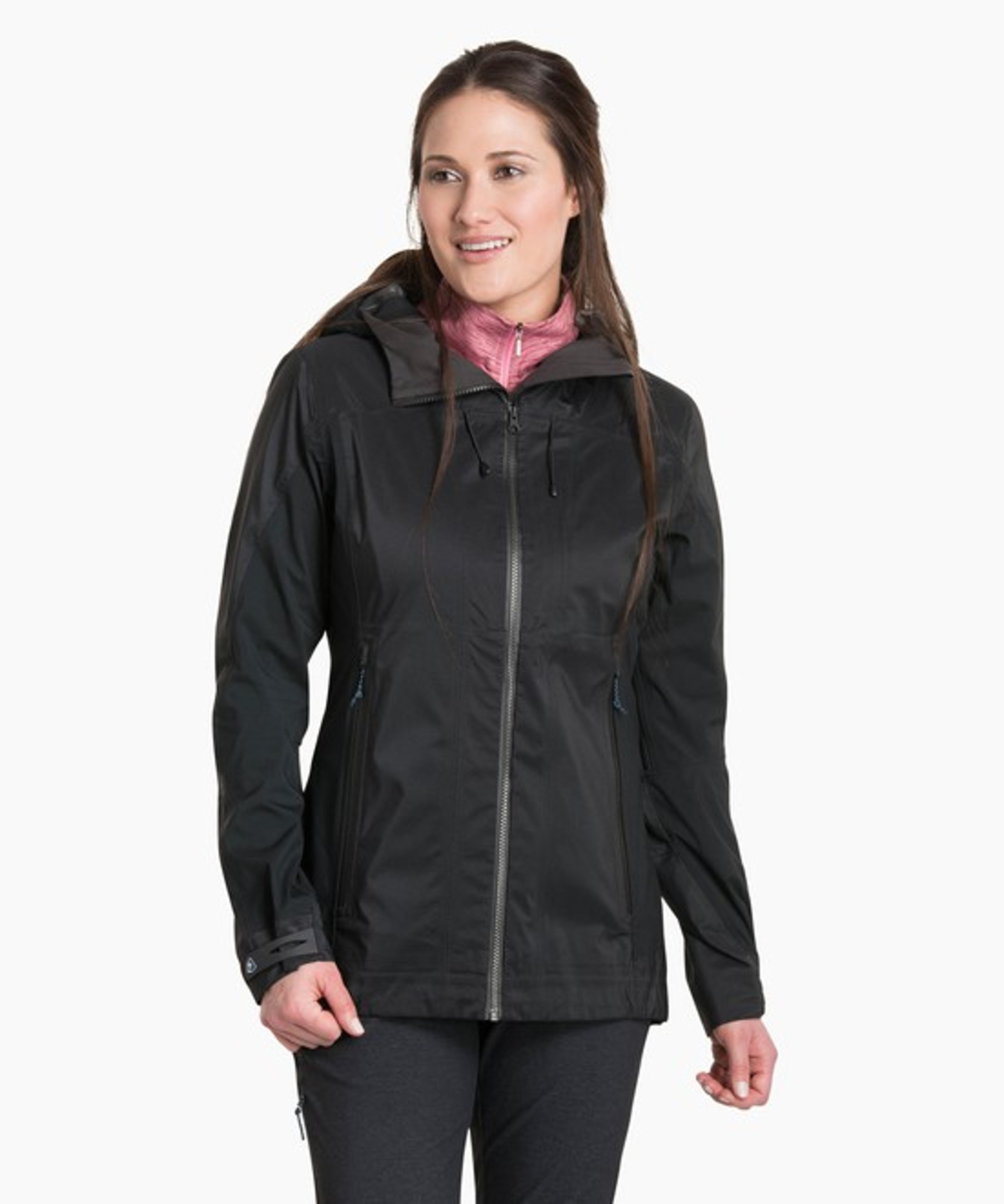
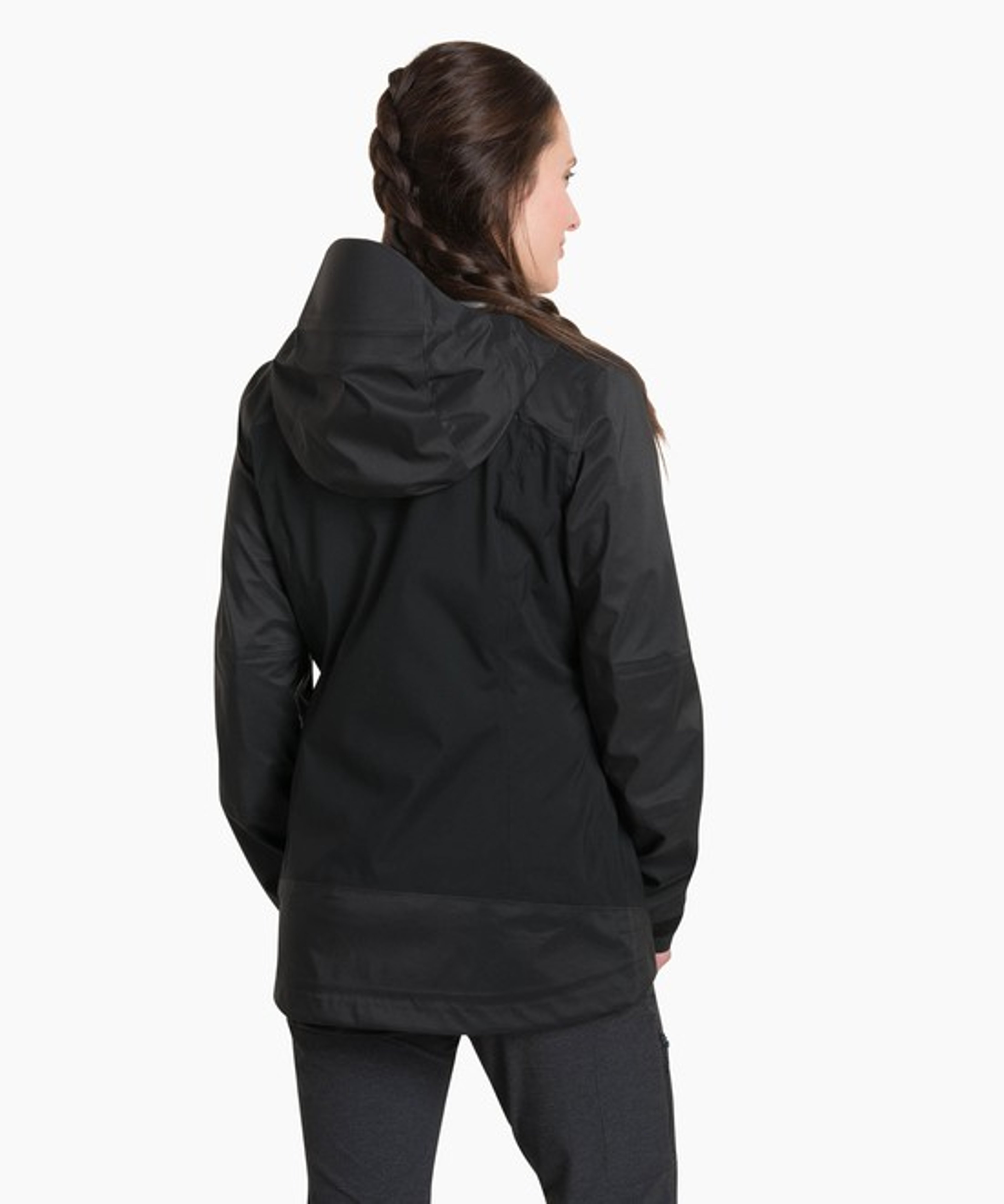
Choose from a variety of fabrics, constructions, and features for the women's rain jackets that match your conditions:
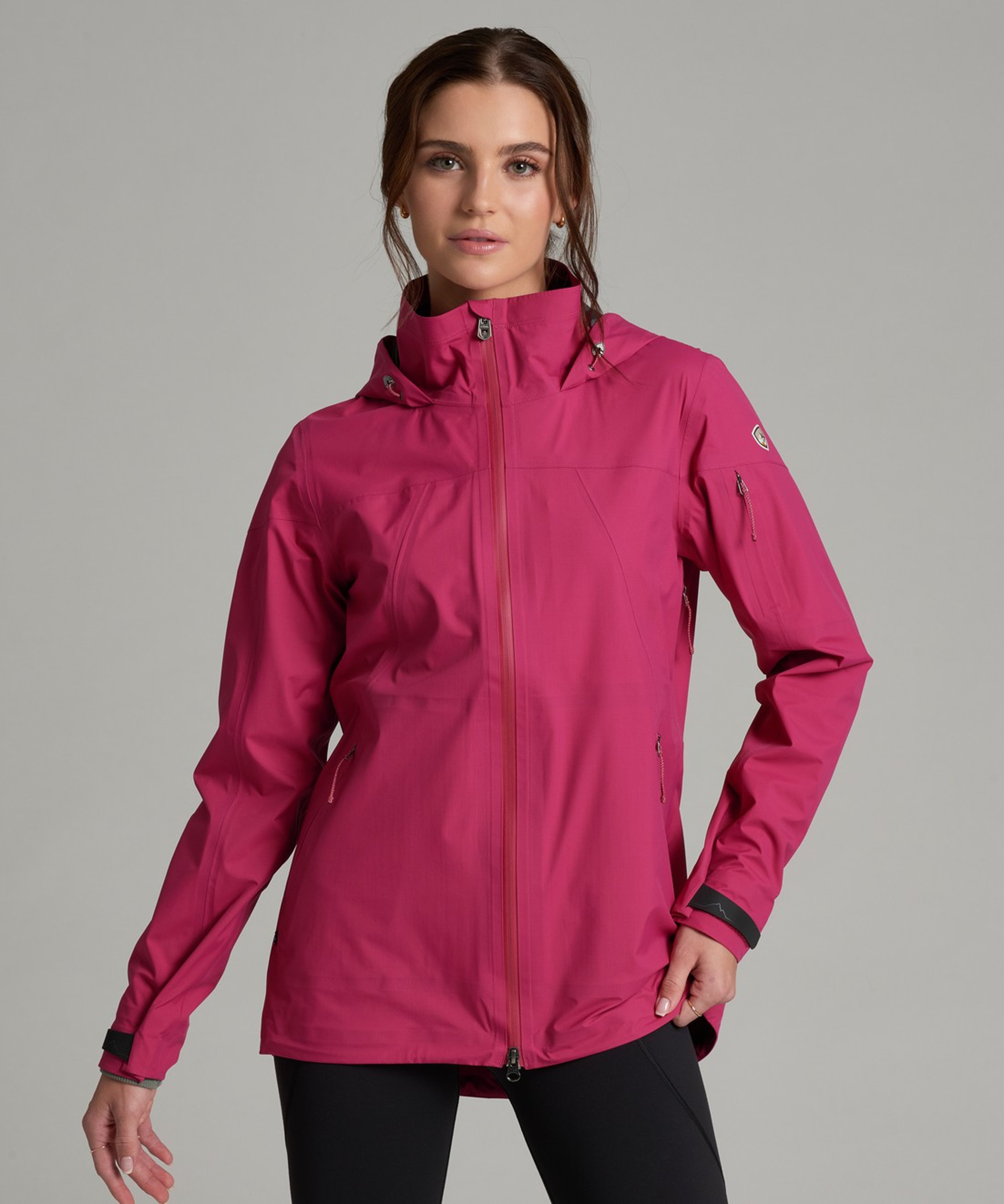
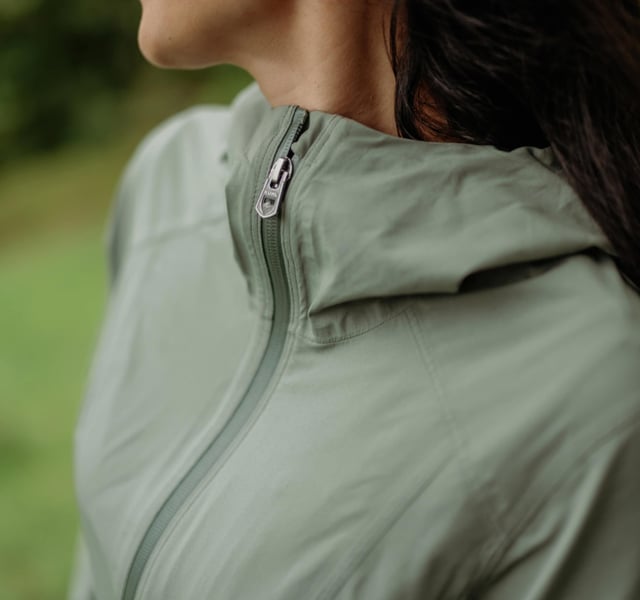
Hardshell Protection. When the forecast turns serious, a hardshell rain jacket is your barrier between you and a soaking. Fully waterproof shells use a laminated membrane, taped seams, and water-repellent zippers to keep sustained rain on the outside, while breathable construction lets perspiration escape so you don't end up wet from the inside out.
Stretch & Mobility. A modern waterproof shell shouldn't feel like a tarp. Look for 4-way stretch built into the face fabric for unrestricted reach on a scramble, a ski line, or a cross-town walk. Articulated patterning at the elbows and shoulders keeps the hem from riding up when arms go overhead.
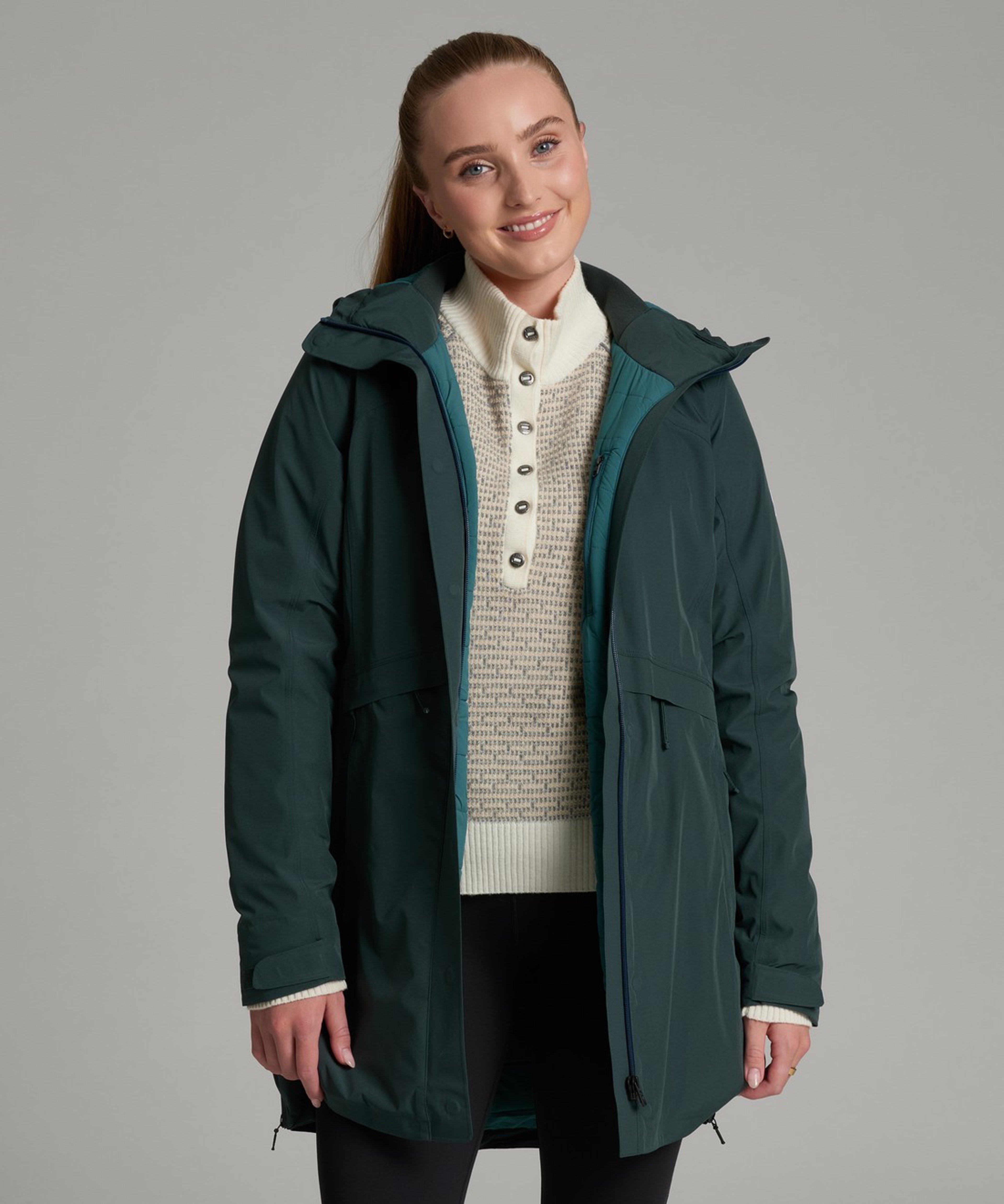
Insulated Options. For shoulder seasons and cold rain, a synthetic-insulated waterproof jacket pulls double duty as shell and mid-layer in one. Synthetic fill retains warmth when damp, dries quickly, and packs down small. If you want layering flexibility instead, pair an uninsulated shell with one of our women's fleece mid-layers.
Lightweight Travel-Ready Design. Trail miles and travel days reward a jacket that disappears into your pack until you need it. Lightweight ripstop nylon with a DWR finish sheds passing showers, packs down small, and stands up to brush, branches, and the rough side of a backpack.
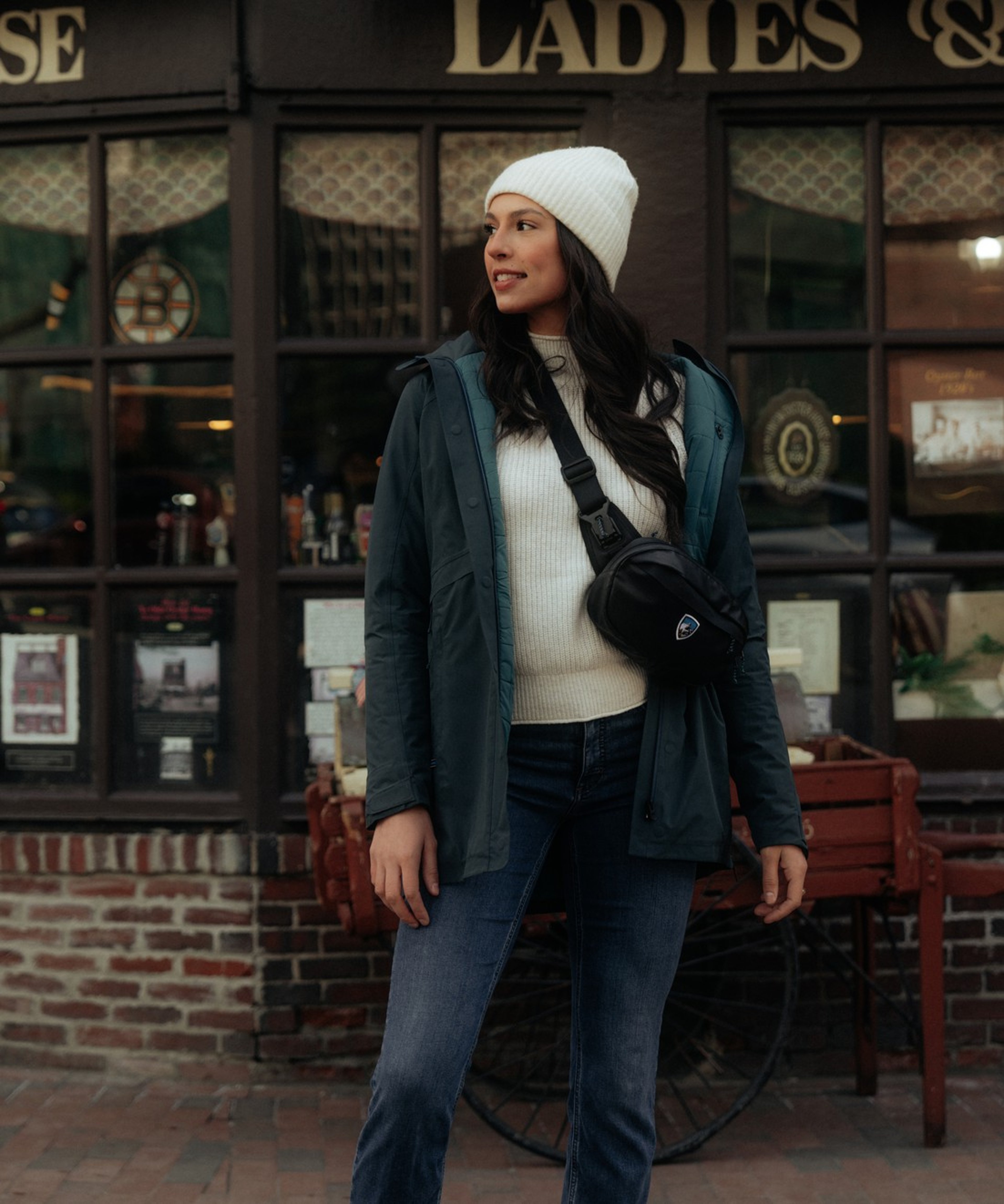
Style That Carries Over. A waterproof jacket shouldn't read as gear-only. Trench-cut silhouettes, refined seam lines, and quiet face fabrics carry from a wet trailhead to a city sidewalk without changing the look.
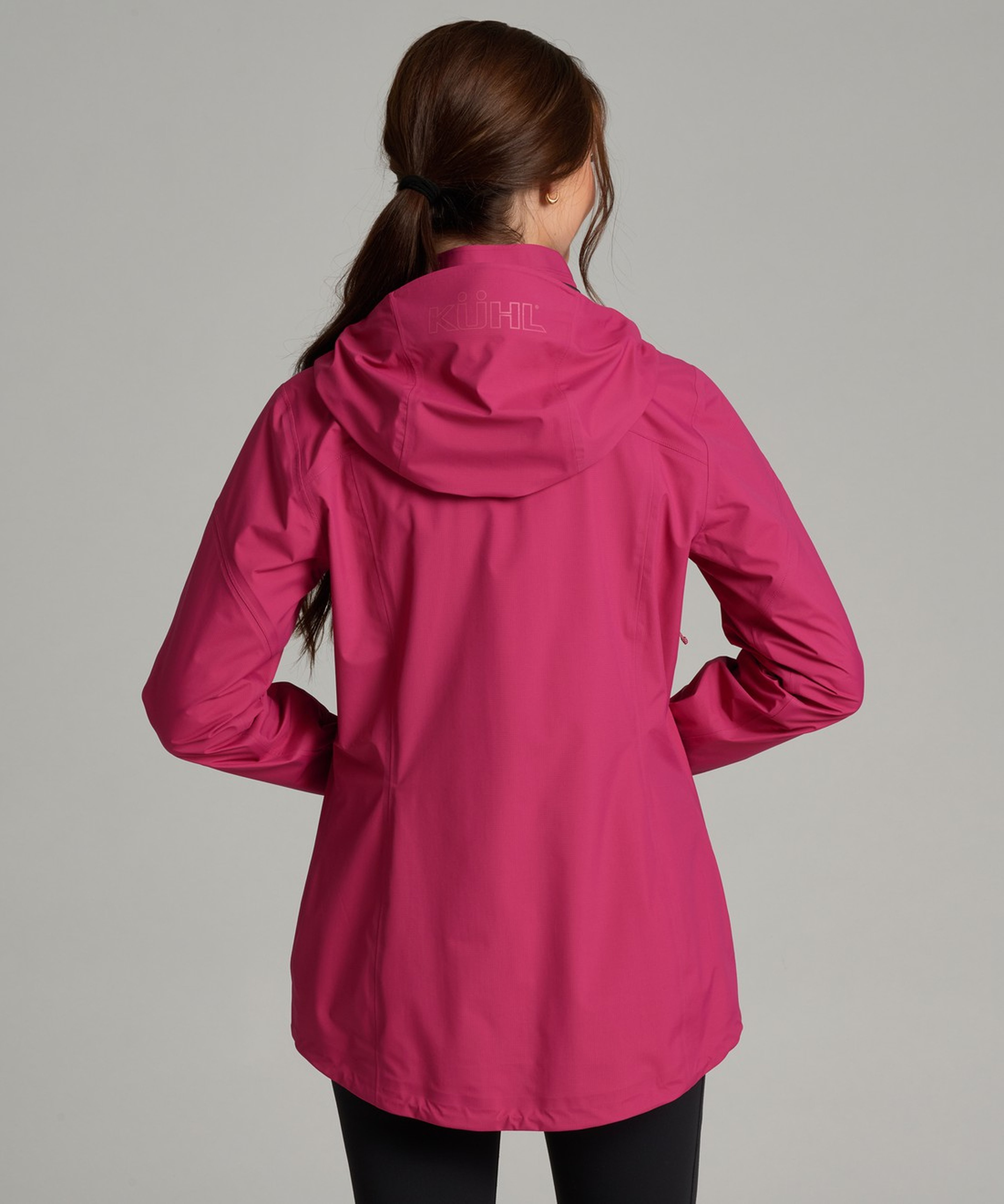
When choosing among our women's outerwear, look for signature touches like an adjustable, helmet-compatible hood with a laminated brim, pit zips for fast venting on steep climbs, hand pockets positioned above a hipbelt, and an adjustable hem to seal out wind. Compare against our softshell options when full waterproofing isn't required.
Choose from a variety of fabrics, constructions, and features for the women's rain jackets that match your conditions:
Hardshell Protection. When the forecast turns serious, a hardshell rain jacket is your barrier between you and a soaking. Fully waterproof shells use a laminated membrane, taped seams, and water-repellent zippers to keep sustained rain on the outside, while breathable construction lets perspiration escape so you don't end up wet from the inside out.
Stretch & Mobility. A modern waterproof shell shouldn't feel like a tarp. Look for 4-way stretch built into the face fabric for unrestricted reach on a scramble, a ski line, or a cross-town walk. Articulated patterning at the elbows and shoulders keeps the hem from riding up when arms go overhead.
Insulated Options. For shoulder seasons and cold rain, a synthetic-insulated waterproof jacket pulls double duty as shell and mid-layer in one. Synthetic fill retains warmth when damp, dries quickly, and packs down small. If you want layering flexibility instead, pair an uninsulated shell with one of our women's fleece mid-layers.
Lightweight Travel-Ready Design. Trail miles and travel days reward a jacket that disappears into your pack until you need it. Lightweight ripstop nylon with a DWR finish sheds passing showers, packs down small, and stands up to brush, branches, and the rough side of a backpack.
Style That Carries Over. A waterproof jacket shouldn't read as gear-only. Trench-cut silhouettes, refined seam lines, and quiet face fabrics carry from a wet trailhead to a city sidewalk without changing the look.
When choosing among our women's outerwear, look for signature touches like an adjustable, helmet-compatible hood with a laminated brim, pit zips for fast venting on steep climbs, hand pockets positioned above a hipbelt, and an adjustable hem to seal out wind. Compare against our softshell options when full waterproofing isn't required.
Pick the right women's rain jacket: hardshell vs. softshell, down vs. synthetic, waterproof vs. water-resistant, and what to prioritize on trail.
What should you look for in women's rain jackets?
The best women's rain jackets balance four things: waterproofing, breathability, layering room, and packability. Start with how wet you'll actually get. A 2.5-layer shell with a DWR finish handles passing storms and shoulder-season hikes, while a 3-layer hardshell earns its weight on multi-day trips and sustained rain. Look at venting next: pit zips dump body heat on steep climbs, and a laminated, helmet-compatible hood seals the head without blocking peripheral vision. Finally, check the fit. A rain jacket has to layer cleanly over a base layer and a mid-layer without binding at the shoulders or pulling at the hem.
What's the difference between a hardshell, softshell, and insulated jacket?
A hardshell is a fully waterproof outer layer, a softshell is a wind-resistant breathable shell with light water repellency, and an insulated jacket adds down or synthetic fill for warmth. Hardshells use a membrane plus taped seams to keep sustained rain out, the right call when the forecast is genuinely bad. Softshells trade absolute waterproofing for stretch, breathability, and a quieter hand, which suits high-output activity in dry-to-damp conditions. Insulated jackets prioritize warmth and often pair with a shell on top when the weather turns wet.
How do you choose between down and synthetic insulation?
Choose down when warmth-to-weight and packability matter most. Choose synthetic when wet weather is likely. Down offers the best warmth per gram and compresses smaller than any synthetic, which is why it dominates ultralight kits and dry-cold conditions. Its weakness is moisture. Wet down clumps and loses loft. Synthetic insulation is heavier and bulkier, but it keeps insulating when damp and dries faster, which makes it the better fill inside a waterproof rain jacket. For warmth-first kit in cold-but-dry conditions, see our women's down outerwear collection.
Are rain jackets waterproof or just water-resistant?
It depends on the construction: a true waterproof rain jacket uses a laminated membrane and taped seams, while a water-resistant jacket relies on a DWR finish alone. A DWR (durable water repellent) coating makes water bead off the face fabric and handles light showers fine. Once rain turns sustained, water saturates the face and pushes through unless a membrane is blocking it. Confirm waterproofing by checking three things: a stated waterproof rating, fully taped or welded seams, and water-repellent zippers. Anything short of that is water-resistant, not waterproof.
How should a rain jacket fit for layering?
A rain jacket should fit close enough to seal out wind, but with enough room for a base layer and a mid-layer underneath without restricting movement. With your usual layers on, raise both arms overhead. The hem shouldn't lift above your hipbelt or waistband. Reach across your chest. The shoulders shouldn't pinch and the back shouldn't pull tight. The hood should rotate with your head and cinch down small enough to wear without a hat. If you live in heavier puffies or fleece mid-layers, size with that bulk in mind rather than over a bare base layer.
What features matter most when hiking or backpacking?
For hiking and backpacking, prioritize pit zips, an adjustable hood, pockets that clear a hipbelt, and a packable design. Pit zips dump heat fast on steep climbs without the on-and-off shuffle. The hood should adjust at the back and sides, ride with your head when you turn, and ideally accept a climbing or ski helmet. Hand pockets need to sit above where a hipbelt rides so you can actually use them. A chest pocket adds map or phone access without unbuckling. Look for a ripstop face fabric to shrug off brush and branch scrapes, and a jacket that stuffs into its own pocket when the sky clears.