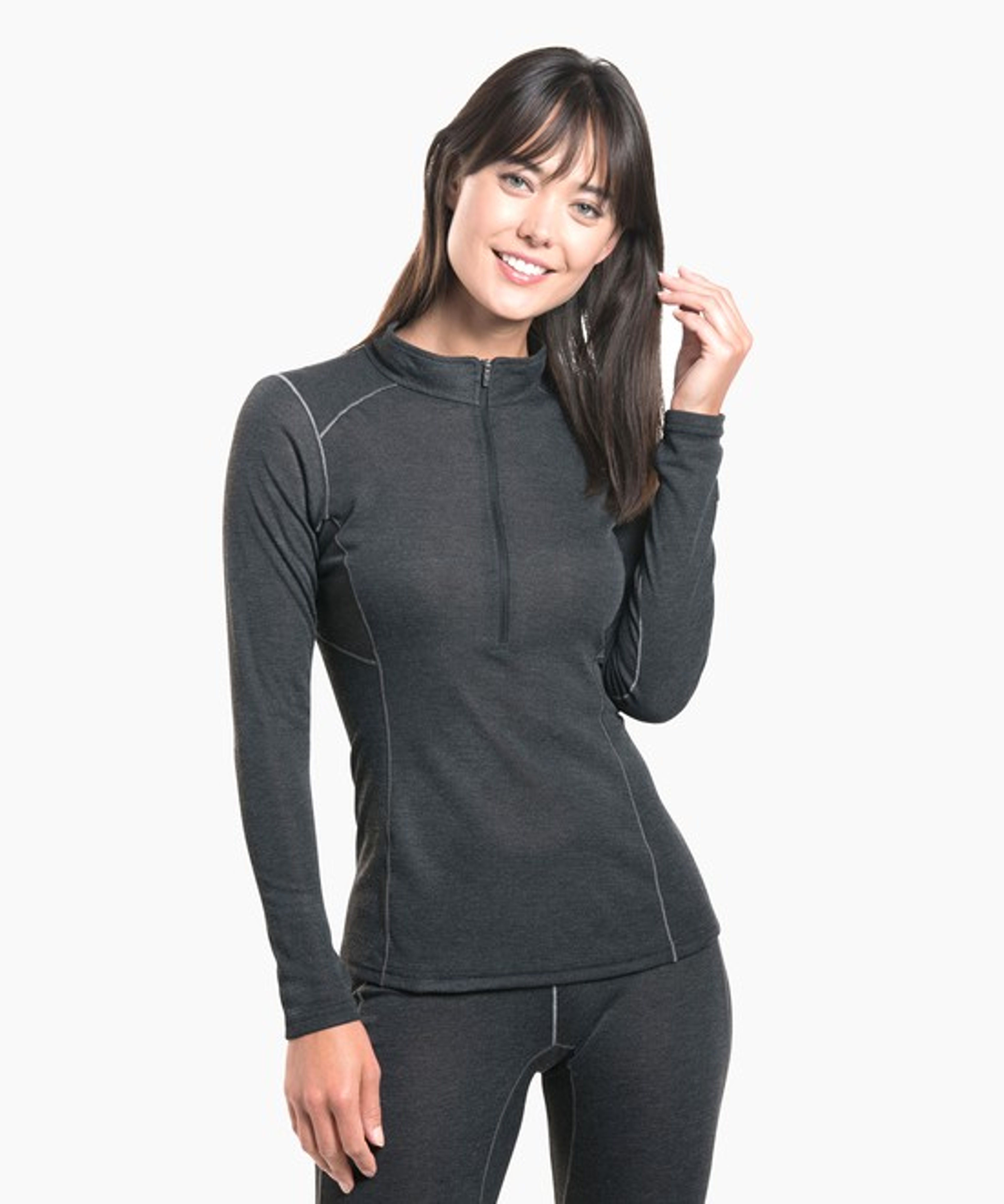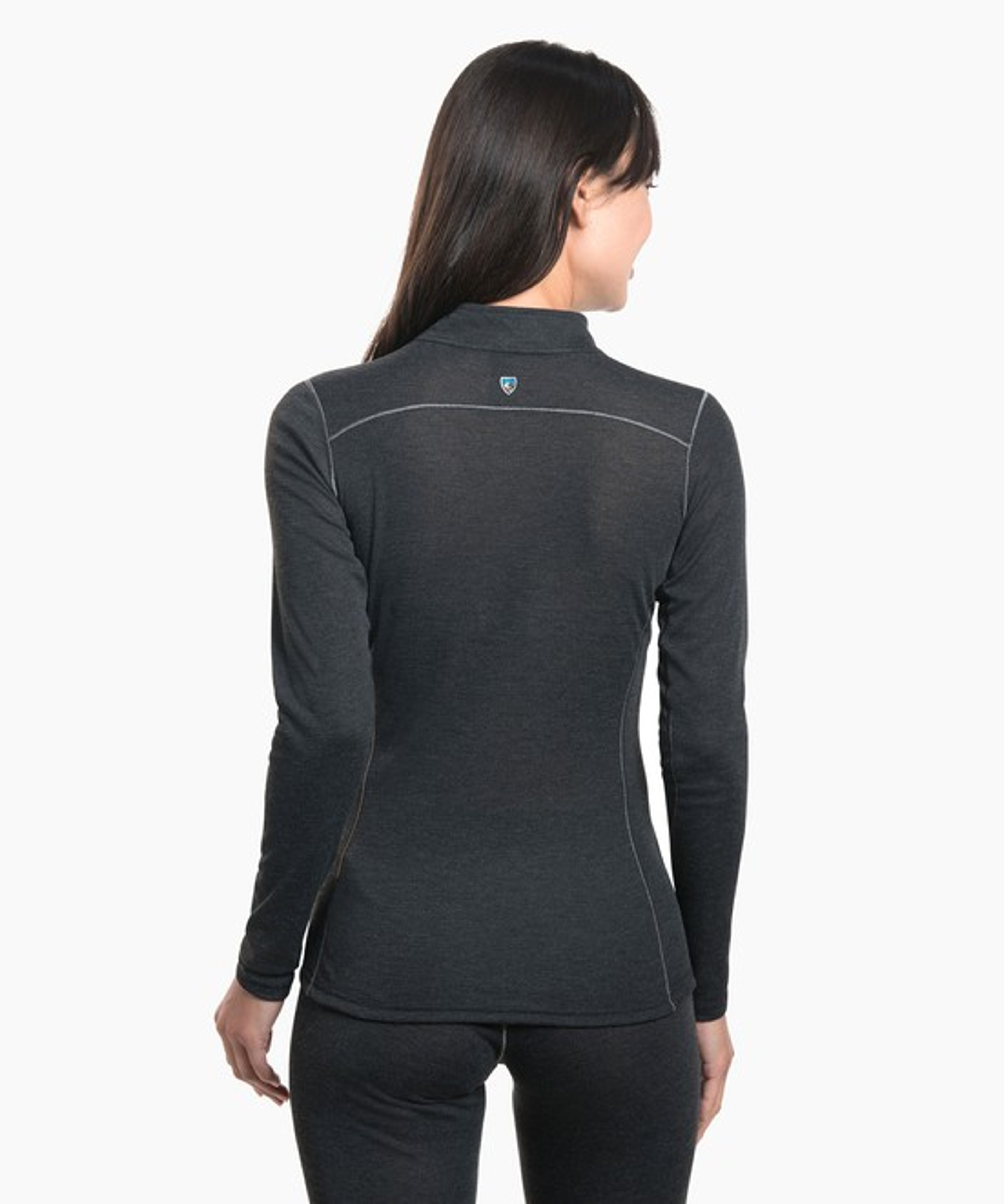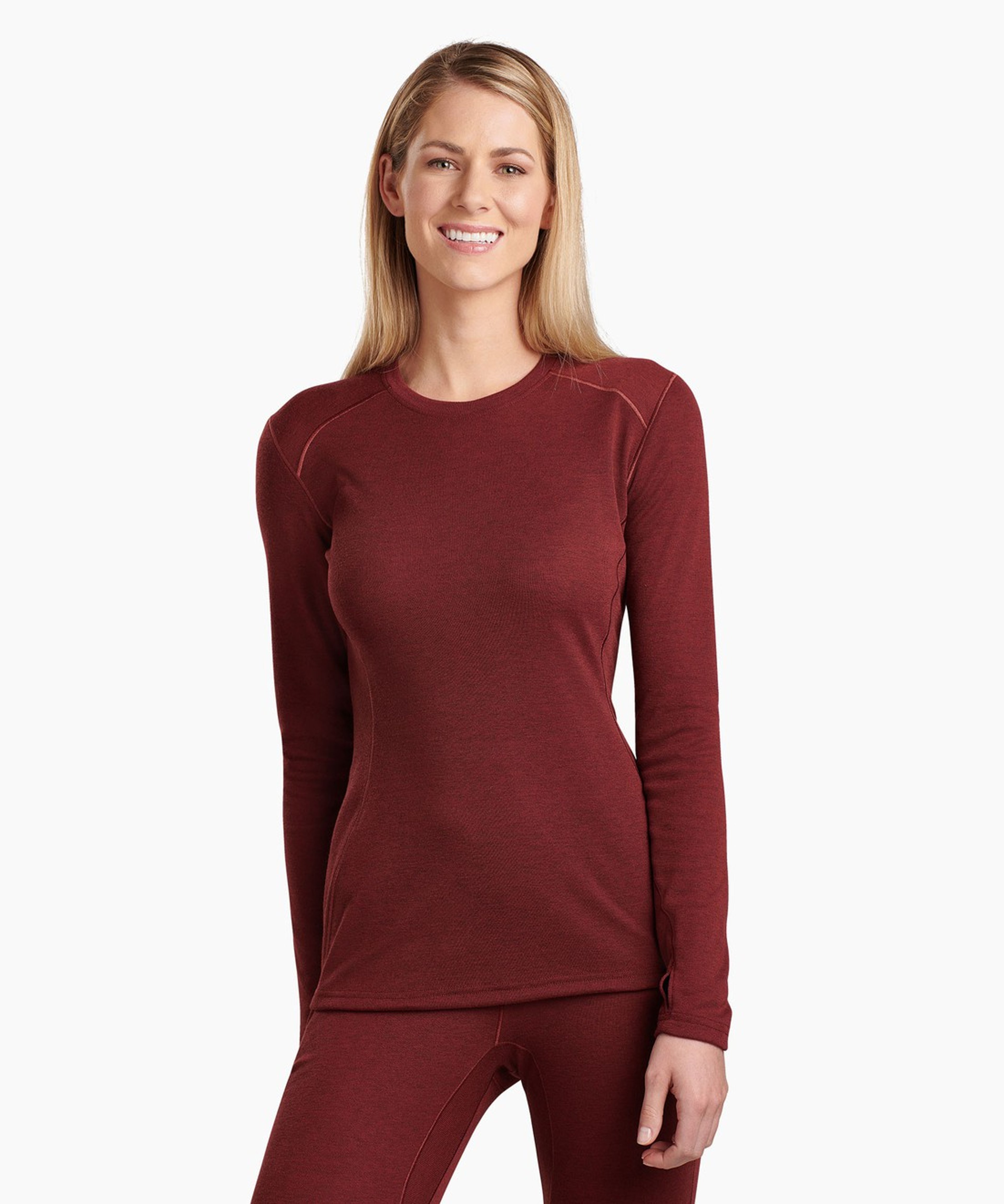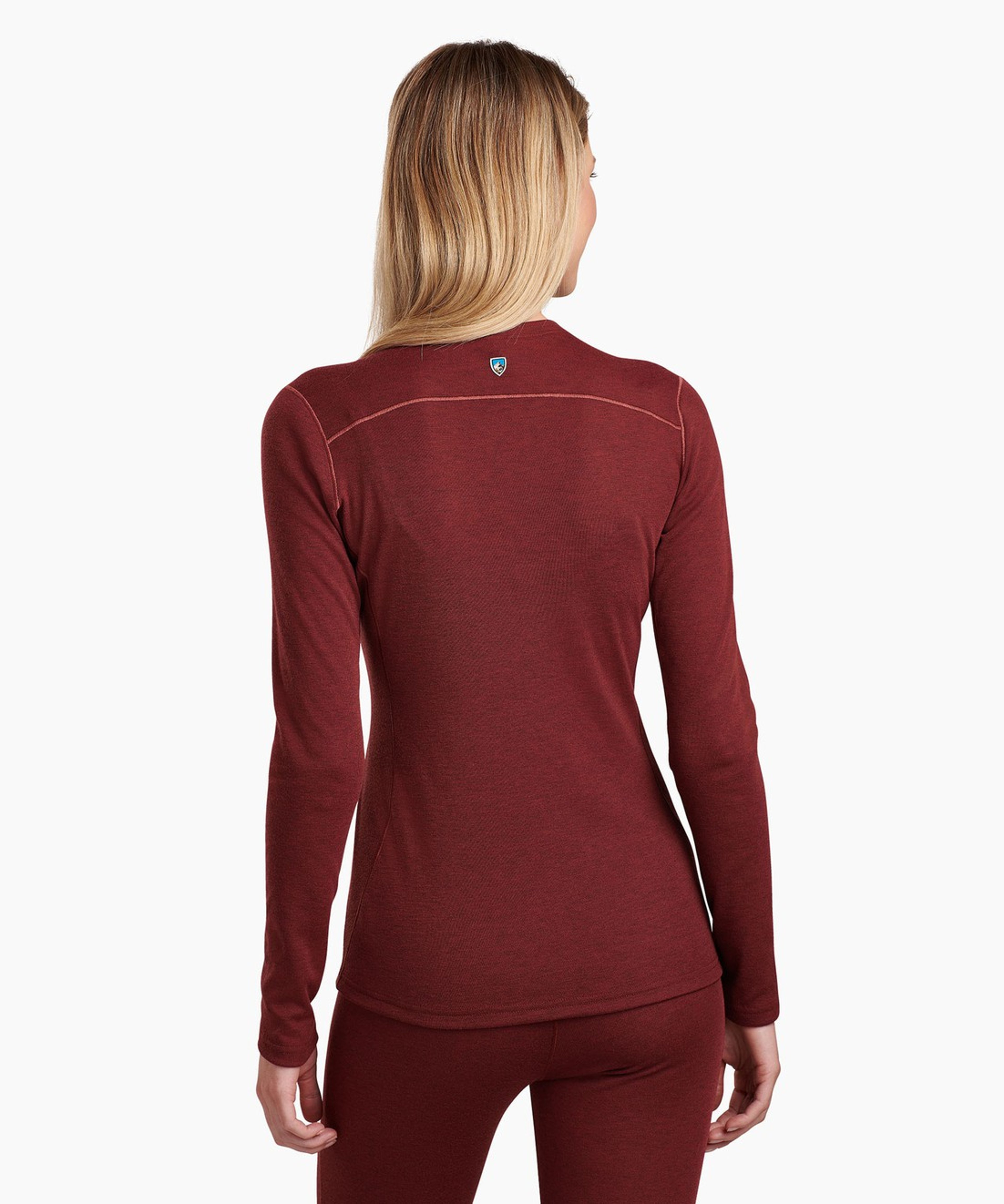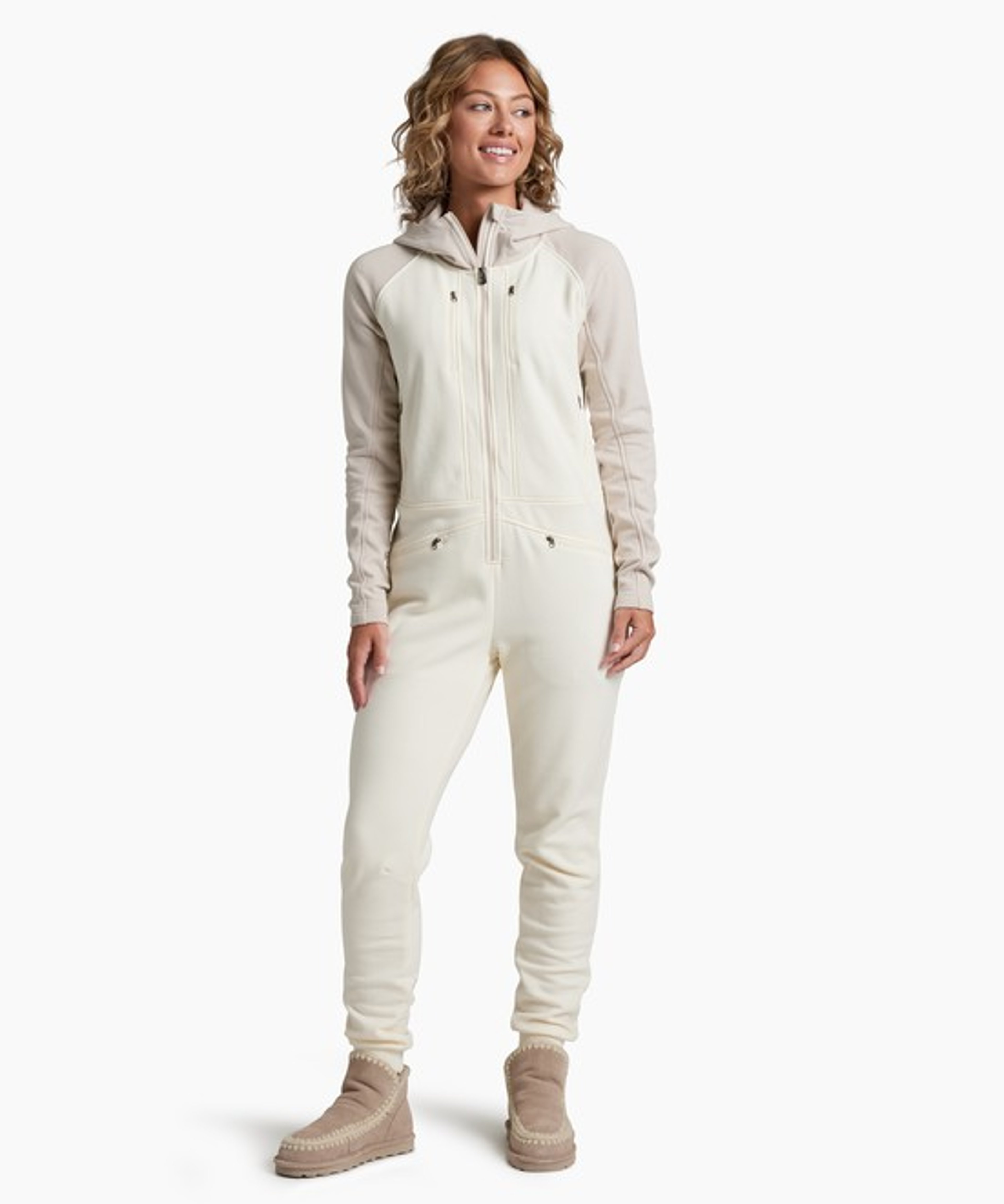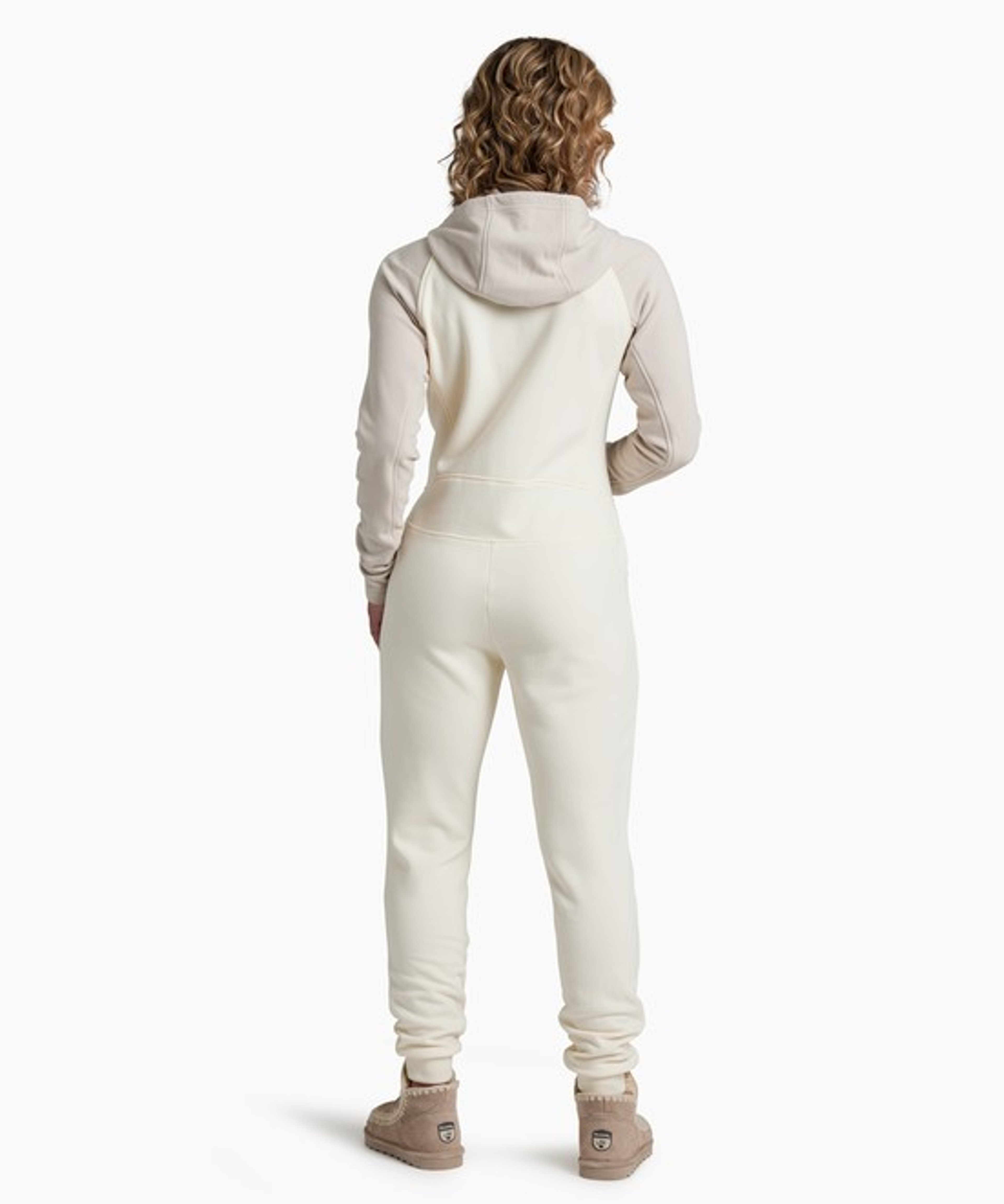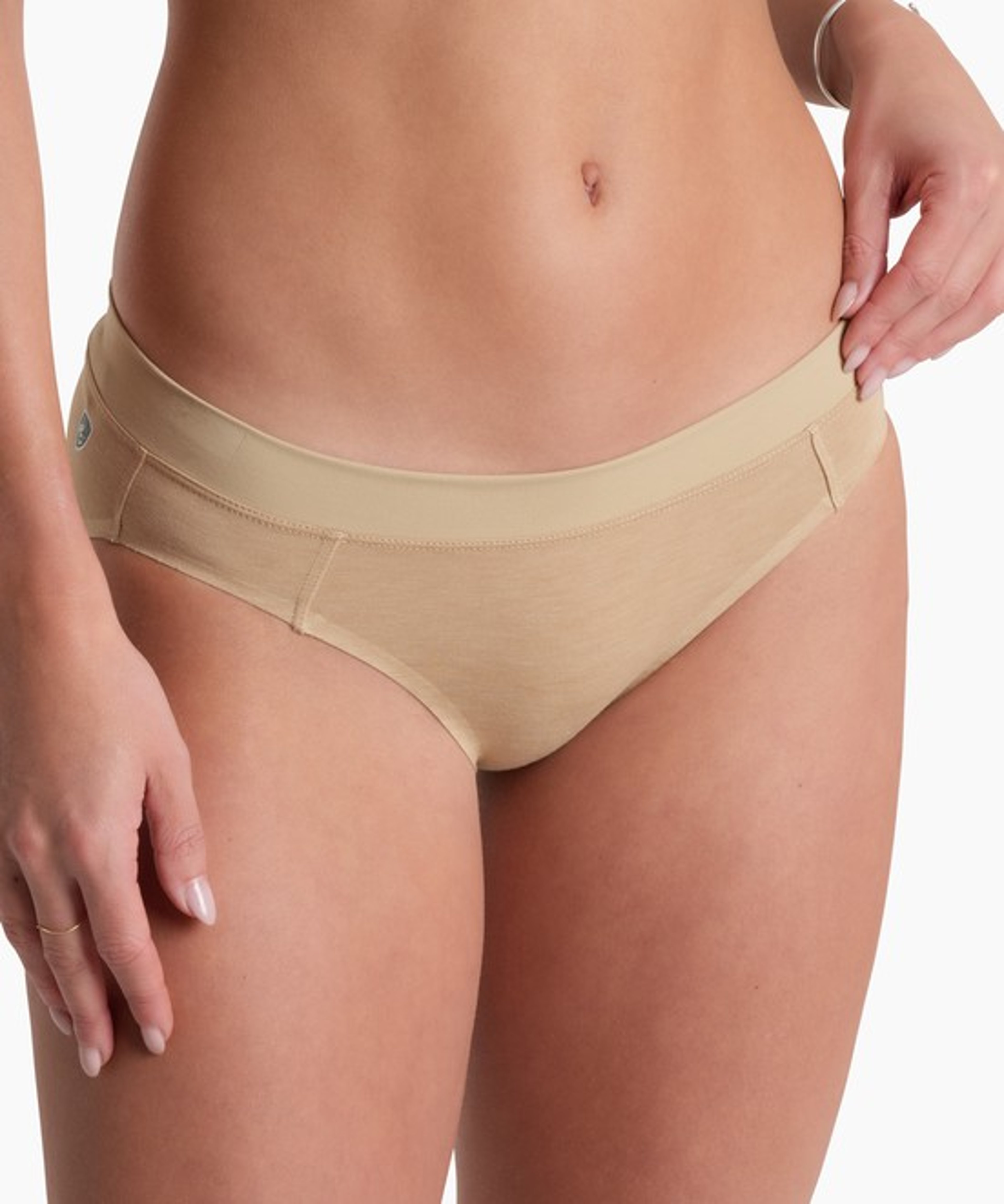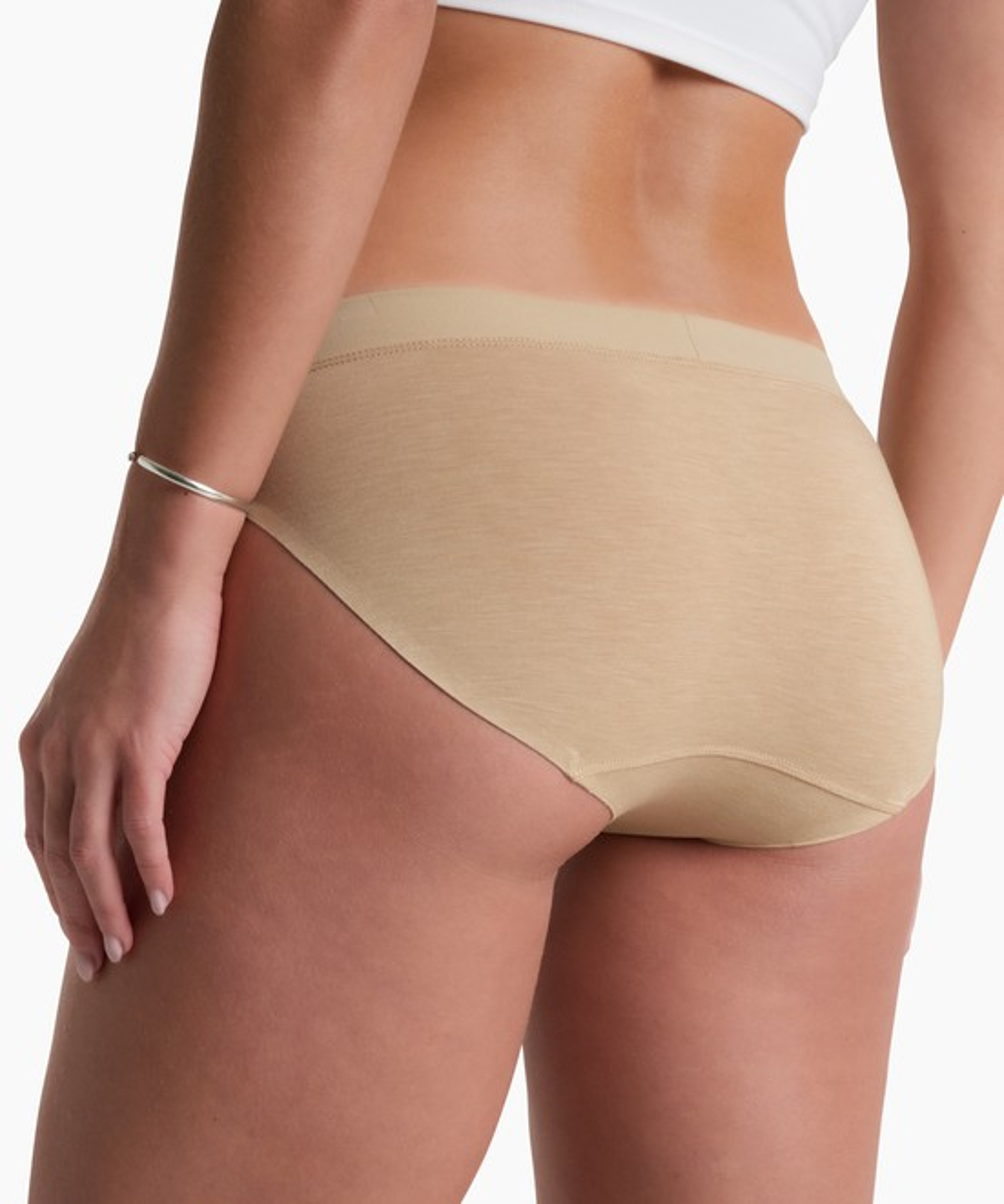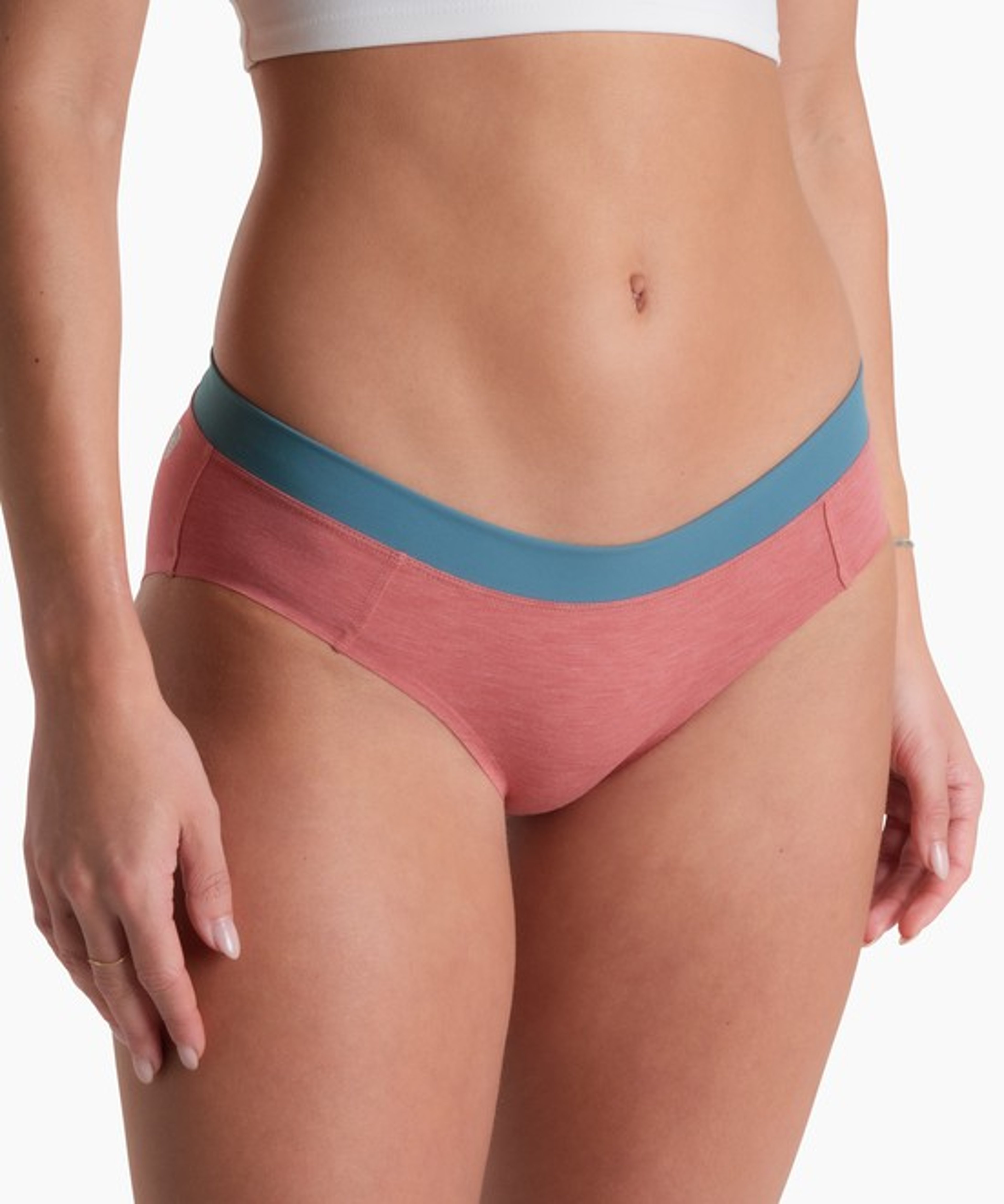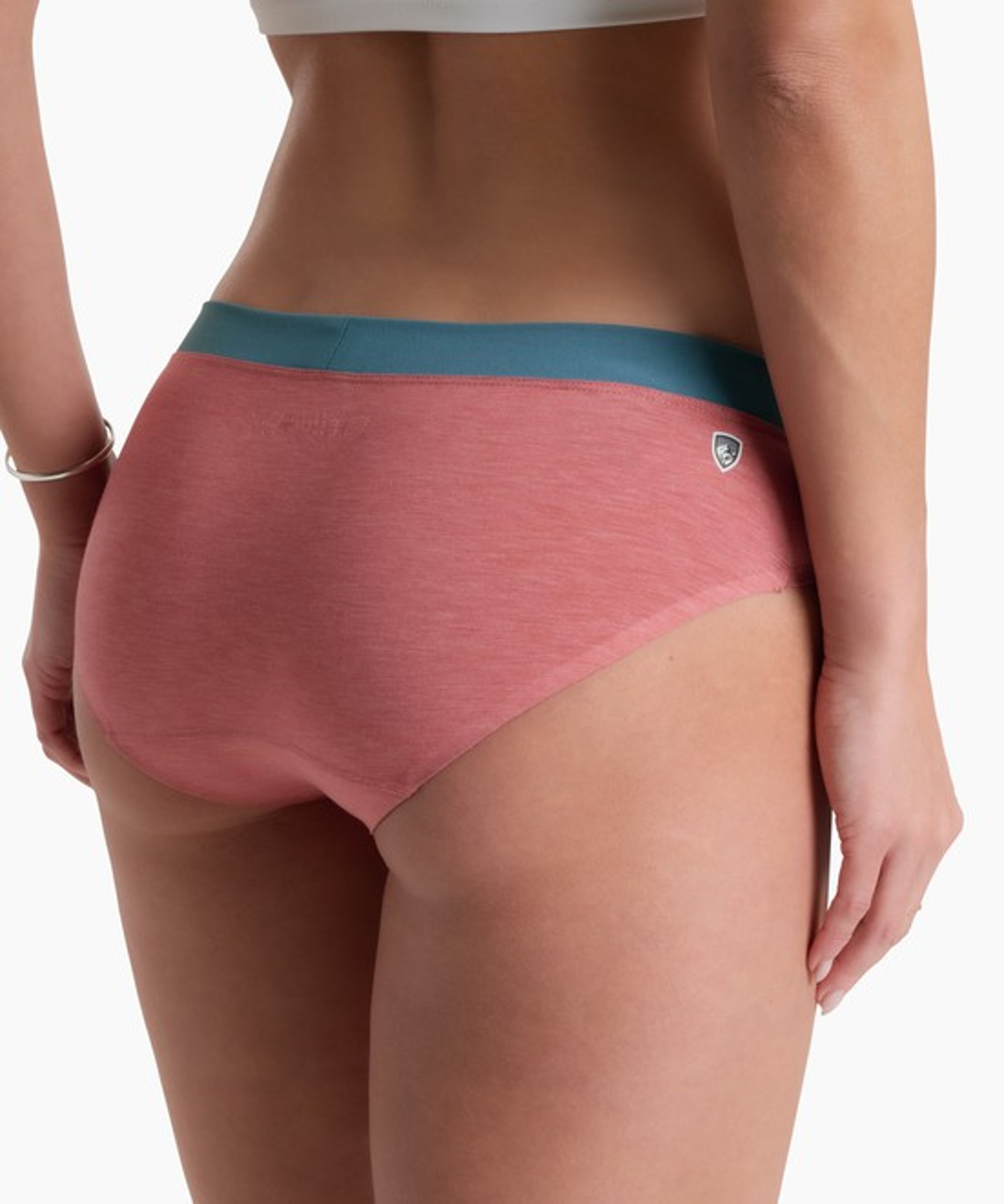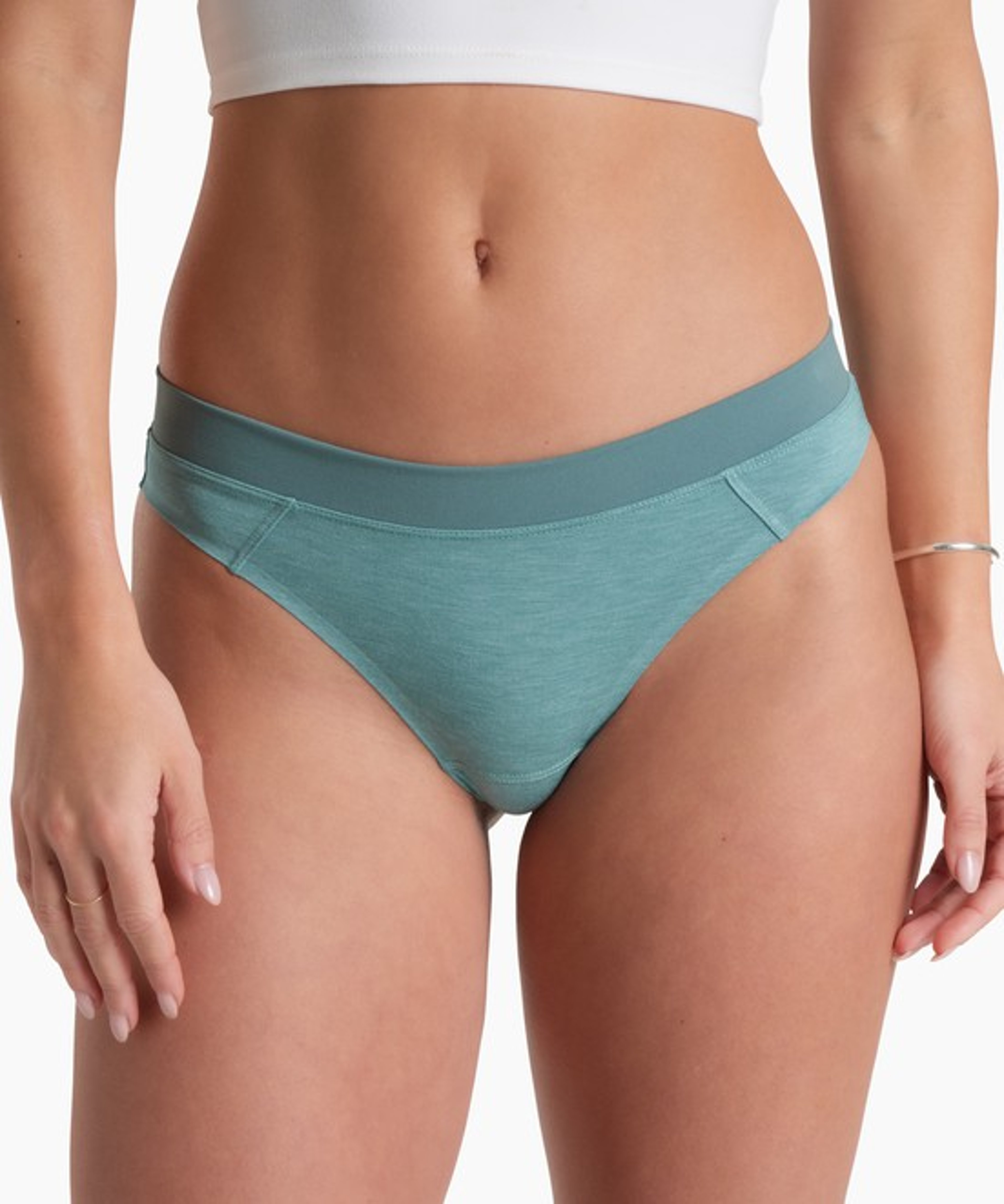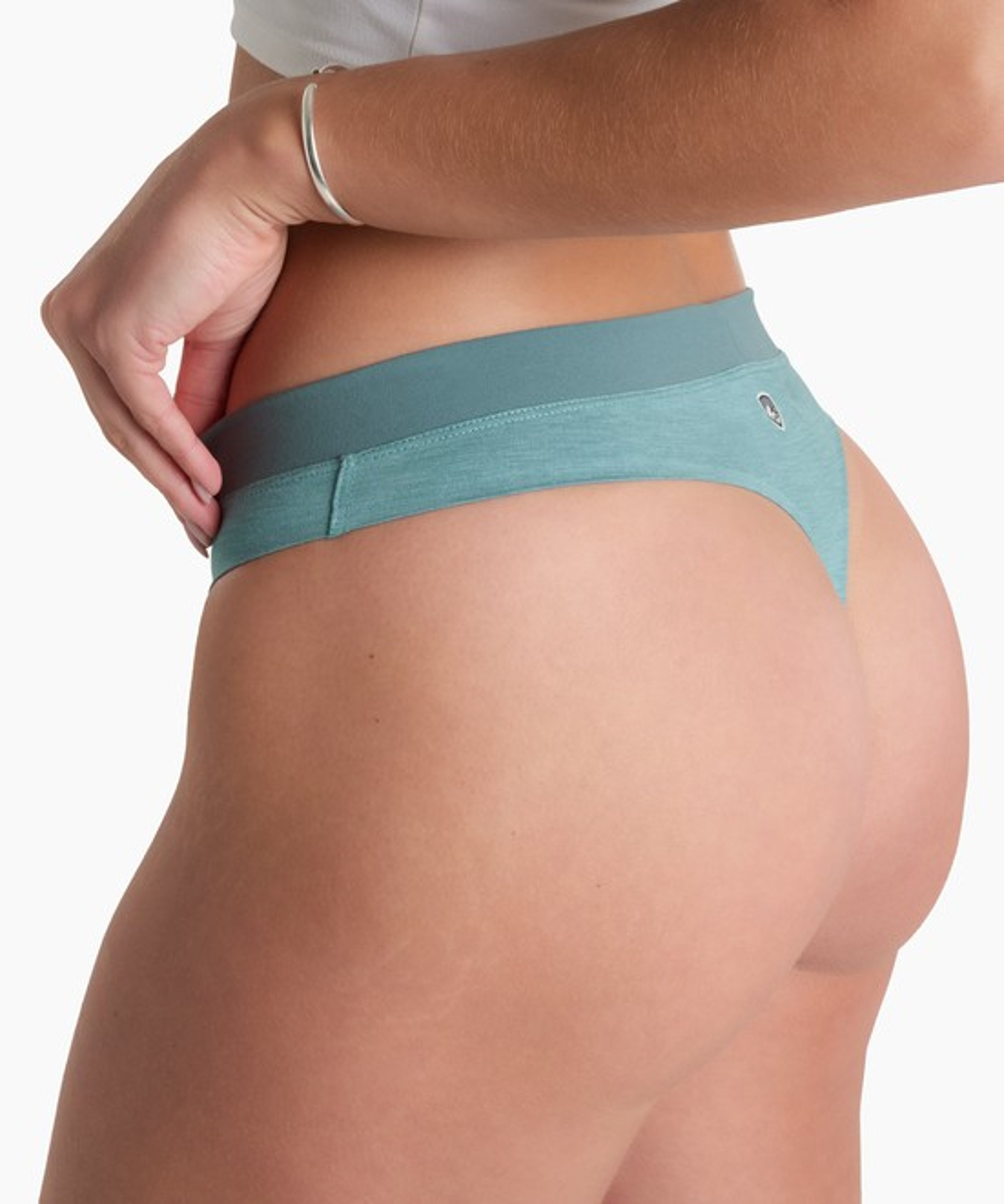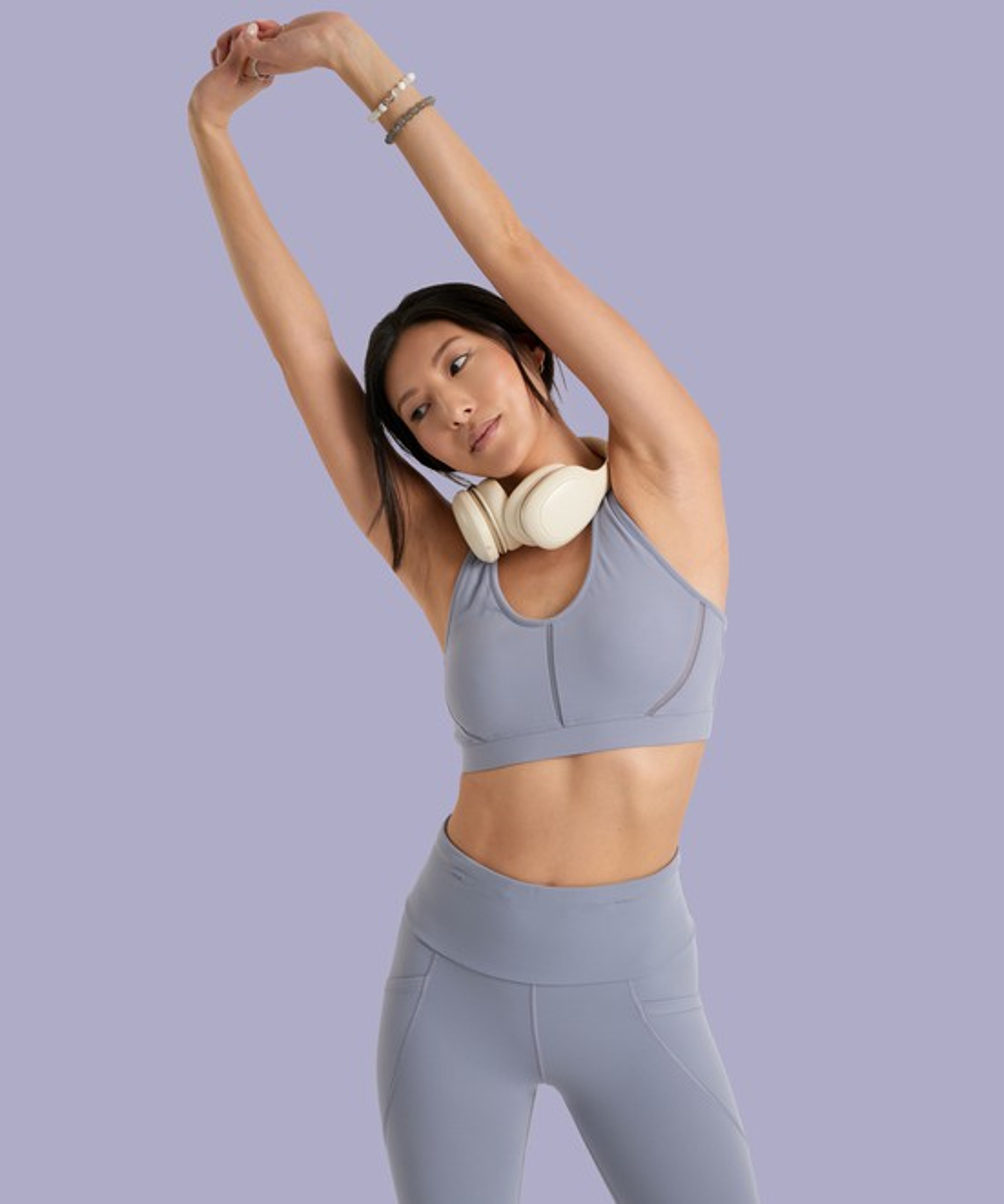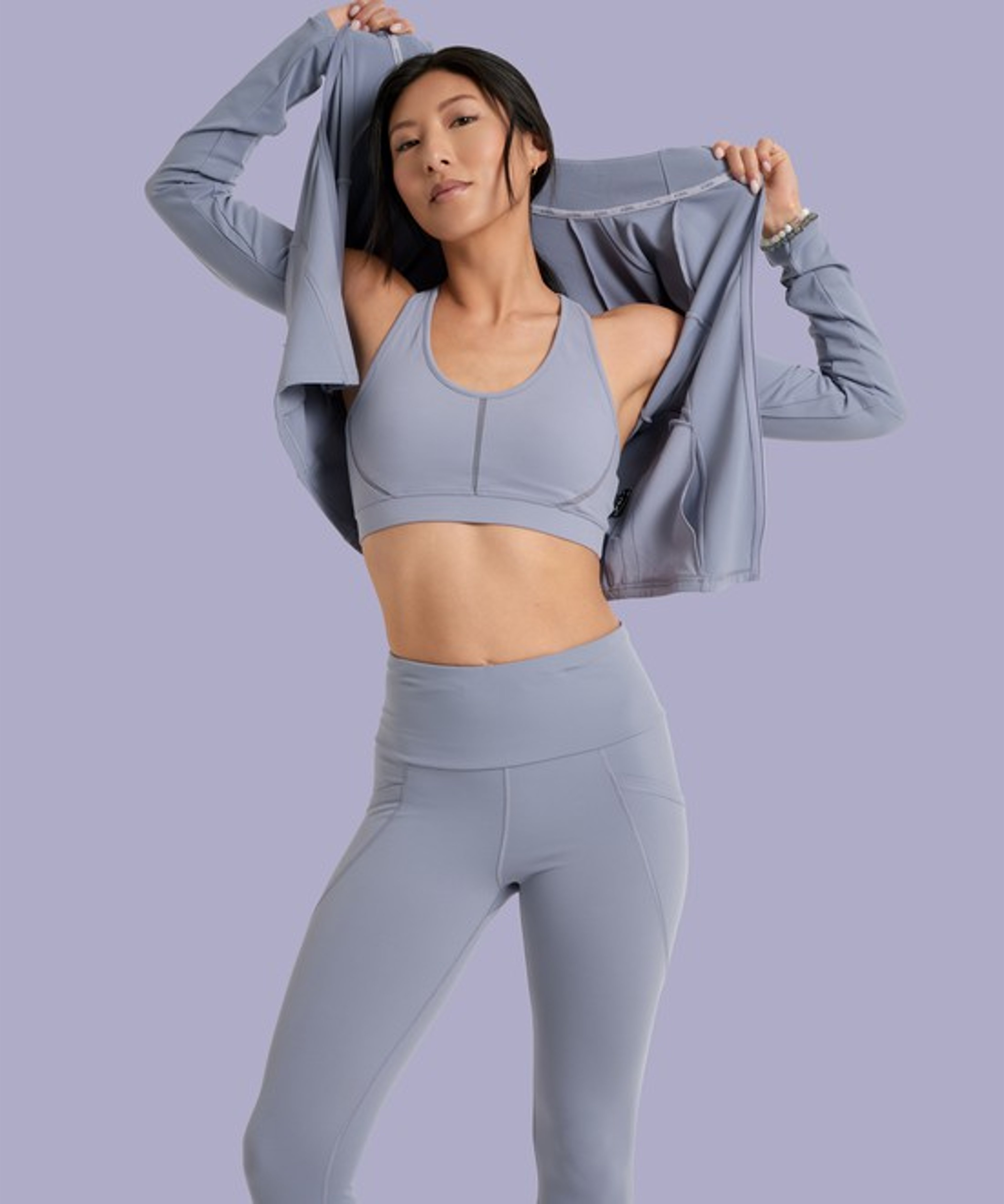





Women's Baselayer Tops and Bottoms
Layer Up in Comfort with KÜHL Women's Baselayer Tops and Bottoms
Whether you're skinning up before dawn or stacking firewood in a frozen yard, the layer closest to your skin sets the tone for the day. Baselayer that wicks moisture and dries fast keeps you warm when you stop moving, and that's the whole job.
Choose from a variety of fabrics, weights, and silhouettes for the women's baselayer that fits your activity:
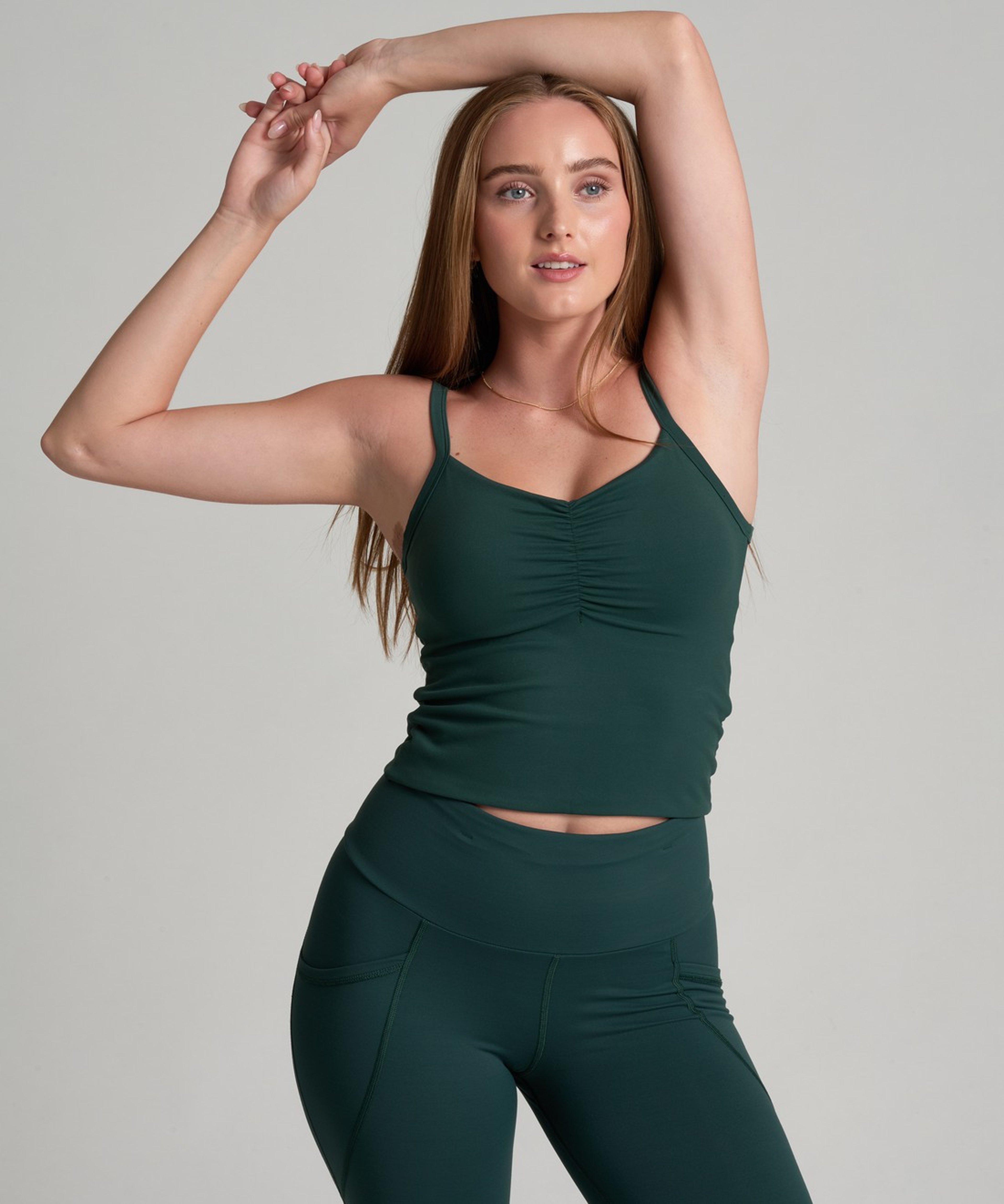
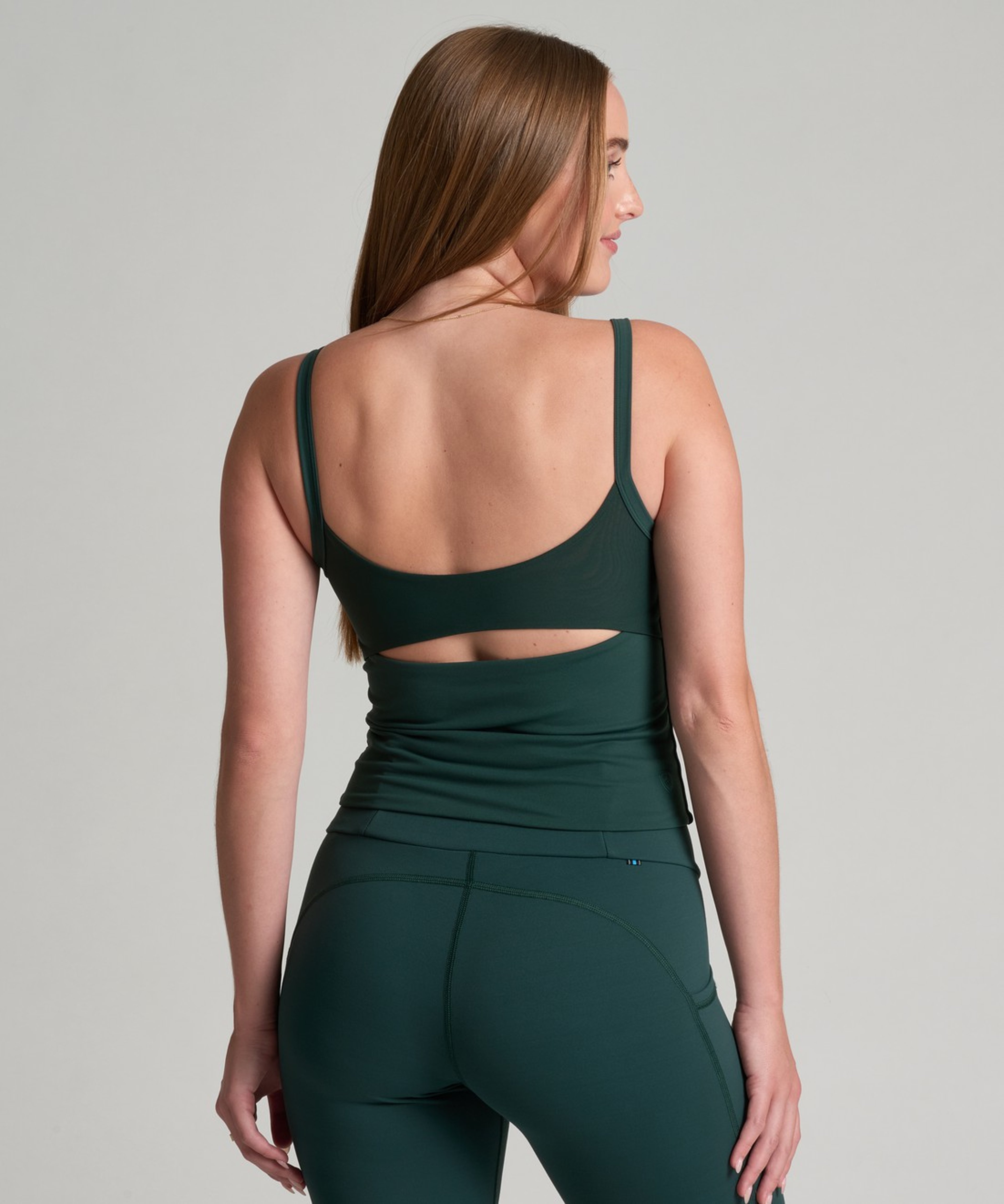
Cold-Weather Performance. Cold-weather baselayer tops and bottoms pair a brushed interior with 4-way stretch for warmth that moves with you. Moisture-wicking yarns pull sweat off the skin so you don't chill mid-pitch, and quick-dry construction shortens the recovery time between exertion and rest.
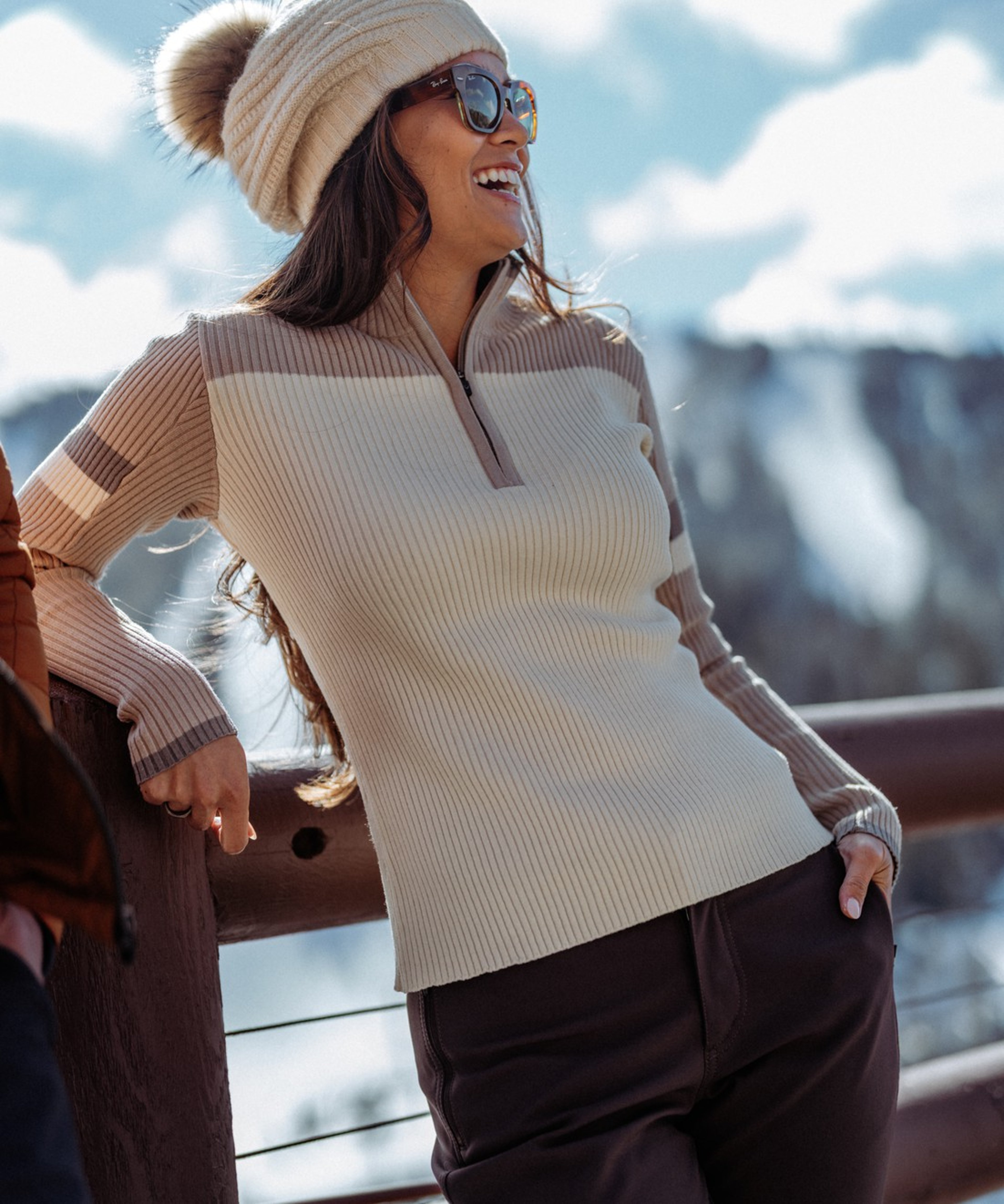
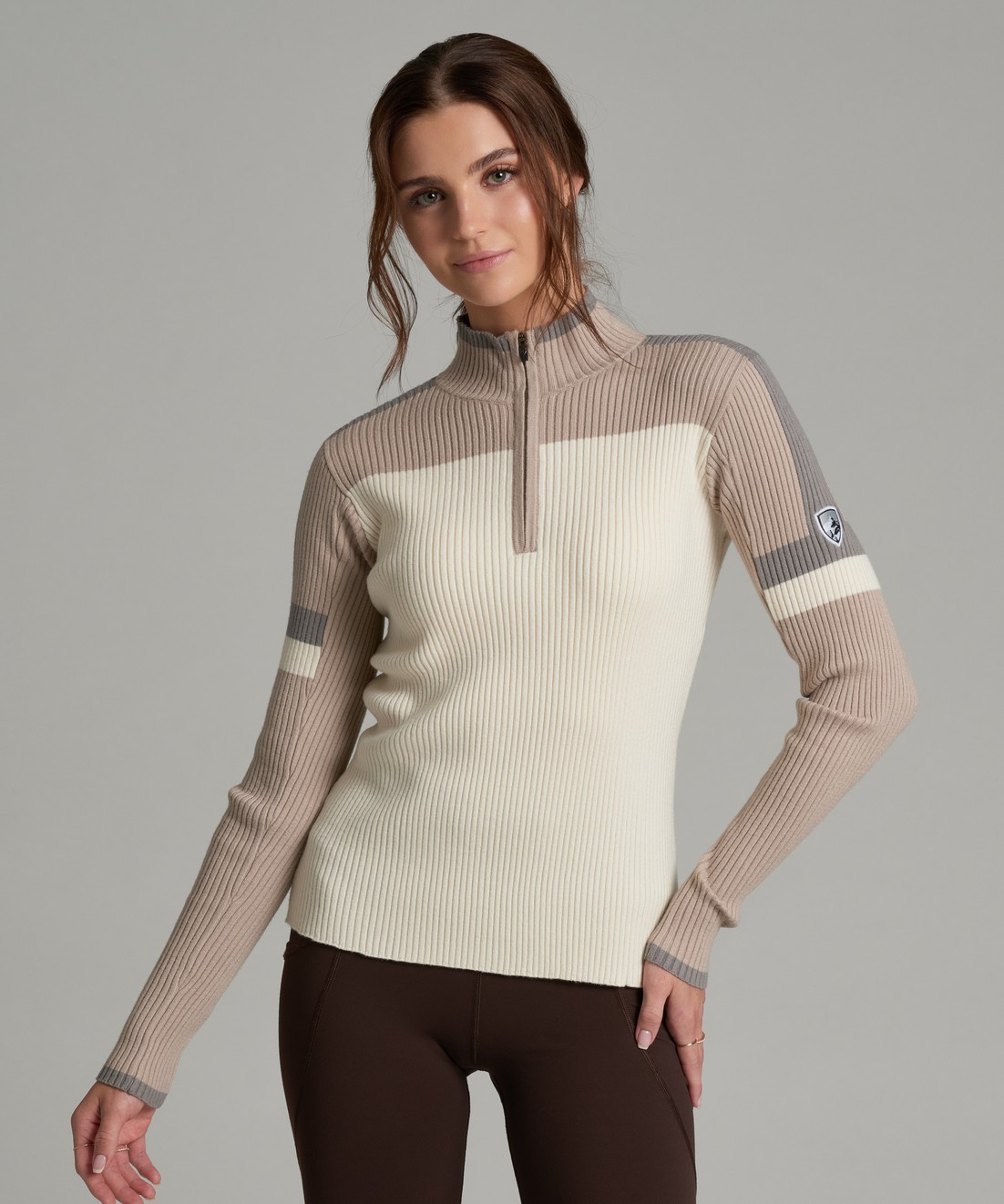
Mid-Weight Versatility. Mid-weight pieces sit between high-output skin layers and insulating mid-layers. Soft, smooth-faced fabrics layer cleanly under fleece or softshell, and a slim, body-following cut prevents bunching at the waistband, which matters when you're pairing tops with women's hiking pants for long days on the trail.
Aerobic & Active. For high-output efforts, lightweight baselayer in a synthetic-blend knit moves moisture quickly and dries before it freezes against your back. Flatlock seams reduce chafe under pack straps, and thumb loops keep sleeves anchored when you pull on a glove.
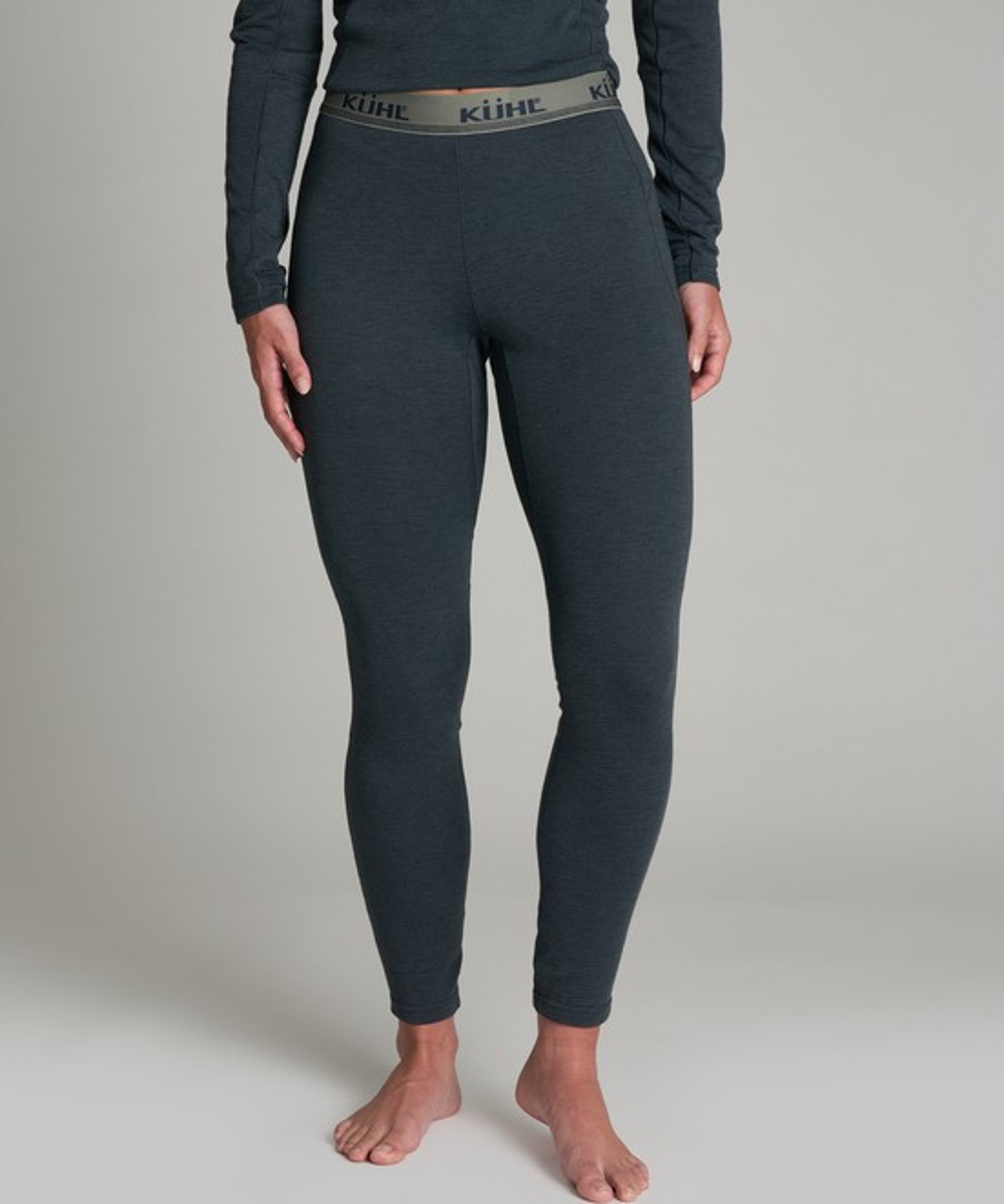
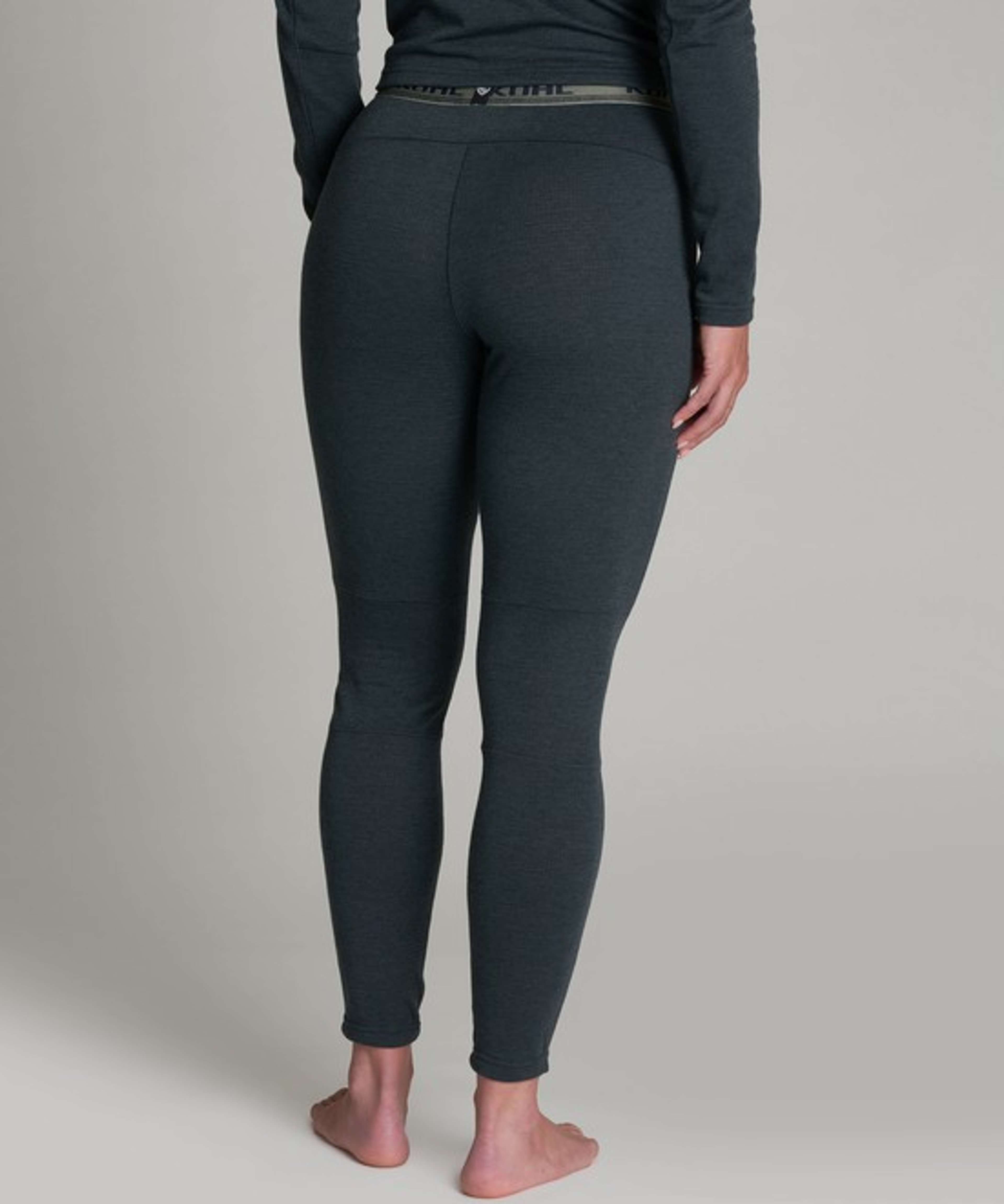
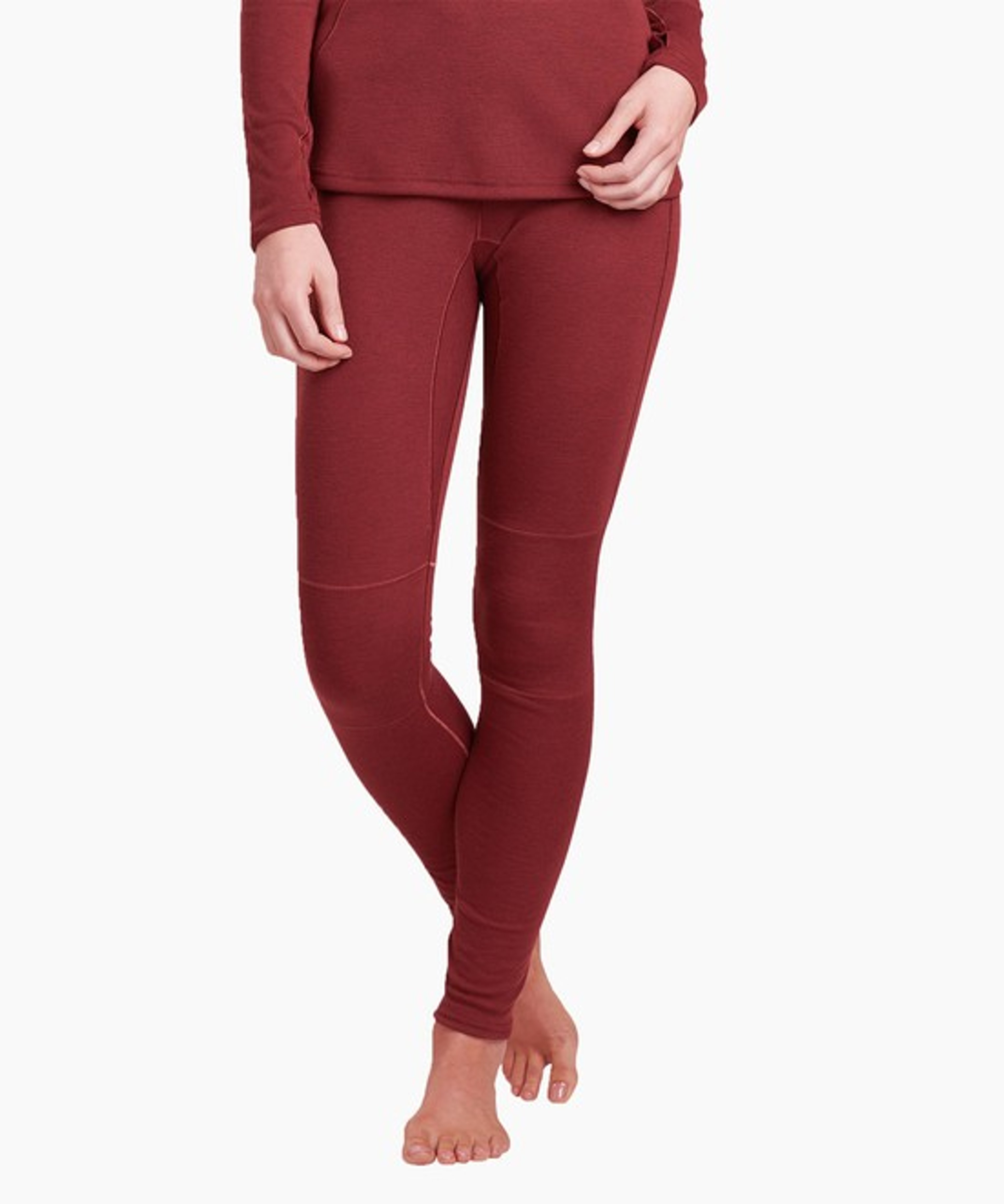
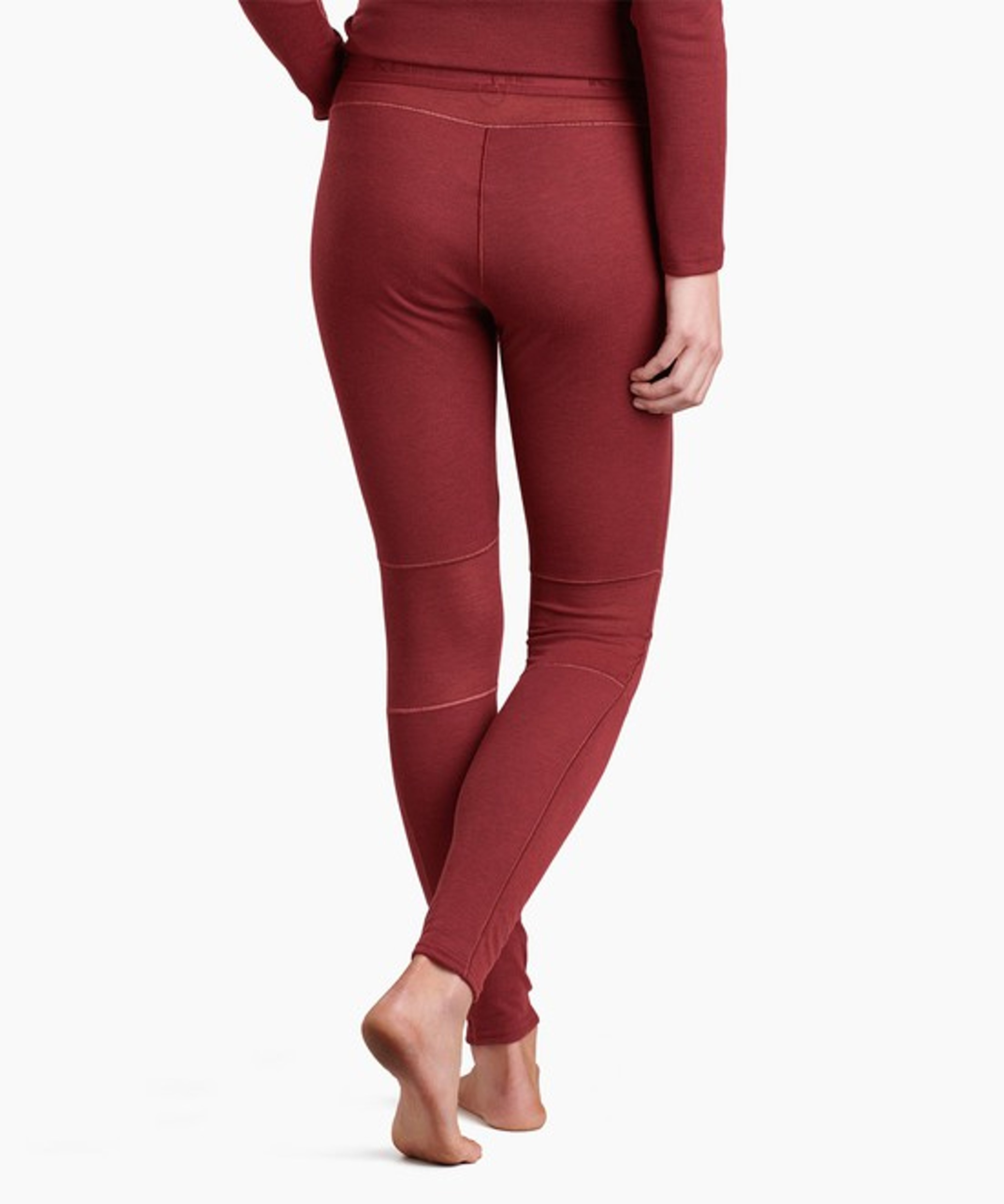
Bottoms as a Foundation. Baselayer bottoms build the foundation for everything that follows. A gusseted construction and articulated knees keep the bottoms quiet through skin tracks, scrambles, and long days in the saddle, whether worn solo or under a heavier pant.
When choosing women's baselayer, look for signature touches like flatlock seams for low-bulk layering, thumb loops to keep sleeves in place under jackets, and a brushed interior that traps warmth against the skin while still wicking. Match the weight to the work: light for high-output efforts, mid for shoulder season, heavy for static cold.
Whether you're skinning up before dawn or stacking firewood in a frozen yard, the layer closest to your skin sets the tone for the day. Baselayer that wicks moisture and dries fast keeps you warm when you stop moving, and that's the whole job.
Choose from a variety of fabrics, weights, and silhouettes for the women's baselayer that fits your activity:
Cold-Weather Performance. Cold-weather baselayer tops and bottoms pair a brushed interior with 4-way stretch for warmth that moves with you. Moisture-wicking yarns pull sweat off the skin so you don't chill mid-pitch, and quick-dry construction shortens the recovery time between exertion and rest.
Mid-Weight Versatility. Mid-weight pieces sit between high-output skin layers and insulating mid-layers. Soft, smooth-faced fabrics layer cleanly under fleece or softshell, and a slim, body-following cut prevents bunching at the waistband, which matters when you're pairing tops with women's hiking pants for long days on the trail.
Aerobic & Active. For high-output efforts, lightweight baselayer in a synthetic-blend knit moves moisture quickly and dries before it freezes against your back. Flatlock seams reduce chafe under pack straps, and thumb loops keep sleeves anchored when you pull on a glove.
Bottoms as a Foundation. Baselayer bottoms build the foundation for everything that follows. A gusseted construction and articulated knees keep the bottoms quiet through skin tracks, scrambles, and long days in the saddle, whether worn solo or under a heavier pant.
When choosing women's baselayer, look for signature touches like flatlock seams for low-bulk layering, thumb loops to keep sleeves in place under jackets, and a brushed interior that traps warmth against the skin while still wicking. Match the weight to the work: light for high-output efforts, mid for shoulder season, heavy for static cold.
Everything you need to know about choosing women's baselayer: fabrics, fit, weather, and how it layers with the rest of your kit.
What should you look for in women's baselayer?
The best women's baselayer wicks moisture, dries quickly, and layers cleanly under everything else in your kit.
Look for a synthetic-blend or merino-style knit with 4-way stretch. Moisture-wicking yarns move sweat off the skin so it doesn't chill you when you stop moving, and quick-dry construction shortens the recovery window between exertion and rest. Flatlock seams sit flush under pack straps and waistbands without chafing, thumb loops keep sleeves anchored when you pull on a midlayer, and a body-following cut prevents bunching when you stack a fleece and softshell on top. Bottoms should have a gusseted construction and articulated knees for skinning, scrambling, and long miles.
Look for a synthetic-blend or merino-style knit with 4-way stretch. Moisture-wicking yarns move sweat off the skin so it doesn't chill you when you stop moving, and quick-dry construction shortens the recovery window between exertion and rest. Flatlock seams sit flush under pack straps and waistbands without chafing, thumb loops keep sleeves anchored when you pull on a midlayer, and a body-following cut prevents bunching when you stack a fleece and softshell on top. Bottoms should have a gusseted construction and articulated knees for skinning, scrambling, and long miles.
Are jeans or cotton pants OK for hiking, working, or traveling in?
No. Cotton is the worst fabric for almost every active outdoor use.
Cotton holds moisture instead of moving it, and wet cotton against the skin is a fast track to chill, chafe, and blisters. Jeans compound the problem with weight, slow drying, and stiff seams that bind at the knee and crotch. Synthetic-blend technical fabrics (nylon, polyester, and spandex in various ratios) wick moisture, dry in minutes, and stretch with you, which is why every piece in our women's travel pants collection is built on a performance blend, not cotton. Save the jeans for the drive home.
Cotton holds moisture instead of moving it, and wet cotton against the skin is a fast track to chill, chafe, and blisters. Jeans compound the problem with weight, slow drying, and stiff seams that bind at the knee and crotch. Synthetic-blend technical fabrics (nylon, polyester, and spandex in various ratios) wick moisture, dry in minutes, and stretch with you, which is why every piece in our women's travel pants collection is built on a performance blend, not cotton. Save the jeans for the drive home.
What's the difference between hiking, work, and travel pants?
Hiking pants prioritize stretch, breathability, and UPF 50+ sun protection. Work pants lean on heavier, abrasion-resistant fabrics. Travel pants split the difference with a lighter hand-feel and pack-friendly fabrics that resist wrinkles.
A trail-focused pant pairs a stretch nylon-spandex blend with articulated knees and a gusseted crotch, the construction recipe behind most of our women's technical pants. Work pants trade that lightness for reinforced fabric and tougher seams at the knee and seat. Travel pants prioritize a slimmer, dressier look that doesn't crease in a duffel. Match the pant to where you'll spend most of your day, not where you start it.
A trail-focused pant pairs a stretch nylon-spandex blend with articulated knees and a gusseted crotch, the construction recipe behind most of our women's technical pants. Work pants trade that lightness for reinforced fabric and tougher seams at the knee and seat. Travel pants prioritize a slimmer, dressier look that doesn't crease in a duffel. Match the pant to where you'll spend most of your day, not where you start it.
What's the best fit for baselayer: slim, relaxed, or wide-leg?
For baselayer specifically, slim is the answer, though the silhouette label matters less than the construction.
Baselayer needs to sit close to the skin to wick moisture effectively. A slim, body-following cut keeps the fabric in contact where it can do its job, prevents bunching under a midlayer, and avoids cold pockets where sweat can pool. The difference between a baselayer that moves with you and one that fights you isn't the silhouette: it's a gusseted construction in the bottoms and articulated knees for skinning and scrambling. Get those right and the cut takes care of itself.
Baselayer needs to sit close to the skin to wick moisture effectively. A slim, body-following cut keeps the fabric in contact where it can do its job, prevents bunching under a midlayer, and avoids cold pockets where sweat can pool. The difference between a baselayer that moves with you and one that fights you isn't the silhouette: it's a gusseted construction in the bottoms and articulated knees for skinning and scrambling. Get those right and the cut takes care of itself.
What should you wear in hot vs cold weather?
In heat, prioritize lightweight, breathable fabrics with UPF 50+. In cold, layer a brushed-interior baselayer under a softshell or insulating mid-layer.
For summer, the goal is to move sweat and shed sun. A thin synthetic knit with moisture-wicking and quick-dry properties keeps you cool, and UPF 50+ protects skin on exposed ridges. For shoulder season and winter, a mid- or heavy-weight baselayer with a brushed interior traps warmth against the skin while still wicking. Layer it under women's leggings or technical pants and you've got a system that breathes on the climb and holds heat on the descent.
For summer, the goal is to move sweat and shed sun. A thin synthetic knit with moisture-wicking and quick-dry properties keeps you cool, and UPF 50+ protects skin on exposed ridges. For shoulder season and winter, a mid- or heavy-weight baselayer with a brushed interior traps warmth against the skin while still wicking. Layer it under women's leggings or technical pants and you've got a system that breathes on the climb and holds heat on the descent.
Are baselayer pieces waterproof, or just water-resistant?
Neither: baselayer is designed to manage sweat from the inside out, not weather from the outside in.
A DWR finish on an outer layer sheds light moisture, but it's not the baselayer's job. The skin layer's role is to move sweat away from your body so it doesn't chill you, and that requires a fabric that absorbs and disperses moisture, not one that repels it. For sustained rain, pair your baselayer with a proper hardshell or rain jacket. For cold, wet days, a brushed baselayer under a softshell handles drizzle and wind without needing the baselayer itself to be waterproof.
A DWR finish on an outer layer sheds light moisture, but it's not the baselayer's job. The skin layer's role is to move sweat away from your body so it doesn't chill you, and that requires a fabric that absorbs and disperses moisture, not one that repels it. For sustained rain, pair your baselayer with a proper hardshell or rain jacket. For cold, wet days, a brushed baselayer under a softshell handles drizzle and wind without needing the baselayer itself to be waterproof.